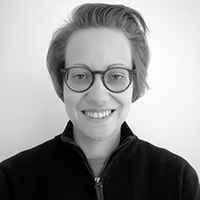
 Zarzeczna is a former editorial fellow of American Psychologist. At the end of her term, she was offered the opportunity to serve as an associate editor of APA’s flagship journal. We asked Natalia about her experience as a fellow.
Natalia Zarzeczna, PhD
American Psychologist
Background
Tell us a bit about your background and research interests.
I am an assistant professor at the University of Essex, United Kingdom, who specializes in social cognition, identifies as LGBTQ+, and was born in Poland. My research examines meaning-making processes, aiming to expand our understanding of how basic cognition (e.g., grounded cognition, cognitive conflict) can inform social beliefs about science, religion, and spirituality. I use diverse methodologies, including reaction time experiments, self-report surveys, and physiological measures of arousal.
Fellowship experience
Tell us about a highlight of your experience in APA’s Editorial Fellowship Program.
One highlight for me was the opportunity to work with Harris Cooper, editor-in-chief, and Sue Harris, managing editor, at American Psychologist. Harris has been a great mentor, providing me with training on APA’s editorial practices that included selecting appropriate reviewers, assessing papers’ suitability for the journal, integrating reviewers’ comments, and writing decision letters. This training has been invaluable, especially because editorial work for American Psychologist can be challenging given its broad readership.
As publications at American Psychologist cover a wide range of areas in psychology, I often have handled manuscripts on research falling outside my area of expertise. Harris taught me how to approach and evaluate such manuscripts, significantly expanding my understanding of the general standards for conducting top-quality science. Having an opportunity to learn about publishing practices and policies from Sue has further enriched my experience. Both Harris and Sue have been extremely supportive and have always highlighted how much they value my work for the journal.
I believe that anyone passionate about high-quality research in psychological science would greatly benefit from this program, but it has been transformative for me, given that I’m at an early career stage. I’m also grateful to my academic mentors, Bastiaan Rutjens and Jesse Preston, who have provided me with previous editorial opportunities and encouraged me to apply for this program.
Knowledge gained
What knowledge or skills have you gained through this experience?
Beyond excellent editorial practices, the program has allowed me to read papers that represent conceptually advanced and methodologically rigorous research in psychology. Handling such papers and inviting expert reviewers was a unique learning experience. It has allowed me to better understand what I should strive for in my own research in academic writing, clarity, conceptual innovation, and methodology.
Continued involvement
Do you plan to stay involved with APA Publishing?
At the completion of the fellowship program, I was invited to join the American Psychologist editorial board as an associate editor, which was a wonderful surprise! While continuing to handle thought-provoking papers from across psychology, I’ll also keep learning from American Psychologist’s outstanding editorial team. Contributing to science in this way is extremely rewarding.
Advice
Do you have any words of wisdom for early career researchers like yourself?
Harris gave me important advice to always write decision letters and peer reviews in a formal and impersonal style, focusing on a paper’s qualities rather than its authors. This attention is essential in facilitating constructive scientific discussions and improving everyone’s publishing experience. I think more of us should be using this style as reviewers.
Date created: November 2025