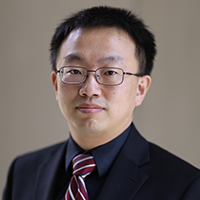
 Wang is the Seinsheimer Chair in Business and a full professor in the Freeman School of Business at Tulane University.
Mo Wang, PhD
Journal of Applied Psychology
Background
Tell us a bit about your background. What is your area of research? What is your most recent journal editing experience?
My research has always been motivated by a simple question, “How can we help people thrive throughout their working lives?” That interest began early in my career. I was originally trained in both industrial–organizational psychology and developmental psychology, and I was fascinated by the idea that work is not a static experience but one that unfolds across the lifespan. My interdisciplinary training has allowed me to integrate perspectives from work and organizational psychology, adult development, occupational health, and quantitative methodology, which has shaped my research since.
Much of my early work examined retirement, bridge employment, and workforce aging, helping establish retirement as a dynamic developmental process rather than simply an end-of-career event. Over time, my research has expanded to include occupational health psychology; newcomer and expatriate adjustment; team processes; leadership; and, increasingly, how emerging technologies, such as artificial intelligence (AI), are transforming work and organizations. One common theme has been understanding the mechanisms through which individuals adapt and how organizations can create environments that foster both performance and well-being. Methodologically, I also have been deeply interested in developing approaches that better capture the dynamic and multilevel nature of psychological phenomena.
In addition, I served as associate editor for the Journal of Applied Psychology (JAP) for about a decade, with extensive experience handling manuscripts across nearly every area of applied psychology. I also have other editorial leadership experience collaborating closely with authors and reviewers. This work has been rewarding and reinforced one overarching goal of my career: to produce and promote research that is scientifically rigorous; theoretically meaningful; and, ultimately, useful for improving people’s working lives. Psychology has tremendous potential to address many of today’s challenges, and JAP is central to advancing that mission.
Priorities
What are your main priorities? For example, how will you grow readership, what type of scholarship would you like to see in the journal, and what kind of content are you hoping to attract?
One high priority is to build on JAP’s long-standing reputation as the premier journal in work and organizational psychology while ensuring that it continues to evolve with the rapidly changing world of work.
- First, JAP will continue publishing theoretically rich and methodologically rigorous research that advances the understanding of fundamental psychological processes at work, not simply documenting whether something works but uncovering the mechanisms explaining why it works, for whom, and under what conditions. I will encourage research that offers strong theoretical contributions, utilizes rigorous and diverse methodologies, and addresses meaningful questions that advance cumulative scientific knowledge.
- Second, I will further expand the journal’s engagement with emerging challenges facing workers and organizations, such as AI, demographic shifts, globalization, and increasing uncertainty. These developments present exciting opportunities for psychological research. JAP will continue to be the leading venue where scholars develop theories and generate evidence that advances the understanding of these transformations before they become yesterday’s problems. Also, I will support greater interdisciplinary collaboration from fields such as computer science, public health, economics, and sociology when doing so advances psychological theory.
- Third, we will increase the visibility and societal impact of the excellent science JAP publishes. Research must reach researchers, practitioners, policymakers, and the broader public. One initiative I have begun is regularly posting accessible summaries of selected JAP articles on LinkedIn, translating complex findings into language that a broader audience can understand. I will build on those efforts through additional communication and outreach activities that help bridge the gap between rigorous research and real-world practice, informing organizational decisions, public policy, and the future of work.
Journal importance
Why is this journal important for the field? What is its relevance to society/public health? What are the hot issues in your area right now?
JAP is important because it serves as the flagship journal for understanding the psychological processes that shape people’s experiences at work. Work occupies a substantial portion of our lives, influencing not only individual performance but also health; well-being; family functioning; organizational effectiveness; and, ultimately, societal prosperity. JAP has long been the venue where researchers develop and test theories that explain these processes and provide evidence informing organizational practices and public policy. As such, the journal’s relevance extends well beyond academia.
Many of today’s most-pressing societal challenges have important psychological dimensions. Organizations around the world are grappling with rapid technological change, population aging, increasing uncertainty, and evolving employment relationships. Decisions about leadership, job design, performance management, teamwork, and employee development affect millions of workers daily. By publishing rigorous evidence on these topics, JAP can contribute not only to scientific progress but also to healthier workplaces, more productive organizations, and a better quality of working life.
AI is transforming how work is organized and performed, how decisions are made, and how humans collaborate with intelligent technologies. At the same time, workforce aging and demographic changes are creating new questions about sustainable careers, lifelong learning, and healthy retirement transitions. Also, interest is growing in employee well-being, resilience, hybrid and flexible work arrangements, occupational safety and health, and the changing nature of teamwork in increasingly virtual and technology-enabled environments. More broadly, the field is moving toward studying work more as a dynamic system, using longitudinal, multilevel, and intervention-based research approaches to better understand how individuals, teams, and organizations adapt, influence one another, and evolve.
What excites me most is that these topics are not isolated trends but are fundamentally reshaping the future of work. JAP has a unique opportunity and responsibility to lead these conversations by publishing theoretically innovative and methodologically rigorous research.
Challenges
What challenges, if any, lie ahead for the field and/or the journal? What issues do you see as important for the field to address more broadly?
One great challenge facing both the field and the journal is ensuring that psychological science continues to be rigorous, relevant, and worthy of the public’s trust in an increasingly complex and rapidly changing world. These priorities are not competing but, rather, can reinforce one another.
- First, the field has made tremendous and positive progress in promoting transparency, open science, and methodological rigor. At the same time, scientific progress depends not only on rigorous methods but also on asking important questions, developing strong theory, and building cumulative knowledge. An editor’s role is to encourage methodologically sound and theoretically meaningful research.
- Second, science must keep pace with the changing nature of work. New technologies, evolving employment relationships, and global societal changes are creating questions that did not exist even a decade ago. Scientific journals must remain open to new theories and methods, interdisciplinary collaboration, and innovative sources of evidence while maintaining the highest standards of scientific quality.
- Third, the journal must communicate psychological science more effectively beyond academia. Publishing an excellent paper is only the beginning. Findings should inform organizational practice, public policy, and public understanding, which requires translating complex research into accessible language without sacrificing scientific accuracy. Engaging with practitioners, policymakers, and the public will allow psychological science to become part of broader conversations about work, health, and society.
- Ultimately, JAP can cultivate a scientific community that values rigor, innovation, openness, and societal impact so that we will not only advance our discipline but also ensure that psychological science continues to make meaningful contributions to organizations, communities, and people’s working lives.
Advice
What advice would you offer new authors hoping to publish in the journal? What are you looking for in a manuscript?
- First, I encourage authors to begin with an important scientific question that advances the understanding of people at work. Reviewers may debate methods or analyses, but they are much more likely to become excited about an article if they believe the underlying question is important.
- Second, I encourage authors to think carefully about their theoretical contribution. A successful paper does more than demonstrate that one variable is related to another. It explains why the relationship exists, identifies the underlying mechanisms, and clarifies the conditions under which the findings are likely to hold.
- Third, I encourage authors to use the most appropriate methodology for the research question. Experimental, longitudinal, qualitative, computational, intervention-based, and mixed-method approaches all can make important contributions when they are well executed and aligned with the theoretical question. Methodological rigor should support drawing meaningful conclusions.
- Fourth, I encourage authors to think about the broader significance of their work. Ask, “How will this article change the way researchers think? How might it influence workers’ behaviors, improve organizational practice, or ultimately enhance people’s working lives?” The strongest work offers a new way to understand an important phenomenon.
- Ultimately, when these above-mentioned elements come together, an article has the potential to make a lasting contribution to the field.
I also encourage authors to think of the review process as an opportunity to strengthen their science. Some of the best articles published in JAP are the result of thoughtful dialogue among authors, reviewers, and editors. Our shared goal is to produce the strongest science possible.
Date created: August 2026