Michelle D. Sherman, PhD, LP, ABPP
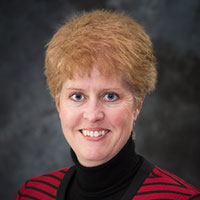 Michelle D. Sherman, PhD, LP, ABPP is the director of behavioral health at the University of Minnesota North Memorial Family Medicine Residency Program.



Michelle D. Sherman, PhD, LP, ABPP is the director of behavioral health at the University of Minnesota North Memorial Family Medicine Residency Program.
Tell us a bit about your background: What is your area of research? What is your most recent journal-editing experience?
I am a professor in the University of Minnesota’s Family Medicine and Community Health Department, and am board certified in couple and family psychology. I’m also a fellow in APA’s Division 43 (Society for Couple and Family Psychology). My areas of research interest include effects of mental illness/PTSD on families (especially youth), patient-centered communication, health behavior change, integrated behavioral health, and the role of mental health in musical theater. Prior to becoming editor in chief of Couple and Family Psychology: Research and Practice, I served as the associate editor for this journal. I have also guest edited special issues for several other journals.
I directed the Family Mental Health Program at the Oklahoma City VA for the first 17 years of my career, where I enjoyed offering couples therapy, teaching trainees from multiple disciplines, and conducting research. I developed and evaluated numerous family interventions for mental illness and PTSD. A few years ago, I returned to my home state of Minnesota and transitioned to a faculty role at the University of Minnesota. I am the director of behavioral health at the North Memorial Family Medicine Residency Program where I perform short-term psychotherapy and integrated care, teach residents, and do research with an interdisciplinary group of faculty and trainees. I have written several booksopens in new window for teens whose parents have a mental illness, have PTSD/trauma, or are on military deployment.
A recent area of research and clinical interest is the overlap of psychology and musical theater; psychologists are uniquely poised to support both the audience and production team in shows that involve issues of mental illness. Sparked by my recent qualitative research with theatre professionals, many of whom are struggling with the effects of COVID-19, I developed and am offering a free online support group to empower and support this community.
It is an honor to collaborate with our two associate editors, Hayley Fivecoat and Corinne Datchi, as well as with the amazing Journals team at APA. I’m also deeply grateful to our outstanding editorial board and the many reviewers who volunteer their time to make our journal of the highest caliber. Serving as APA Division 43’s journal editor is an honor, and we are committed to representing our division well.
Briefly, what are your main priorities? For example, how will you grow readership, what type of scholarship would you like to see in the journal, and what kind of content are you hoping to attract?
Couple and Family Psychology: Research and Practice is a relatively new journal, and it’s poised to grow over the next five years. I am excited to continue the traditions that Tom Sexton and previous associate editors have created as we strengthen the journal. Increasing readership and submissions are important priorities, as well as eliciting high-quality manuscripts. I believe special issues can increase interest, visibility, and submissions. Couple and Family Psychology has published two special issues to date: on relationship uncertainty in 2014, and on couples and families managing HIV in 2012. We currently have three underway and are in the planning stages of another for early 2021.
Another priority is narrowing the gap between research and practice. To that end, we are requiring all manuscripts to have a Clinical Implications section with practical, applied information that readers can use in working with couples and families. Generally, we seek treatment-focused articles, clinical case studies, research-focused articles, and brief reports. We welcome interdisciplinary collaboration as well as manuscripts describing the application of couple and family psychology in diverse settings (e.g., integrated behavioral health in primary care, incarceration and re-entry, military and veteran settings). We also specifically desire submissions that explore issues of diversity in working with couples and families, as well as ways psychologists can overcome implicit bias and address issues of diversity, equity, and inclusion.
Why is this journal important for the field? What is its relevance to society/public health? What are the hot issues in your area right now?
Couple and Family Psychology strives to focus on the practice of couple and family psychology and how research can inform the work of practitioners and educators. As the journal for Division 43, it is also a place for research and scholarly writing on broader topics related to couple and family psychology, public policy, and training issues.
Our focus is on couple and family psychology (which includes an emphasis on formal assessment and use of evidence-based interventions) rather than general couples/family therapy or general family processes. Couple and Family Psychology is committed to the integration of science and practice of family psychology, which can more broadly involve training models, interdisciplinary collaboration, an international perspective, and issues of social justice related to family psychology.
Hot topics include the role of couple and family psychology in integrated care, couple/family issues in sexual minority couples and families (a current special issue), teledelivery of couple/family psychological services, working with couples and families managing issues of suicide or self-harm, couple/family issues related to the opioid crisis, and the effects of COVID-19 on couples and families (another current special issue).
Do you have plans for a special issue or changes to the editorial process? Are you making any changes?
Yes, we’ve already made some changes*. In addition to the Clinical Implications section mentioned above, we’ve introduced a Brief Report option for innovative work that may be premature for publication as a full research report because of small sample size, novel methodologies, and so on. Brief reports are also an appropriate format for pilot studies, replications, and clinical case studies.
As mentioned, three special issues are currently underway: “Risk and Resilience in Sexual and Gender Minority Relationships,” guest edited by Ashely K. Randall, Tyrel Starks, and Casey J. Totenhagen; and “Interventions for Military and Veteran Families,” guest edited by Steve Sayers; and “Mitigating the Impact of the Pandemic on Families and Couples” guest edited by Nadine Kaslow and Chanda Graves. Stay tuned!
*Couple and Family Psychology has a new journal cover! Be on the lookout for it in early 2021.
Editor Spotlight features interviews with the newly-appointed editors of APA Journals.
APA Journals produces an array of scholarly journals that cover the spectrum of modern psychology and feature the latest research in the field.
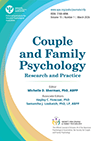
Couple and Family Psychology: Research and Practice is a scholarly journal publishing peer-reviewed papers representing the science and practice of family psychology.