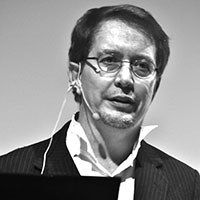
 Cardeña is Thorsen Professor of Psychology and director of the Centre for Research on Consciousness and Anomalous Psychology at Lund University in Sweden.
Etzel Cardeña, PhD
Psychology of Consciousness: Theory, Research, and Practice
Background
Tell us a bit about your background: What is your area of research? What is your most-recent journal-editing experience?
I am a cultural and intellectual mixed breed. I was born and raised in México, did graduate studies in Canada and the United States, and have held an endowed chair in Sweden for two decades. In addition to my graduate training in clinical and personality psychology, I completed graduate courses in anthropology and neuroscience and have been a professional theater-maker throughout my life.
My areas of research are related to alterations of consciousness: anomalous experiences and altered states, hypnosis and dissociation, and acute reactions to trauma. I was associate editor of two journals and, in 2021, founded the Journal of Anomalous Experience and Cognition, a no-fee, open-access, university-based journal.
Priorities
Briefly, what are your main priorities? For example, how will you grow readership, what type of scholarship would you like to see in the journal, and what kind of content are you hoping to attract?
Besides the usual staples of the journal (e.g., sensory consciousness, interaction of conscious and unconscious processes, the self), I will emphasize a more integrated view of alterations of consciousness, so areas that do not “talk” to each other begin doing so. I am also interested in attracting authors from disciplines such as anthropology and the humanities who may not immediately think of a psychology journal as a good niche for their work.
Journal importance
Why is this journal important for the field? What is its relevance to society/public health? What are the hot issues in your area right now?
Psychology of Consciousness is unique in that it covers a broad expanse of topics related to consciousness, prioritizing experience rather than potentially associated neural processes. Conscious experience is central to various disorders (e.g., depressed moods) as well as their treatments (e.g., increasing mindfulness), so the overall well-being of individuals and groups is very much a remit of the journal. As to hot topics, my take is that what is “hot” today may be “cold” tomorrow, so I encourage submissions from anyone with a relevant and interesting topic, whether fashionable or not.
Challenges
What challenges, if any, lie ahead for the field and/or the journal? What issues do you see as important for the field to address more broadly?
A major problem, which has become worse with the proliferation of journals on the same topic (including consciousness), is the lack of common knowledge and language. Some authors seem to know only the newest literature and the perspectives most congenial to their current paper. Another problem is the growing use and abuse of artificial intelligence, with some authors delegating part of their thinking and writing to it. In my experience, the struggle to write helps one better understand one’s topic and test different ways of viewing and expressing ideas. Many other challenges exist for the field, but also so do opportunities such as translating findings about consciousness to clinical practice and to the raising and education of children.
Plans
Do you have plans for a special issue or changes to the editorial process? Have you introduced or are you planning to introduce any changes?
A main thrust of my current work is the development and testing of categorical and dimensional models of alterations of consciousness, which will facilitate communication across relevant topics and give this topic a more-secure scientific footing. I am contemplating an issue related to classifications of consciousness alterations. Some changes I will insist on include requiring information about how researchers interact with participants and the context of their research, including positionality statements if relevant (demand characteristics and experimenter effects are paid lip service, if paid attention to at all, in many journals); encouraging open science practices; studying diverse populations; requiring a statement about the limitations of generalizability of results; and encouraging a plurality of methodological approaches.
Advice
What advice would you offer new authors hoping to publish in your journal? What are you looking for in a manuscript?
There are many aspects that can make a manuscript valuable, and, in some ways, my advice departs from standard publishing wisdom. In no particular order here are some elements that I like in a paper:
- It has a coherent and interesting story to tell, even if the narrative explains that the results do not provide facile conclusions.
- It is written clearly (authors who are not comfortable expressing themselves in English can use services to help with their writing) and avoids cliches, repetitions, and pseudoscientific language (e.g., unnecessary passive verbal phrases).
- It connects with previous knowledge and takes it one step further or revisits it from a different perspective. Authors should not only review and report the past 5 years of literature but go as far back as an important relevant opinion or finding exists, whether that is 10 or 100 years.
- It does not inflate its importance.
Equity, diversity, and inclusion
APA Journals is committed to equity, diversity, and inclusion (EDI) in its practices and systems. How will this be reflected in the journal?
A salient fact in the history of all sciences, including psychology, is how the contributions of women and members of minority groups have been ignored. A quick example from consciousness is how almost every psychologist has heard of William James and his study of the self but not of Mary Whiton Calkins, one of his students, who placed the self at the core of psychology and was a president of APA. In Psychology of Consciousness, we will encourage a fair representation of genders (defined broadly), minority groups, and non-Western cultures. I have sought to do that in the composition of the editorial board, which includes members from a wide swath of backgrounds and nationalities, and I encourage submissions from authors of different backgrounds, disciplines, and perspectives. We will also commission profiles of not-well-known women and members of minority groups whose contributions have not been given their due.
Open science
The APA Journals Program is committed to publishing transparent, rigorous research; improving reproducibility in science; and aiding research discovery. Do you foresee your journal participating or continuing to participate in any of APA Journals’ Open Science initiatives? What is the significance of such initiatives for your field?
Open science, particularly transparent procedures and data availability, is important to having a more-democratic and participatory science. Nonetheless, part of the reproducibility “crisis” is due to the nature of studying beings (not only humans) that can choose, have unique historical developments, and interact with the specific characteristics of the researchers. Trying to emulate the reproducibility of sciences such as physics and chemistry misrepresents the nature of our discipline.
APA experience
Please describe your experience with APA Publishing. Has your experience with APA as a nonprofit scholarly publisher differed from other publishers?
I have had only good experiences with APA Publishing, including the commission of my most important book, Varieties of Anomalous Experience (Cardeña et al., 2000, 2014), at a time when the topic was risky. Later, APA also published my summary of the experimental evidence for parapsychological phenomena (Cardeña, 2018) in its flagship journal, American Psychologist, not showing the automatic bias against the topic that other publishers have.
Mission
APA Publishing is proud to support the association’s mission to promote psychological science and knowledge to benefit society and improve lives. How will your editorship further support this mission?
Understanding better conscious experiences and states—and their interactions with nonconscious processes—can enhance people’s capacity to choose among different alternatives. This knowledge can enhance people’s lives and foster a freer and more-capacious form of living a worthy life, as well as assist with educating and raising children. The multiple perspectives offered by different states of consciousness can also help us understand better and be more tolerant toward alternative individual and cultural experiences. Finally, procedures that may affect one’s state or trait of consciousness (e.g., through psychedelics, hypnosis, or meditation) can provide clinical and personality changes that shift positively a life trajectory beyond what the typical drug and psychological treatments can typically accomplish.
Citations
Cardeña, E., Lynn, S. J., & Krippner, S. (Eds.). (2000). Varieties of anomalous experience: Examining the scientific evidence. American Psychological Association. https://doi.org/10.1037/10371-000
Cardeña, E., Lynn, S. J., & Kripner, S. (Eds.). (2014). Varieties of anomalous experience: Examining the scientific evidence (2nd ed.). American Psychological Association. https://doi.org/10.1037/14258-000
Cardeña, E. (2018). The experimental evidence for parapsychological phenomena: A review. American Psychologist, 73(5), 663–677. https://doi.org/10.1037/amp0000236
Date created: June 2025