Arthur M. Nezu, PhD, DHL, ABPP
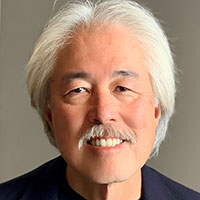 Arthur M. Nezu, PhD, DHL, ABPP is a distinguished university professor of psychology, professor of medicine, and professor of community health and prevention at Drexel University.



Arthur M. Nezu, PhD, DHL, ABPP is a distinguished university professor of psychology, professor of medicine, and professor of community health and prevention at Drexel University.
Tell us a bit about your background: What is your area of research? What is your most recent journal-editing experience?
I became the editor-in-chief of CP:SP in 2019 when it was being published by Wiley. Having the journal soon to be published by APA feels like I am coming home, as I have edited several other APA journals: editor of the Journal of Consulting and Clinical Psychology, associate editor of both Archives of Scientific Psychology and American Psychologist. I’ve also served as chair of APA’s Council of Editors, member of the task force that revised the APA Publication Manual (7th ed.), and member of the task force that revised the Journal Article Reporting Standards for Quantitative Research.
Briefly, what are your main priorities? For example, how will you grow readership, what type of scholarship would you like to see in the journal, and what kind of content are you hoping to attract?
I would like to greatly expand the breadth of topics to be covered. The field of clinical psychology is continuously innovative regarding research methodology and practice approaches. Multiple bridges are being built with other areas of psychology, as well as other scientific disciplines. I would like to capture these state-of-the-art trends and activities, as well as covering topics of interest to as wide an audience as possible. Transparency, accessibility, openness, diversity of topics and orientations, and diversity of stakeholders are all critical dimensions.
Why is this journal important for the field? What is its relevance to society/public health? What are the hot issues in your area right now?
On the home page of APA’s website, an important aim is articulated: “advancing psychology to benefit society and improve lives.” All fields of psychology make significant contributions to such goals. However, clinical psychology tends to have a more direct and immediate impact, via evidence-based practice. When I was the editor of the Journal of Consulting and Clinical Psychology, I required authors to include a public health statement that identified the impact their research might have on society. I am continuing this requirement for CP:SP to hopefully disseminate important scientifically based information to psychology professionals as well as the greater public. I have always believed in the adage generally attributed to Sir Francis Bacon: “Knowledge is power.” That is why this journal is important—it provides important knowledge.
What sets CP:SP apart from other related clinical psychology journals?
The major aim of CP:SP is to publish cutting-edge trends and developments in the science and practice of clinical psychology. Unlike many other journals in clinical psychology, we do not publish individual research studies, such as clinical trials. Rather, CP:SP includes both narrative and systematic scholarly reviews, such as meta-analyses. Narrative reviews of topics should be based on empirical evidence. We also publish invited commentaries to provide multiple perspectives on areas addressed by major articles. Readers of CP:SP will obtain scientifically sound and broad syntheses in a variety of areas in clinical psychology. We welcome contributions from all theoretical orientations and diverse research approaches. CP:SP represents the best of scientific clinical psychology rather than a singular perspective.
What advice would you offer students and early-career researchers entering the field?
Editor Spotlight features interviews with the newly-appointed editors of APA Journals.
APA Journals produces an array of scholarly journals that cover the spectrum of modern psychology and feature the latest research in the field.
Clinical Psychology: Science and Practice presents cutting-edge developments in the science and practice of clinical psychology and related mental health fields.