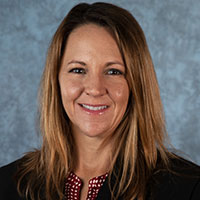
 Nichols is a professor and chair of the Department of Educational Psychology at the University of Texas at San Antonio.
Sharon L. Nichols, PhD, and Francesca López, PhD
Educational Psychology for Policy and Practice
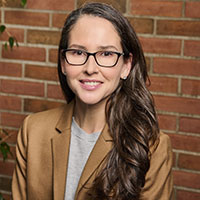 López is the Waterbury Chair in Equity Pedagogy and professor of education at the College of Education at Pennsylvania State University.
Background
Tell us a bit about your background: What is your area of research? What is your most recent journal-editing experience?
Sharon L. Nichols: I was trained as an educational psychologist and learned much about the science and theory of teaching and learning in K–12 classroom settings and beyond. The discipline of educational psychology largely deals with theories and research surrounding the practices of teaching, on students’ learning and their motivation and development, and on methods (research design, evaluation, and statistics). Throughout my training, I focused on adolescent development and motivation, specifically the role social belonging can play in students’ academic engagement and success. From there I spent a year in a postdoc position with David Berliner, PhD, and Gene Glass, PhD, at Arizona State University studying the effects of the (then) recently passed No Child Left Behind federal law. That experience caused me to reevaluate my scholarly interests and prompted me to be increasingly curious about the ways in which educational psychology science does or should intersect with education policy. As a result, and increasingly over time, I sought and carved out opportunities in which I could ruminate more about how the science of educational psychology can be applied or utilized to better understand effects and outcomes of educational policies.
Along the way I engaged in a variety of editing projects to help produce journal issues that highlight these intersections. I have been guest editor of special issues in Teachers College Record, focusing on accountability and special education populations; Theory into Practice, focusing on adolescents and education policies across K–12 settings; and Educational Psychologist, focusing on educational psychology theory and education policy. I have also served on editorial boards for Teachers College Press, Educational Policy Analysis Archives, and currently, AERA Open.
Francesca López: I was a bilingual elementary teacher before pursuing a master’s degree to become a counselor and later my doctorate in educational psychology. As a former bilingual teacher who worked in Tucson, Arizona, I pursued doctoral studies because I wanted to pursue research that could inform policy, because the policies for English learners in Arizona did not, and still do not, reflect the evidence base. As naïve as that was, my research has always focused on educational psychology constructs and their implications for policy. This work includes asset-based pedagogy and outcomes for historically marginalized students, as well as policies that hinder teachers from providing asset-based pedagogy.
I have served as coeditor for the American Educational Research Journal (2016–19) and am an editor for the National Education Policy Center’s “Think Tank Reviews,” as well as coeditor of the Review of Educational Research (since 2022). I have also been a coeditor for special issues in Contemporary Educational Psychology and Teachers College Record and am currently a coeditor of a special issue in Educational Psychologist.
Journal importance
Why is this journal important for the field? What is its relevance to society/public health? What are the hot issues in your area right now?
Sharon L. Nichols and Francesca López: Educational psychologists have much to offer with our understanding of how educational policies work and their effects on practitioners and on student outcomes. Despite more than a century of rigorous science interrogating teaching practices and learning trajectories and outcomes, as a community we have not leveraged that science to focus on the connections between policies and practices. We have both spent much of our careers pondering the potential benefits of more educational psychologists engaging in work related to education policies or their effects on practitioners. The birth of this journal was due, in part, to the recognition that we need a space that encourages educational psychologists to consider these connections as they relate to the topics they study.
This journal is a much-needed resource and platform for the field. We are witnessing some major issues that merit evidence-based efforts. Book bans, attacks on teaching and curricula that affirm students from marginalized backgrounds, and myriad other issues demand an evidence base that can be used by policymakers and educators, as well as by administrators.
Challenges
What challenges, if any, lie ahead for the field and/or the journal? What issues do you see as important for the field to address more broadly?
Sharon L. Nichols and Francesca López: One challenge we see might be a paucity of manuscripts submitted at the start. Because this is a new journal catering to new subject areas for our community, scholars may be hesitant or unsure of what kind of work “fits.” It may also be that scholars have not yet done the type of work that fits the journal’s mission, again resulting in few manuscripts being submitted in the first years. We are developing strategies to help resolve this problem, including launching the journal with a special issue that includes the voices and reflections of senior scholars in the field who will help provide guidance to younger scholars on the type of scholarship needed.
We also think it will likely be difficult to secure expert reviewers—a challenge many journals are facing. In our most recent experience, it was far more difficult to receive reviews in a timely manner and even more difficult to secure the necessary number of expert reviewers. Scholars are stretched thin, and we must be proactive to avoid delays in the review process.
There are several issues most critical as this journal launches. First, we are excited that this publication will encourage more scholars to do the kind of work that informs public education policy-making. Many among us are already working closely with community partners or other stakeholders to engage in research that directly affects those communities. We hope that more scholars will think about how educational psychology research can be designed to study educational policies and their effects. As an example, our field has much to offer related to instructional practices and resultant student motivation. How can this science be leveraged in various contexts in which certain policy proscriptions are playing out: where high stakes testing pressures are greatest; where restrictions on equity, diversity, and inclusion are salient; and where parent involvement is challenging or woefully absent?
Plans
Do you have plans for a special issue or changes to the editorial process? Have you introduced or are you planning to introduce any changes?
Sharon L. Nichols and Francesca López: Because the journal is new, everything we do right now is a change! First, we plan to launch the journal with a special issue of invited senior scholars whom we have asked to reflect on their life’s work and the ways they see how it affects policy and practice. Second, we also have asked them to provide advice to future authors on how to think about this impact in their own work. With this inaugural issue our goal is to introduce the kinds of work and research the journal will publish.
We see the journal as accomplishing three key goals: The first goal is to publish data-driven work—and all methods are welcome—guided by research questions focusing on how educational psychology science intersects or informs some educational policies and practice. The second goal is to publish rigorous reviews (meta analyses and in-depth literature reviews) to help us understand what we know about a given topic that can have implications for a specific policy or practice. The third goal is to include a commentary section in which we will invite experts to weigh in on various aspects of this entire endeavor: What kinds of research are needed? How do we translate our knowledge? Should we include opinion editorials?
Advice
What advice would you offer new authors hoping to publish in your journal? What are you looking for in a manuscript?
Sharon L. Nichols and Francesca López: We are looking for research in which authors are investigating key questions of education policy and practice. Manuscripts can feature relevant theories and science from educational psychology, but those are not required elements. Although we will encourage authors to bring relevant disciplinary knowledge to bear on in each article, we have no strict requirements related to the depth of that material. We are looking for work in which authors have thought about the implications and impact of their findings and results not only for future research but also for practitioners and policymakers. In addition, we are seeking authors interested in translating their work for broader audiences. This journal will serve as a critical pipeline for work that can be more broadly disseminated. Therefore, the articles published will be vetted to a degree for which we can then invite authors to translate that work into other formats for dissemination.
Date created: April 2025