Photo credit: Philip Neal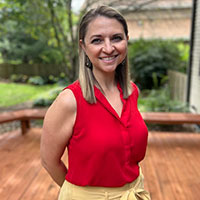
Tess Neal, PhD
Psychology, Public Policy, and Law
Background
Tell us a bit about your background: What is your area of research? What is your most recent journal-editing experience?
I am an associate professor and dean’s professor of psychology at Iowa State University. I study the nature and limits of expertise. My basic work focuses on understanding and improving human judgment processes, especially among trained experts, and my applied work focuses on improving forensic and legal experts’ judgments in particular. I study rich real-world behaviors; embrace open science practices; and weave together theories and methods from the clinical, social, and cognitive traditions of psychological science.
The focus and breadth of my scholarship prepares me well for editing a journal at the interface of psychology, public policy, and law. This role builds on my editorial experience as an associate editor at Psychology, Public Policy, and Law (PPPL), an associate editor at the Journal of Personality Assessment, and an inaugural open science advisor with the Association for Psychological Science journal Clinical Psychological Science. I have helped guide these journals and the field through evolutions occurring in open science (see, e.g., Howard et al., 2024; Lamb et al., 2021; Silverstein et al., 2024), my roles dovetailing with my research interests in robust expert judgment methods. I have curated manuscripts written by diverse teams, fostered adversarial collaborations, and negotiated with publishers to make important content freely available (see, e.g., Neal et al., 2022). I thoroughly enjoy editorial work and see great value in the opportunity to promote good ideas, nurture the development of scholars, and be involved in the further development of the field.
Priorities
Briefly, what are your main priorities? For example, how will you grow readership, what type of scholarship would you like to see in the journal, and what kind of content are you hoping to attract?
My main priority is to preserve the strengths of the journal while fully embracing transparent, open, and free communication of research. Promoting rigorous research practices is key to increasing the scholarly merit and trustworthiness of published content, a particularly important goal for a journal tackling complex real-world legal and policy issues with insights from psychology. My role as editor requires that I be both a standard-bearer for these rigorous research practices as well as an ally or coach who encourages and enables scholars in the field to build more rigorous research practices into their workflow. I will promote increased quality and the scholarly standing of the journal by fostering a culture of quality and transparency; overseeing a rigorous, fair, and timely peer review process; ensuring that clear and constructive feedback is offered to authors as well as reviewers; building good mentorship into PPPL’s editorial processes; increasing the visibility and accessibility of the work published in the journal; strengthening and diversifying the editorial board; and expanding the scope of the journal to attract new authors and readers.
Relevance
Why is this journal important for the field? What is its relevance to society/public health? What are the hot issues in your area right now?
PPPL is an important journal that is advancing knowledge at the intersection of psychology, law, and public policy. The journal is unique within the American Psychological Association’s (APA’s) portfolio, and it is unique more broadly in the fields of psychology, social science, behavioral science, law, and policy. It is a key forum for scholars, policymakers, and practitioners to engage in the generation and application of psychological science to legal and policy issues. The journal boasts a broad scope, publishing rigorous empirical, theoretical, and review works at the journal’s unique intersection and welcoming submissions from scholars around the world. See the journal’s sample articles for some of the hottest issues in the area today, including psychological insights for evidence quality improvements (Smith et al., 2023), modeling of critical legal processes like plea negotiation (Cardenas, 2023) and jury deliberation (Ruva et al., 2022), experimental testing of different family dispute resolution policies (Holtzworth-Munroe et al., 2021), syntheses of psychometric evidence for commonly used forensic assessment tools (Helmus et al., 2022), solutions for the competency crisis (Gowensmith, 2019), and the potential link between psychosis and mass shootings (Peterson et al., 2022).
Challenges
What challenges, if any, lie ahead for the field?
Generative artificial intelligence’s role in science is a big one. How can opportunities be managed ethically and responsibly? Things are changing fast, and the PPPL team will work with APA to keep up-to-date on what is happening and implement the latest policies that APA sets, including the current policy (APA, 2024). Another challenge is to manage the tensions between internal validity and field validity. For the kind of work done in this field, these tensions are critically important to address. Issues of data quality amid evolutions in online technology will continue to be a challenge, so keeping abreast of these developments is essential. Finally, shaping sociocultural forces to expect transparency and replicable findings from research—and enabling people to critically recognize when findings are trustworthy—is a challenge we, the editorial team at PPPL, look forward to meeting head-on.
Plans
Do you have any plans for a special issue or changes to the editorial process? Have you introduced or are you planning to introduce any changes?
The cover of the journal is changing its color from blue to gold, with the change representing the transition of editorial teams for the sixth time in the journal’s 30-year history. Four substantive changes to the journal’s editorial processes are detailed in my inaugural editorial (which will be published in PPPL’s first issue of 2025; Neal, in press). A first change is in how scholars can join the journal’s editorial team. Every year, PPPL will have an open call for editorial board members. A portion of the board will be rotated off each year so new people can become part of the board. There will be opportunities to apply for associate editorships and all other roles. We also plan to incorporate a team of statistics, transparency, and rigor (STAR) editors in future years (see Hardwicke & Vazire, 2024; see also Howard et al., 2024). More information about these roles will be available in the annual call for applications. If you would like to be involved with the editorial work of PPPL, please respond to the annual call for editorial board members, which will be publicized each fall.
A second change is the new transparency-by-default policy. Despite its robust engagement of open science practices (see Lamb et al., 2021), PPPL never instituted open science badges. Many of the article types that PPPL publishes (e.g., reviews, field studies) are not the typical experimental study for which the badges were originally designed. However, other fields and journals that publish longitudinal studies, field studies, surveys, reviews, and so forth have found value in and space for open science practices (e.g., Tackett et al., 2017), and so even though some types of articles will more naturally lend themselves to badge-related practices, most types of scholarly methods can build in some open workflows. For example, authors of review articles can use systematic methods and document them as such while sharing materials (and data and preregistration when it makes sense); researchers who conduct field studies and surveys can do the same. My experience as an open science editor for Clinical Psychological Science involved these very discussions (see Howard et al., 2024). A number of articles submitted to that journal were not as easy a fit with the badges as other types of work done in psychology; the same is true for PPPL submissions. This is understandable. However, journal editors have the responsibility of establishing aspirational standards and cultures that value open science practices, and, as the journal’s editor, I plan to move PPPL toward open science practices by default, following the maxim “as open as possible and as closed as necessary.” Making research accessible improves the trustworthiness of research, encourages rigorous practices, promotes equity, and strengthens translation and policymaking. Given the new transparency-by-default policy, badges will not be introduced at PPPL. Transparency is expected for all empirical manuscripts; introducing badges now would be redundant and unnecessary. Furthermore, mounting evidence suggests badges are becoming distorted signals, subject to the same criticisms that spurred the credibility revolution to begin with (Hardwicke & Vazire, 2024; Klonsky, 2024; van den Akker et al., 2023).
A third change will be to try some new, creative approaches to content while retaining the unique nature and the strengths of PPPL (see Sales, 1995). For instance, our editorial team has plans for nurturing policy-relevant adversarial collaborations, curating living special collections around issues of timely importance, running teaming challenges, and fostering multidisciplinary interchanges about psycho-legally relevant amici briefs and behaviorally relevant policy changes.
Finally, the fourth category of change is for the PPPL editorial team to work with APA journal staff on substantial new directions for journal processes. Specifically, we are working together on guidelines for publishing registered reports and registered replications and working to partner with Peer Community in (PCI) as a registered report–friendly journal, which means PPPL would accept and publish PCI-recommended registered report manuscripts without further review as long as they meet journal requirements. Models for moving the journal to open access are also under consideration; meanwhile, authors are encouraged to make their legally sharable preprints available in public access repositories such as PsyArXiv and the Open Science Framework (even after publication in the journal). I am also interested in experimentally testing triple-blind peer review as compared with the traditional double-blind peer review process used by the journal, relying on open science throughout the process.
Advice
What advice would you offer new authors hoping to publish in your journal?
If you are doing empirical work, embrace open science. We at the journal are working hard to make as much (and ideally all) of the data and materials that are part of the articles we publish publicly available. Create an account on the Open Science Framework if you do not already have one and learn how to make your data, materials, codebook, and analytic code available to the public (and how to mask themopens in new window for peer review). Consider preregistering your work, and transparently document deviations from the plan. Be innovative and rigorous in your work, careful in your writing. Peruse the articles PPPL publishes and consider subscribing to the journal to keep abreast of the field. Volunteer to review submissions for this and other journals to further develop your critical reading skills and—when a decision letter is sent—carefully read all the reviewers’ comments and the editor’s decision rationale to get a good sense of how the journal evaluates submissions and how the work you submit to the journal is likely to be evaluated. Read and follow the instructions to authors before submitting. Persevere: Do not let rejection discourage you from taking feedback or eventually becoming a published author in the journal. Do not take rejection personally: Rejection is the most common outcome for anyone submitting to the journal (which is the case for most reputable journals). Send PPPL your best work!
Citations
American Psychological Association. (2024). APA publishing policies. https://www.apa.org/pubs/journals/resources/publishing-policies
Cardenas, S. A. (2023). Charged up and anchored down: A test of two pathways to judgmental and decisional anchoring biases in plea negotiations. Psychology, Public Policy, and Law, 29(4), 435–456. https://doi.org/10.1037/law0000390
Gowensmith, W. N. (2019). Resolution or resignation: The role of forensic mental health professionals amidst the competency services crisis. Psychology, Public Policy, and Law, 25(1), 1–14. https://doi.org/10.1037/law0000190
Hardwicke, T. E., & Vazire, S. (2024). Transparency is now the default at Psychological Science. Racism on the mind (apa.org), 35(7), 708–711. https://doi.org/10.1177/09567976231221573opens in new window
Helmus, L. M., Kelley, S. M., Frazier, A., Fernandez, Y. M., Lee, S. C., Rettenberger, M., & Boccaccini, M. T. (2022). Static-99R: Strengths, limitations, predictive accuracy meta-analysis, and legal admissibility review. Psychology, Public Policy, and Law, 28(3), 307–331. https://doi.org/10.1037/law0000351
Holtzworth-Munroe, A., Beck, C. J., Applegate, A. G., Adams, J. M., Rossi, F. S., Jiang, L. J., Tomlinson, C. S., & Hale, D. F. (2021). Intimate partner violence (IPV) and family dispute resolution: A randomized controlled trial comparing shuttle mediation, videoconferencing mediation, and litigation. Psychology, Public Policy, and Law, 27(1), 45–64. https://doi.org/10.1037/law0000278
Howard, A. L., Neal, T. M. S., Kirtley, O. J., Urry, H. L., & Tackett, J. L. (2024). Open science at Clinical Psychological Science: Reflections on progress, lessons learned, and suggestions for continued improvement. Clinical Psychological Science. Advance online publication. https://doi.org/10.1177/21677026241255882opens in new window
Klonsky, E. D. (2024). Campbell’s law explains the replication crisis: Pre-registration badges are history repeating. Assessment. Advance online publication. https://doi.org/10.1177/10731911241253430opens in new window
Lamb, M. E., Steblay, N. K., & Neal, T. M. S. (2021). Psychology, Public Policy, and Law adopts further open science practices and refreshes its commitment to generalizable empirical research. Psychology, Public Policy, and Law, 27(3), 293–294. https://doi.org/10.1037/law0000318
Neal, T. M. S. (in press). Inaugural editorial: Reflecting on the past, charting the future. Psychology, Public Policy, and Law.
Neal, T. M. S., Sellbom, M., & de Ruiter, C. (2022). Personality assessment in legal contexts: Introduction to the special issue. Journal of Personality Assessment, 104(2), 127–136. https://doi.org/10.1080/00223891.2022.2033248opens in new window
Peterson, J. K., Densley, J. A., Knapp, K., Higgins, S., & Jensen, A. (2022). Psychosis and mass shootings: A systematic examination using publicly available data. Psychology, Public Policy, and Law, 28(2), 280–291. https://doi.org/10.1037/law0000314
Ruva, C. L., Diaz Ortega, S. E., & O’Grady, K. A. (2022). What drives a jury’s deliberation? The influence of pretrial publicity and jury composition on deliberation slant and content. Psychology, Public Policy, and Law, 28(1), 32–52. https://doi.org/10.1037/law0000310
Sales, B. D. (1995). Editorial. Psychology, Public Policy, and Law, 1(2), 243–245. https://doi.org/10.1037/h0092729
Silverstein, P., Elman, C., Montoya, A., McGillivray, B., Pennington, C. R., Harrison, C. H., Steltenpohl, C. N., Röer, J. P., Corker, K. S., Charron, L. M., Elsherif, M., Malicki, M., Hayes-Harb, R., Grinschgl, S., Neal, T., Evans, T. R., Karhulahti, V.-M., Krenzer, W. L. D., Belaus, A., . . . Syed, M. (2024). A guide for social science journal editors on easing into open science. Research Integrity and Peer Review, 9, Article 2. https://doi.org/10.1186/s41073-023-00141-5opens in new window
Smith, A. M., Ayala, N. T., & Ying, R. C. (2023). The rule out procedure: A signal-detection-informed approach to the collection of eyewitness identification evidence. Psychology, Public Policy, and Law, 29(1), 19–31. https://doi.org/10.1037/law0000373
Tackett, J. L., Lilienfeld, S. O., Patrick, C. J., Johnson, S. L., Krueger, R. F., Miller, J. D., & Shrout, P. E. (2017). It’s time to broaden the replicability conversation: Thoughts for and from clinical psychological science. Perspectives on Psychological Science, 12(5), 742–756. https://doi.org/10.1177/1745691617690042opens in new window
van den Akker, O. R., van Assen, M. A. L. M., Enting, M., de Jonge, M., Ong, H. H., Rüffer, F., Schoenmakers, M., Stoevenbelt, A. H., Wicherts, J. M., & Bakker, M. (2023). Selective hypothesis reporting in psychology: Comparing preregistrations and corresponding publications. Advances in Methods and Practices in Psychological Science, 6(3). https://doi.org/10.1177/25152459231187988opens in new window
Date created: October 2024