Qi Wang, PhD
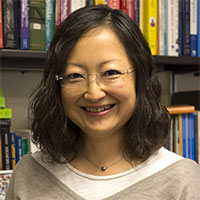 Wang is a professor of human development at Cornell University.
Background
Tell us a bit about your background: What is your area of research? What is your most recent journal-editing experience?
I am a developmental, cognitive, and cultural psychologist specializing in memory and memory development. I have done extensive studies to understand how cultural factors (e.g., beliefs, practices, technological tools such as the internet) influence memory for personal experiences (i.e., autobiographical memory) and other cognitive processes.
I grew up in China and spent my college years at Peking University. I then had my graduate training at Harvard and received my PhD in psychology in 2000. I subsequently joined the faculty of the Department of Human Development at Cornell and have been here ever since. Currently, I am a professor of human development, psychology, and cognitive science at Cornell. More details about my educational and career pathsopens in new window.
I served as an associate editor of Memory from 2014 to 2021 and have been an associate editor of Culture and Brain since 2019. I have also served on the editorial boards of several cognitive, developmental, and general psychology journals. Having been the department chair of a top developmental science program in the United States for the past 4 years (2017–2021), I have also had extensive administrative and leadership experiences working with diverse individuals and teams to set and accomplish goals. With the preparation from all these experiences, I strive to be an effective, efficient, and visionary editor for the Journal of Applied Research in Memory and Cognition (JARMAC).
Priorities
Briefly, what are your main priorities? For example, how would you like to grow readership, what type of scholarship would you like to see in the journal, and what kind of content are you hoping to attract?
As I mentioned in my editorialopens in new window, I took on the role of editor-in-chief of JARMAC in 2021, in the midst of the COVID-19 pandemic. I see this as a time of great challenges as well as opportunities. Perhaps more than ever, applied research—and applied research in memory and cognition in particular—is in great demand both to help solve problems that we are currently facing as individuals, communities, and a society and to anticipate and devise solutions for future challenges. Our COVID-19 Express and COVID-19 Special Forum articles in the 2021 issues are great examples of applying research to solve urgent real-world problems.
The best way to grow readership is to continue building the journal’s excellence, publishing the best work in applied memory and cognition that tackles society’s timeliest issues. Furthermore, as a leading journal, JARMAC must adapt to a fast-changing world and extend its relevance and impact. As I outlined in my Editorial, my main priorities for JARMAC include the following:
- JARMAC’s scope will expand to reflect emerging research trends and priorities. On the one hand, the journal will continue its current strengths in publishing high-quality work in the areas of psychology and law and of learning and education. It will also continue its emphases on various research areas, including decision-making, expertise, intelligence and creativity, metacognition, special spatial cognition, working memory, and autobiographical memory. On the other hand, JARMAC will widen its coverage to areas outside of the normative cognitive and memory literature. It will include more work addressing such topics as social-cognitive processes of communication, cognitive and metacognitive biases, cognitive aspects of identity formation, emotion cognition, moral cognition, political cognition, and intergroup cognition. The aims and scope of the journal will continue to evolve as society changes and as new questions and challenges emerge.
- The field of memory and cognitive research has become increasingly interdisciplinary and integrative. Researchers use diverse and rigorous methods and approaches to answer questions of real-world relevance. As an interdisciplinary journal, JARMAC is already at the forefront in promoting such research. During my editorship, I intend to further broaden the journal’s focus to be more inclusive of work from diverse disciplines and subdisciplines, especially those that are not frequently seen in its current submissions and publications. Efforts will be made to attract submissions on developmental research, clinical research, and interdisciplinary research on the interplay between mind and technology.
- Under my editorship, JARMAC will place a greater emphasis on research conducted beyond WEIRD populations (i.e., participants from Western, educated, industrialized, rich, democratic societies; Henrich, Heine, & Norenzayan, 2010), as well as on cross-cultural research involving more than one cultural community. Extra steps will also be taken to encourage international scholars from underrepresented regions to submit their work.
- One signature format of JARMAC is target articles that address timely issues of general interest to researchers, professionals, and practitioners. These articles and their peer commentaries together create intellectual synergies that have lasting effects on the field and shape real-life practices and policies. In addition, JARMAC will publish more special issues and special sections to create these intellectual synergies and facilitate cross-disciplinary dialogues. Proposals for target articles and special issues or sections are always welcome.
Journal importance
Why is this journal important for the field? What is its relevance to society/public health? What are the hot issues in your area right now?
Our society and communities face many challenges that span diverse domains, such as political and ideological polarization, diversity and equality, economic growth, public health, psychological well-being, educational reform, police reform, and more. Applied cognitive and memory research can make critical contributions to the solutions for these issues and problems. As a leading journal for applied cognitive and memory research, JARMAC has the opportunity to take the center stage in disseminating the best research that answers the timeliest real-world questions and to effect change and improvement in lives and practices. The challenges are also opportunities for the field.
Plans
Do you have plans for special issues or changes to the editorial process? Have you introduced or are you planning to introduce any changes?
With the publisher transition from Elsevier to APA in 2022, my goal has been to ensure a smooth and seamless process for all—authors, reviewers, and editors. In the meantime, we are addressing issues in the Editorial Manager system to improve efficiency. We have also adopted optional open science badges to encourage research transparency and openness. The APA team has been wonderful about getting things done. My hope is that we will develop a more attractive website to showcase the journal. The current site design is very ’90s.
Aim
What sets JARMAC apart from other journals publishing on memory and cognition?
JARMAC aims to publish the highest quality research in the field. It emphasizes the ecological validity of research and publishes work that will not only advance theories but also make a difference in real life.
The journal’s authors and readers include psychological scientists and other researchers working in this field and related areas, as well as professionals and practitioners who seek to understand and apply research on memory and cognition.
Advice
What advice would you offer new authors hoping to publish in your journal?
Carefully prepare your manuscript: Submit the manuscript as if it were the final version to which no further changes could be made. Follow the journal’s author guidelines. I have compiled an author formatting checklist (PDF, 85KB)opens in new window that is very easy to use and ensures compliance. Pay special attention to the journal’s manuscript word limits.
Citations
Henrich, J., Heine, S. J., & Norenzayan, A. (2010). The weirdest people in the world? Behavioral and Brain Sciences, 33(2–3), 61–83. https://doi.org/10.1017/S0140525X0999152Xopens in new window
Wang, Q. (2021). Accentuating applied research in memory and cognition in times of challenges and opportunities. Journal of Applied Research in Memory and Cognition, 10(2), 177–179. https://doi.org/10.1016/j.jarmac.2021.05.005opens in new window