Y. Joel Wong, PhD
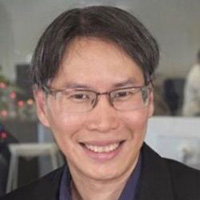 Wong is a professor of counseling psychology and chair of the Department of Counseling and Educational Psychology in the School of Education at Indiana University.
Background
Tell us a bit about your background: What is your area of research? What is your most recent journal-editing experience?
I am a professor of counseling psychology and chair of the Department of Counseling and Educational Psychology in the School of Education at Indiana University. I obtained my doctorate in counseling psychology at The University of Texas at Austin. My research interests are in Asian American mental health; the psychology of encouragement and gratitude; and, of course, the psychology of men and masculinities. Within the psychology of men and masculinities, I am interested in understanding how best to define, conceptualize, and measure masculinities. I was previously an associate editor for the Journal of Counseling Psychology (2014–2017) and an associate editor for Psychology of Men & Masculinities (PMM; 2013–2021).
Priorities
Briefly, what are your main priorities? For example, how will you grow readership, what type of scholarship would you like to see in the journal, and what kind of content are you hoping to attract?
As I wrote in my application letter to be PMM’s editor, my vision is for “PMM to serve as the main forum through which innovative and high-impact ideas and social science research on men and masculinities are first disseminated.” To this end, I hope to increase the number of conceptual manuscripts (those that propose new ideas, frameworks, and theories) and review manuscripts (those that synthesize and evaluate an area of research) submitted to the journal.
To increase readership, I have collaborated with the Society for the Psychology of Men and Masculinities (Division 51, American Psychological Association) to feature one article from PMM each month on the society’s websiteopens in new window. The lead author of the article is interviewed and invited to summarize the article in their own words and discuss their research. Information about the article and the author is then disseminated through the society’s electronic mailing list.
Journal importance
Why is this journal important for the field? What is its relevance to society/public health? What are the hot issues in your area right now?
I define masculinities as the constellation of cultural and individual meanings associated with boys and men. These meanings can be attributed to the self and other people (women, men, and people with diverse gender identities) and even to nonhuman objects and concepts, such as food, academic subjects, sports, movies, and occupations. Whether explicitly or implicitly, people classify themselves, others, and a wide variety of phenomena as relatively masculine or less masculine. Once it is understood that masculinities are not just about boys and men but are ubiquitous and touch on almost every aspect of daily life, the broad implications of this field for society, public health, and everyday life can be seen. For instance, an analysis of masculinities can help people better understand and change the gender segregation and disparities that occur in certain occupations; problematic health behaviors (e.g., refusal to wear a face mask to protect against COVID-19 infection); and unhealthy norms in schools, workplaces, and the sports arena.
Masculinities attracted a considerable amount of media attention when APA published the APA Guidelines for Psychological Practice with Boys and Men (PDF, 444KB)opens in new window in 2018. These guidelines highlighted research demonstrating that adherence to masculine norms and ideologies was linked to negative outcomes for boys and men. Reactions to these guidelines were swift and polarizing. Some in the media praised the guidelines for drawing attention to boys’ and men’s concerns, while others stridently criticized them for purportedly pathologizing men. Given this context, I hope PMM articles will address how laypeople and the media interpret (and misinterpret) the guidelines as well as critically assess whether greater attention to the positive aspects of masculinities is warranted.
Challenges
What challenges, if any, lie ahead for the field?
Founded in 2000, PMM is now in its third decade of existence. The journal has hit its stride. With a 2020 impact factor of 2.95, it now publishes a wide range of research that uses sophisticated methods and interdisciplinary scholarship that interfaces with many other areas of psychology and the social sciences. At the same time, many of the theories and conceptual models that PMM researchers rely on date back to the 1980s, 1990s, and early 2000s. The time is ripe to revisit, rethink, and reevaluate the theoretical foundations of the field. I therefore hope to see more submissions that will contribute to theory development, critique, and refinement. I encourage authors to take intellectual risks, challenge conventional wisdom, and propose novel ideas that will catalyze new trajectories of research.
Plans
Do you have plans for a special issue or changes to the editorial process? Have you introduced or are you planning to introduce any changes?
Jeff Valentine (University of Louisville) and I have initiated a special issue on meta-analyses and meta-syntheses in the psychology of men and masculinities. Over the next few years, I hope to introduce additional special issues on (a) qualitative and quantitative research methods in the psychology of men and masculinities and (b) the scientific future of the psychology of men and masculinities (sketching out big ideas that will pave the way for new lines of research).
To cope with the increase in the number of manuscripts submitted to the journal, I have substantially expanded the number of consulting editors from 42 to 80 (in 2022). I have also increased the number of women, people of color, international scholars, and researchers from diverse disciplines on the editorial board. Two of the three associate editors I have appointed are women. Because issues of diversity and equity are central to the psychology of men and masculinities, I have introduced new guidelines on such concerns that must be addressed in every manuscript submitted to the journal. To increase transparency in the expectations for manuscripts submitted to the journal and in the review process, I have developed guidelines for reviewers that are available on the journal’s website (PDF, 157KB)opens in new window so that both reviewers and authors are aware of our standards and norms. I also want PMM to develop a reputation for quick reviews of manuscripts. In 2020, the average turnaround time for a manuscript submitted to PMM (from submission to the first editorial decision) was 37 days; from January to September 2021, this was reduced to 29 days.