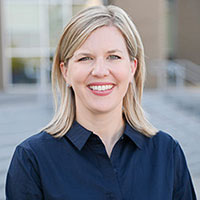
 Crouch is an associate professor in the Department of Health Services Policy and Management at the University of South Carolina and serves as codirector of the Rural and Minority Health Research Center.
Elizabeth Crouch, PhD
Journal of Rural Mental Health
Background
Tell us a bit about your background: What is your area of research? What is your most recent journal-editing experience?
I have always been involved in policy-oriented research, through funding obtained from the Health Resources and Services Administration, the Centers for Disease Control and Prevention, and other agencies and foundations. This work has culminated in my current role as the codirector of the Rural and Minority Health Research Center, one of nine federally funded rural health research centers in the country. The focus of this center’s research is health care utilization and health disparities across the lifespan among rural populations, particularly among people of color and members of the lesbian, gay, bisexual, transgender, queer, and other gender and sexual identities (LGBTQ+) community.
I currently serve on the editorial board of the Journal of Rural Health. I also serve as chair of the Rural Health Congress for the National Rural Health Association. Through these experiences, I have had to rapidly assess the scientific merit of various types of publications, including manuscripts and policy briefs. These roles have given me the opportunity to learn more about the publication process.
Priorities
Briefly, what are your main priorities? For example, how will you grow readership, what type of scholarship would you like to see in the journal, and what kind of content are you hoping to attract?
To enhance the dissemination and impact of the Journal of Rural Mental Health (JRMH), I will work with APA and the National Association for Rural Mental Health (NARMH) to broaden the journal’s outreach and communication methods. This may include implementing an enhanced social media strategy and expansion to other platforms, issuing press releases to announce off-press issues and promote key articles, and encouraging authors to disseminate articles through their organizational channels. I will also work with APA and NARMH to make sure the journal has a presence at various association meetings and conferences.
Relevance
Why is this journal important for the field? What is its relevance to society/public health? What are the hot issues in your area right now?
JRMH has traditionally focused on rural mental health issues nationally and, to a degree, internationally; opportunities exist for further expansion in the international area. Approximately 18% of the U.S. population is rural, which is nearly one in five residents. Rural area populations are diverse and growing more so in the United States; for example, Hispanic populations are increasing in rural areas. In this context and with its consistent attention to underserved populations, JRMH has played a significant role in advancing the field of rural mental health.
JRMH has a tremendous platform that has been and will continue to be used to describe and contextualize how the prevalences of various mental health conditions and treatment access may vary across levels of rurality. JRMH also serves as a scientific platform where methods of designing and implementing tailored interventions to rural communities are discussed. The dissemination of the work published in JRMH can be of tremendous importance to stakeholders who work in and care about rural communities.
Plans
Do you have plans for a special issue or changes to the editorial process? Have you introduced or are you planning to introduce any changes?
More research findings remain to be disseminated, with contributors coming from interdisciplinary fields, including social work, psychology, pharmacology, public health, and nursing, among others. Particularly, the journal could prioritize articles about mental health among potentially underserved or vulnerable rural populations, including but not limited to tribal communities, immigrants, people of color, and LGBTQ+ individuals. Other priority topics potentially include substance use; the growth of polysubstance use among rural populations compared with their urban counterparts; and access to mental health treatment, including telehealth services. Particular ways to expand the journal’s reach would be to publish quick-turnaround short briefs that could disseminate information about gains and challenges in rural mental health, particularly work examining the increasing demands of funders for rural health practitioners to use technology to reach patients.
EDI
APA Journals is taking the lead on equity, diversity, and inclusion (EDI) in its practices and systems. How will you promote EDI as editor of the journal?
A diverse editorial board—with diversity defined as a balance of experiences, genders, races, ethnicities, methodological expertise, and backgrounds—is needed to provide interdisciplinary views for the journal’s selection of articles and content. A diverse and inclusive editorial board will also help to attract content with the potential to advance diversity, intersectionality, and social justice for rural mental health. Generally speaking, diverse perspectives assist editors in making publication choices that drive their journals toward more diversity of thought and inclusivity of topic areas. JRMH’s editorial board could encourage contributors with expertise in EDI areas and who are members of these communities to submit. I have expertise in cultivating diversity of talent and thought from my work as director of a rural health research center and would hope to translate that experience to this role as well.
Date created: January 2025