skip to main content

This page has been archived and is no longer being updated regularly.

Editor Spotlight

Spirituality in Clinical Practice
photo of red pencil standing out among black pencils

Thomas Plante, PhD, ABPP

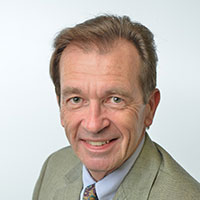
Photo of Thomas Plante, PhD, ABPP Thomas Plante, PhD, ABPP, is the Augustin Cardinal Bea, SJ University Professor of Psychology and, by courtesy, Religious Studies at Santa Clara University, and an adjunct clinical professor of psychiatry and behavioral sciences at Stanford University School of Medicine.

Background

Tell us a bit about your background: What is your area of research? What is your most recent journal-editing experience?

I'm an endowed professor of psychology, and by courtesy, religious studies at Santa Clara University in Northern California and am an adjunct clinical professor of psychiatry and behavioral sciences at Stanford University School of Medicine. I also have a small private practice as a licensed psychologist in Menlo Park, California.

My primary area of research concerns spirituality integration in psychotherapy, psychological testing, and consultation mostly within Roman Catholic, Episcopalian, and Orthodox traditions.

I was previously an associate editor for APA's Psychology of Religion and Spirituality.

Priorities

Briefly, what are your main priorities? For example, how will you grow readership, what type of scholarship would you like to see in the journal, and what kind of content are you hoping to attract?

As the new incoming editor with a terrific associate editor team of four (Drs. Isacco, Kristeller, Shafranske, and York Al-Karam), we hope to build upon the many successes of the talented founding editors, Drs. Miller and Sperry, and hopefully usher the journal to the next level of success.

What do we have in mind? We are hoping for more high quality and diversity minded articles from a wide range of spiritual and religious traditions. We hope to do all that is possible to market the journal to potential authors, readers, and colleagues in a variety of settings such as universities, clinical practices, hospitals and clinics, divinity schools and seminaries, and so forth.

We hope to assess what readers find most helpful and target our efforts in those directions if possible.

Journal Importance

Why is this journal important for the field? What is its relevance to society/public health? What are the hot issues in your area right now?

Most people consider themselves religious, spiritual, or both. Most people, when they experience the various stressful challenges of life, turn to their faith or spiritual tradition as a source of comfort, solace, inspiration, and direction.

Mental health professionals, as a rule, don't have much, if any, training or experience working with these concerns, and research tells us that most clients and patients want to be treated holistically taking these concerns into consideration. So, the journal is really the go-to place for this kind of scholarship and reflection.

There are so many hot topics now. Diversity is always important and a hot topic. Clerical abuse and victimization, mindfulness and other contemplative practices, and yoga are in the popular imagination now too. More evidence-based best practices for therapy, assessment, and consultation with diverse spiritual and religious groups and populations is likely to be an important trend for a long time to come.


Challenges

What challenges, if any, lie ahead for the field?

People often have strong opinions and views when it comes to anything that has to do with spirituality and religion and are not always open to evidence-based scholarship and best practices.

Sadly, many mental health professionals experience bias that western religious traditions and practices are bad while eastern ones are good. Too often professionals do not seriously consider religion and spirituality as cultural diversity as our ethics codes instructs us to do.

Secularized versions of spiritual practices such as mindfulness and yoga are popular, but faith tradition-based approaches are often ignored. We have much work to do to be sure that spirituality and religion is treated with respect and an ethical mindedness regarding diversity and to use science-based evidence and clinical best practices to move the field along.

Plans

Do you have plans for a special issue or changes to the editorial process? Are you making any changes?

Oh yes. Once the new associate and consulting editors and I all get comfortable with our new roles, we are enthusiastically interested in developing some special issues on important hot topics in the field. We have already started discussing these ideas and hope to line things up soon.

In terms of editorial processes, our mantra is "quick and nice." We want to be deeply respectful and compassionate with contributing authors trying our very best to get through the review process in an efficient, timely, and gracious way and be really nice about it too. We want to be known as a team that treats everyone with great respect, compassion, and care.

Finally, it takes a village or small city to sustain a successful professional journal. We greatly appreciate the role of the editors and reviewers, the authors, readers, and the terrific APA publishing office staff to make Spirituality in Clinical Practice an outstanding quality go-to journal for this important area of interest.

Date created: 2019
The content I just read:

About Editor Spotlight

Editor Spotlight features interviews with the newly-appointed editors of APA Journals.

APA Journals

APA Journals produces an array of scholarly journals that cover the spectrum of modern psychology and feature the latest research in the field.

About the Journal

Cover of Spirituality in Clinical Practice (small)

Spirituality in Clinical Practice is a practice-oriented journal that encompasses spiritually-oriented psychotherapy and spirituality-sensitive cultural approaches to treatment and wellness.