skip to main content

This page has been archived and is no longer being updated regularly.

Editor Spotlight

Psychology of Sexual Orientation and Gender Diversity
photo of red pencil standing out among black pencils

M. Paz Galupo, PhD

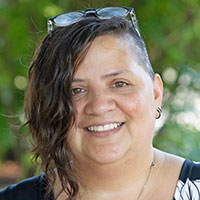
Photo of M. Paz Galupo, PhD To increase rigor in Psychology of Sexual Orientation and Gender Diversity, editor M. Paz Galupo, PhD (She/They) aims to increase engagement of underrepresented groups, promoting a community of diverse perspectives.

For more information on Galupo, visit their web page.opens in new window

Background

Tell us a bit about your background: What is your area of research?

I am a professor of psychology and director of the Sexual and Gender Diversity Lab at Towson University in Baltimore MD.

My research interests focus on the intersection of sexual orientation and gender identity, with a particular focus on understanding non-binary expressions of bisexual/plurisexual and transgender experience.

My recent work has focused on lesbian, gay, bisexual, transgender, and queer (LGBTQ) microaggressions and microaffirmations experienced in the context of social and romantic relationships and within a therapeutic context.

I have recently launched a research program focused on (re)conceptualizing gender dysphoria by centering the investigation on the lived experiences of trans and non-binary folks.

I am also co-PI on a NIMHD grant to create simulated conversation training modules for therapists in order to improve care for transgender and gender diverse individuals. Basically, it will allow clinicians to develop skills in a simulation before they can do harm to actual trans clients.

Editing Experience

What is your most recent journal-editing experience?

My editing experiences include Journal of Bisexuality (Editor), Journal of GLBT Family Studies (Editor), and International Journal of Transgenderism (Associate Editor). These journals are narrower in topic, but interdisciplinary in scope.

I am particularly excited about leading the Psychology of Sexual Orientation and Gender Diversity editorial team given its disciplinary (psychology) focus and its dual coverage of sexual orientation and gender diversity.

Ultimately, I see this opportunity as the most meaningful way for me to contribute to Division 44 and APA.

Editorial Philosophy

What is your editorial philosophy?

I have come to understand that an academic journal is, at its best, a powerful form of community building. Psychology of Sexual Orientation and Gender Diversity as a journal is a reflection of the community of scholars who contribute to, and are consumers of, the published scholarship.

Developing relationships with authors and reviewers is critical for building a community around a journal. Some of my most rewarding experiences as a journal editor have been the ones that help scholars feel nurtured in the peer-review process and feel more excited about their own research ideas or skills.

I have seen that even a small encouragement to an early career researcher can make a difference in their confidence after a rejection decision and can be the push they need to submit again in the future. Providing guidance and feedback to a first-time reviewer helps them develop their peer-reviewing skills, and also translates back to their own research and writing.

Encouraging scholars to propose special issues and mentoring them through their first editorial experience helps them to own their development as scholars. Calling on a senior researcher for their expert opinion connects them to the journal and factors into their willingness to serve as a reviewer in the future or see the journal as a publishing outlet for their own work.

These examples illustrate the reciprocal relationship afforded from within a journal community; where individual scholars develop and refine their ideas through the peer-review process and where the various stakeholders (e.g. authors, reviewers, editorial board members), in turn, help to shape the field. My editorial approach keeps this community building aspect of a journal at the forefront.


Priorities

What are your main priorities?

A main priority for the journal is engaging underrepresented groups.

Representation and community building is even more important when engaging the least represented members of our scholarly communities. Representation for people of color, bisexual and transgender individuals, and other marginalized groups within our communities is important to consider at every level of journal administration.

Having members on the board who represent our diverse communities communicates to others the type of scholarship the journal values and strives to publish.

Engaging varying perspectives ultimately increases our rigor and ensures that we maintain a critical edge in the scholarship that we publish.

Date created: 2019
The content I just read:

About Editor Spotlight

Editor Spotlight features interviews with the newly-appointed editors of APA Journals.

APA Journals

APA Journals produces an array of scholarly journals that cover the spectrum of modern psychology and feature the latest research in the field.

About the Journal

Cover of Psychology of Sexual Orientation and Gender Diversity (small)

Psychology of Sexual Orientation and Gender Diversity aims to advance the psychological knowledge of lesbian, gay, bisexual, and transgender individuals and their families, couples and marriage, health and health care, aging, work, and careers.