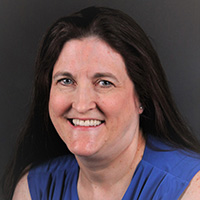
 Brakke recently retired from her position as a professor emerita in the Department of Psychology at Spelman College.
Karen Brakke, PhD
Scholarship of Teaching and Learning in Psychology
Background
Tell us a bit about your background. What is your area of research? What is your most recent journal editing experience?
I am a developmental psychologist by training, so I like to investigate the processes of change. In addition to my work relevant to teaching and learning, most of my research has been in infant cognitive and motor development, and I have also coauthored a few papers on narrative identity in emerging adults. My editorial experience is varied, although this is my first time serving as a journal editor. Over the years I have edited the newsletter for a large professional organization, served on the editorial boards for both Scholarship of Teaching and Learning in Psychology and Teaching of Psychology, coedited two e-books for the Society for Teaching of Psychology (STP), and served as an associate editor for STP’s annual Teaching Tips conference presentation compendium.
Priorities
Briefly, what are your main priorities? For example, how will you grow readership, what type of scholarship would you like to see in the journal, and what kind of content are you hoping to attract?
In addition to continuing to disseminate innovative and evidence-based scholarship in psychology teaching and learning, I would like to broaden representation among different types of institutions, authors, reviewers, and readers of this journal through direct outreach and targeted calls for submissions. In addition, I would like to see as many instructors as possible participate in the ongoing conversation about how we go about teaching and learning, as well as how we might make both more effective in light of emerging contexts and pedagogies.
Journal importance
Why does this journal matter to the field? What is its significance for society and public health?
This journal helps advance innovative and evidence-based practices through dissemination of our peers’ psychology teaching- and learning-related scholarship. It is important to support excellent teaching and deep learning as widely as possible, especially as the volatility of the past few years has shown us that higher education—and teaching more specifically—must be nimble and adapt to changing societal concerns and technologies. We are currently in a period of disruption with the increasing prevalence and capabilities of generative artificial intelligence, as well as, in the United States, challenges to funding and public support of higher education. There is also a rapidly growing need for a mental health workforce that will require a strong, broad-based educational foundation. I hope that, by disseminating scholarship, this journal can help continue to build that foundation in teaching and learning.
Advice
What advice would you offer new authors hoping to publish in the journal? What are you looking for in a manuscript?
First, I hope that my colleagues who are teaching psychology realize that what they do in the classroom can translate into scholarship and that they can help shape the course of psychology education through sharing their practices and perspectives. Because the scholarship of teaching and learning has grown into a mature field with rigorous standards for empirical reports, research articles will be reviewed accordingly. Second, the journal provides space for other formats of scholarly inquiry and discussion about psychology teaching and learning that don’t require data but are thoroughly peer reviewed. Authors should familiarize themselves with the journal’s focus and different formats presented on its website and contact me with questions about the best fit for their work.
Plans
Do you have plans for a special issue or changes to the editorial process? Have you introduced or are you planning to introduce any changes?
The journal’s scope and article formats have been working well, so no major changes are planned. However, we will continue to assess the journal’s success to make sure it serves its audience well. The editorial team has discussed several special issue topics, including teaching at institutions that are less-represented in the literature, such as community colleges, minority-serving institutions, or international institutions. We also hope to have a forthcoming special issue connected to the new APA Code of Ethics. I imagine there will be emerging topics that we cannot yet anticipate as well. If someone has an idea for a special issue theme, I encourage them to contact me to discuss it.
Date created: May 2026