Luo Lu, PhD
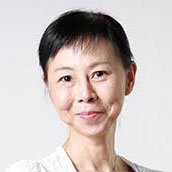 Luo Lu, PhD is a distinguished professor in the Department of Business Administration at the National Taiwan University.



Luo Lu, PhD is a distinguished professor in the Department of Business Administration at the National Taiwan University.
Tell us a bit about your background: What is your area of research? What is your most recent journal-editing experience?
Since receiving my PhD in psychology from the University of Oxford, I have been continuously working on stress and coping, particularly work stress. My research interests include subjective well-being, the self, values, motivations, and positive aging. I am currently the editor-in-chief of Research in Applied Psychology (Taiwan) and senior associate editor of the Journal of Organizational Effectiveness: People and Performance. I have also served as associate editor of the Asian Journal of Social Psychology.
Briefly, what are your main priorities? For example, how will you grow readership, what type of scholarship would you like to see in the journal, and what kind of content are you hoping to attract?
International Journal of Stress Management (IJSM) has been publishing high-quality, original, high-impact research for academia and practitioners. My priority as editor is to ensure that IJSM continues to be a bridge journal for applying rigorous academic research to combat stress and promote well-being for all walks of life, all over the world.
As part of the APA family, I will work to improve the journal’s visibility and impact by publishing position papers that advance theory, empirical studies that address real-life problems, and pioneering work that transcends cultural boundaries.
I believe that IJSM should enhance its focus on international and cross-cultural perspectives as well as foster an interdisciplinary approach to the identification and management of stress. Scholarly work that leads to a comprehensive understanding of factors that shape the human experiences of stress and well-being is most welcome. Equally important is the rigorous work of translating scientific knowledge into effective interventions at all levels to promote well-being and social equality.
On the international front, I would encourage situating the research in context by including national (institutional), organizational, team, and familial characteristics, to elucidate differential opportunities and constraints for individuals to manage stress. It is also valuable to obtain data from different cultures, particularly underrepresented populations, to establish the generalizability of findings and hence contribute to the development of stress management into a true human science.
Why is this journal important for the field? What is its relevance to society/public health? What are the hot issues in your area right now?
I would like to see the journal make a truly high-impact contribution by publishing high-quality research and disseminating knowledge with the speed and efficiency befitting our accelerated world.
One way of achieving this aim is by addressing challenges through interdisciplinary collaboration, as such challenges are often multifaceted. For example, I would like to see research alliances between organizational researchers, social psychologists, IT researchers, and physiologists to study psychophysiological responses to stressors related to information communication technology and adjustment in a hyper-connected world.
As rapidly evolving mobile technology invades employees’ private life and creates the expectation of 24/7 connectivity, the worldwide “always-on” culture presents a formidable challenge to our well-being, as well as an excellent study field for cross-disciplinary collaboration.
What challenges, if any, lie ahead for the field?
When the majority of the world’s population went under a lockdown of unprecedented scale and speed, the business world was forced to adopt new technology in weeks, if not days. This global field experiment calls for a concerted effort to explore the depth of human resilience during crisis, the pros and cons of technology-aided transitions, the evolving trajectory of coping, and a protean array of short- and long-term consequences on every aspect of life.
Building the research base and intervention repertoire for such real-life challenges will arm people of all walks of life with tested knowledge and skills to cope with the intensification of living in contemporary society.
Do you have plans for a special issue or changes to the editorial process? Are you making any changes?
I believe that the journal should strive to disseminate knowledge of stress management research and practices more quickly and efficiently. I will aim for an even faster turn-around of submissions through two strategies.
First, in light of the upsurge of submissions, desk rejection is necessary to maintain the efficiency of the review process. The initial screening is designed to swiftly turn around those submissions that are unlikely to survive the review process, freeing those authors to try more suitable outlets. The associate editors are experts in their respective specialties, and I have full confidence in their professional judgment.
Second, in addition to original papers, I will also encourage brief reports to facilitate more timely sharing of research and practices in stress management. These are similar to original papers and subject to the same review standards, but with a more limited scope. For example, brief reports may replicate or extend known phenomena in new, especially underrepresented, cultural contexts.
A journal is as good as the team that runs it and the authors that contribute to it. I very much hope that IJSM will maintain and improve its high standards and reputation for rigorous research and global relevancy under my watch.
Editor Spotlight features interviews with the newly-appointed editors of APA Journals.
APA Journals produces an array of scholarly journals that cover the spectrum of modern psychology and feature the latest research in the field.
International Journal of Stress Management focuses on the assessment, management and treatment of stress and trauma, whether emotional, cognitive, behavioral or physiological.