Note: Since the time this article was written, the word counts for research reports and short reports have changed to 5,000 words and 2,500 words, respectively. For more information on reports, check the journal’s submission guidelines.
Brad J. Bushman, PhD
Psychology of Violence
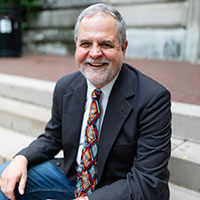 Bushman is a professor of communication at The Ohio State University.
Background
Tell us a bit about your background: What is your area of research? What is your most recent journal-editing experience?
As an undergraduate student, I took a course on aggression research and was fascinated. I asked the professor who taught the course, Hal Bertilson, which professions conducted aggression research. He told me that social psychologists do a lot of work in this area. So, I decided to go into social psychology.
I was especially interested in studies of violent media. Many studies I read were conducted by Russell Geen at the University of Missouri. I was able to attend the University of Missouri to get my PhD under Geen’s mentorship. Ever since, I have been conducting research on aggression and violence, with a continuing focus on violent media.
As far as journal-editing experience, I have been an associate editor for five journals and a consulting editor for 18 journals.
Priorities
Briefly, what are your main priorities? For example, how will you grow readership, what type of scholarship would you like to see in the journal, and what kind of content are you hoping to attract?
One main priority for me is to have a diverse board, because diversity is inherently valuable. Moreover, violence is a worldwide problem. For violence research to be helpful, it should be representative of and sensitive to cultures and people from all over the planet. To that end, my Psychology of Violence board includes scholars from 31 different countries. Over two thirds (68%) of the board members are from countries other than the United States. In addition, the board has good representation in terms of gender—over 54% are women.
In terms of the type of scholarship, I would like to see theory-based research published in the journal. I believe the causes of violence cannot be understood without theoretically grounded research. Even applied research should be grounded in theory to be high impact. I strongly encourage authors to frame their empirical research in clear theoretical terms. As Kurt Lewin said, “There is nothing so practical as a good theory.”
Journal importance
Why is this journal important for the field? What is its relevance to society/public health? What are the hot issues in your area right now?
Psychology of Violence is the only American Psychological Association (APA) journal devoted specifically to the important social problem of violence. The stakes in violence research are high, because the outcomes of violence can be devastating.
The present and recent past have been turbulent, marked by frequent acts of individual and mass violence. For example, one key issue in the field right now is violent extremism. Research is the best tool psychologists have to identify the underlying factors that precipitate events resulting in harm and even fatalities.
Plans
Do you have plans for a special issue or changes to the editorial process?
I intend to follow the lead of the previous editor, Antonia Abbey, and continue to have special issues of Psychology of Violence that deeply focus on a single topic with a guest editor who is an expert on that topic. I would like to have one special issue for each of the 5 years I am the editor listed on the masthead (2025–29).
The topic for 2025’s special issue is the link between global warming and violence. Global warming is perhaps the most pressing issue facing our planet. When people think of the consequences of global warming, they mainly think about the impact of rising temperatures on agricultural crops, flooding, droughts, forest fires, hurricanes, and other natural disasters.
Naturally, these are vital considerations. However, the effects of global warming extend to other contexts. True to the focus of this journal, the special issue will examine how global warming can increase aggression and violence levels. The guest editor for this special issue is Craig Andersonopens in new window, who has already done much work exploring the relationship between global warming and violence.
Changes
Have you introduced or are you planning to introduce any changes?
I plan to introduce three major changes to the journal.
First, I will implement open science badges as incentives for researchers to share their data, share their materials, and preregister their studies.
Second, to increase the impact and the number of articles published in Psychology of Violence, I will add two new categories of articles: research reports (2,500 words) and short reports (1,000 words). To ensure that these shorter articles maintain the highest scientific standards, all details that would typically be present in longer articles will be shared through supplemental materials.
Third, to further advance my goal of “giving away” science to others, Psychology of Violence will add a public significance statement (of one to three sentences) to all articles, like other APA journals do (e.g., Psychological Bulletin). This can help people understand the importance of the research published in the journal.
My hope is that in combination, these changes will improve the accessibility of important findings for anyone who is interested. I want to do all I can to disseminate Psychology of Violence content widely without sacrificing quality or context.
Date created: March 2024