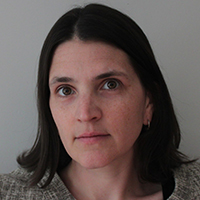
 Brown-Schmidt is currently a professor of psychology and human development at Vanderbilt University.
Sarah Brown-Schmidt, PhD
Journal of Experimental Psychology: General
Background
Tell us a bit about your background: What is your area of research? What is your most recent journal-editing experience?
I am a professor of psychology and human development at Vanderbilt University. My area of research is language processing and memory. In particular, I am interested in the study of interactive conversation. Much of my recent research examines representations of information in conversation, memory for conversation, and the impact of traumatic brain injury and Alzheimer’s disease on communication. This work has potential broader implications for management of communication and memory impairment, policy and law, and conflict resolution. I started as incoming editor at the Journal of Experimental Psychology: General (JEP: General) in January 2022. Prior to that, I was an associate editor and senior editor at Cognition.
Priorities
Briefly, what are your main priorities? For example, how will you grow readership, what type of scholarship would you like to see in the journal, and what kind of content are you hoping to attract?
My aim for JEP: General is to enhance diversity at the journal in multiple ways, such as by supporting policies that emphasize open science and empirical rigor through a diversity lens. The research community has a responsibility to ensure that the fruits of collective scientific pursuits are shared equally with all members of society. Achieving diversity goals involves recognizing that historical, institutional, and social factors have resulted in the systematic underrepresentation of certain groups in positions of power and influence, including in experimental psychology. Institutionalized racism and sexism also affect who and what psychologists study. Using a multifaceted approach, I aim to increase diversity in JEP: General’s authorship, readership, and published research so that the journal is relevant to a broad range of persons and communities. This will increase breadth of impact and increase the external validity of the published findings. Among other efforts to achieve this, I am instituting open “office hours” with the editor (stay tuned for details), paid editorial fellow positions (see below), and special issues spearheaded by the journal’s talented team of associate editors (announcements forthcoming).
Journal importance
Why is this journal important for the field? What is its relevance to society/public health? What are the hot issues in your area right now?
An edited journal such as JEP: General can play a critical role not only in disseminating science but also in leveling the playing field in a way that allows equal access to the knowledge dissemination process, independent of the position, popularity, or social media savvy of the content creator. The journal publishes rigorous and impactful work in the field of experimental psychology that is likely to be of broad interest to its diverse readership. Important questions that are and should be addressed by the journal include, Where does knowledge come from and how is it learned and represented? How do people form opinions about the world? How are different types and sources of information perceived, processed, and used in the service of behavior? How can we as scientists better understand the diversity of human experience and the effect that different lived experiences may have on psychological processes and mechanisms? Who are our participants, what samples are we studying, and what populations can and can’t our research generalize to? Who is included and who is excluded from participation in experimental psychology research? What questions are we not asking but should be?
Challenges
What challenges, if any, lie ahead for the field?
As experimental psychologists, we are privileged to have the opportunity to make new scientific discoveries and theoretical advances in a wide range of disciplines concerning mental and behavioral processes that have the potential to inform both our science and society at large. The diverse scientists who form our community are advancing the understanding of topical and relevant issues faced by people around the world. Scientific discoveries in our field can offer key insights into these issues. Challenges include communicating these discoveries to both the scientific community and the broader public; embracing a more inclusive science that examines a wider and more representative variety of people, experiences, and phenomena than in the past; and improving the transparency of science and scientific discovery so that discoveries are openly available to the public. Addressing these and other challenges is a core part of what we can do as scientists to make our work relevant and impactful.
Plans
Do you have plans for a special issue or changes to the editorial process? Have you introduced or are you planning to introduce any changes?
I am excited about two efforts along these lines. First, the pursuit of knowledge is a fundamental human activity, and the fruits of this labor should be shared with society at large. To this end, JEP: General will be adopting an open data policy that requires authors to share their raw, de-identified data and code in a public repository. It is essential to add that, when viewing open science from a diversity lens, data sharing and/or de-identification is not always ethically or legally possible; in such cases, we will make exceptions to this policy. Second, I am excited to announce that we are going to be recruiting six editorial fellows. These paid fellowship positions are designed for early career psychologists from historically excluded groups. I look forward to working with JEP: General’s current associate editors to mentor this group of fellows. This program is a great way to share community knowledge about the editorial process with early career researchers and to include their perspectives in the science we all have the pleasure and privilege to learn more about. More information and application instructions can be found online.
Date created: September 2022