

 There is growing consensus that both head and heart knowledge of God (i.e., “God concepts” or doctrinal beliefs about God’s love vs. “God images” or experiential knowledge of God’s love) influence theistic believers’ recovery from mental health and substance use disorders (SUDs). Theistic believers derive peace and comfort from their beliefs and experiences of a personal deity who is compassionate and experienced as near and forgiving. Indeed, 12-step programs and other spiritually oriented models of substance abuse recovery often emphasize the importance of experiencing divine love on a daily basis as a source of strength, acceptance, and wisdom. However, persons in early recovery from SUDs may also struggle in relationship with God in ways that increase their risk for relapse, mental health difficulties, or even suicide.
“Divine struggle” (defined as negative emotions focused on one’s beliefs about or relationship with God) has been associated with suicidality in other high-risk groups, such as military veterans. However, its role in risk for suicide among persons recovering from SUDs is unclear. Given the increasing pluralism of religious beliefs in the United States, divine struggle may affect emotional and spiritual health differently, depending on one’s God concepts or head knowledge about God. For example, when someone in recovery views God as caring and loving, conflicting thoughts or feelings might invalidate sacred beliefs that provide a foundation for faith. In contrast, when God is viewed as distant and cruel, experiences of divine struggle might not violate one’s spiritual meaning system in such a distressing manner.
In a study published in Psychology of Religion and Spiritualityopens in new window, Currier et al. investigated these possibilities with 144 men who were in their first 6 months of recovery after serious problems with alcohol (75%) and/or other substances (e.g., cocaine = 57%, opioids = 32%). Fifteen percent to 30% of the sample reported having a plan to die by suicide, attempting suicide in their lifetime, thinking about suicide more than once in the past 6 months, and/or telling someone they were going to attempt suicide with a desire to die. After accounting for recent suicidal ideation and mental health symptoms (depression, posttraumatic stress disorder), interactive links emerged between divine struggle and conceptions of God. Participants who viewed God in cruel or distant terms reported worse suicide risk in general, but divine struggle contributed more notably to perceived likelihood for attempting suicide to the extent to which their experiences were different from their conceptions of God’s traits or attributes. (See Figures 1–3.).
Overall, major findings highlight the potential interplay between God concepts and divine struggle among persons in early recovery from SUDs. Specifically, when compared to cases in which God is viewed in a critical and harsh manner, divine struggle might engender a greater sense of existential dislocation that could lead to a suicide attempt among theistic believers who believe that God is loving and attentive to human beings’ concerns (i.e., distress stemming from discrepancy between head and heart knowledge related to God). From a clinical standpoint, this study underscores the need to assess for head and heart knowledge related to God when screening for suicide risk among theistic believers in recovery from SUDs and consider spiritually integrated treatment options based on their doctrinal beliefs or conceptions of God.
Figures
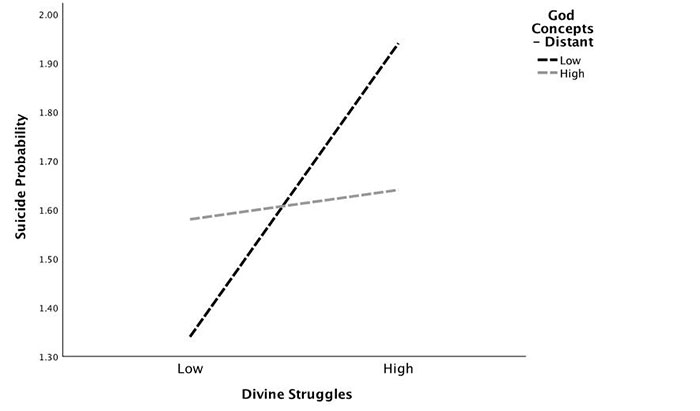
Figure 1. Association between divine struggles and suicide probability moderated by God Concepts—Distant. Suicide Probability = Suicidal Behaviors Questionnaire-Revised Item 4: “How likely is it that you will attempt suicide someday?” Low = 1 SD below mean; High = 1 SD above mean.
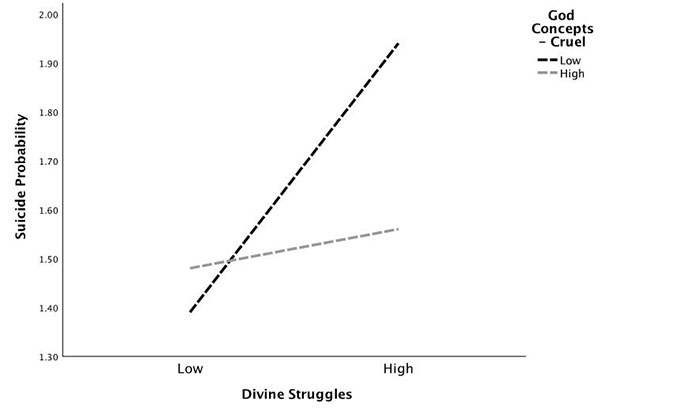
Figure 2. Association between divine struggles and suicide probability moderated by God Concepts—Cruel. Suicide Probability = Suicidal Behaviors Questionnaire-Revised -R Item 4: “How likely is it that you will attempt suicide someday?” Low = 1 SD below mean; High = 1 SD above mean.

Figure 3. Association between divine struggles and suicide probability moderated by God Concepts—Loving. Suicide Probability = Suicidal Behaviors Questionnaire-Revised Item 4 “How likely is it that you will attempt suicide someday?” Low = 1 SD below mean; High = 1 SD above mean.
Note: This article is in the Social Psychology and Social Processes topic area. View more articles in the Social Psychology and Social Processes topic area.