

 Previous research suggests that the retention of Indigenous languages may be a protective factor for the psychological and physical health of their speakers. Although this relationship can be vital for supporting the well-being of Indigenous communities, its precise nature continues to be elusive. In a recently published articleopens in new window in Cultural Diversity and Ethnic Minority Psychology, researchers Justyna Olko, Katarzyna Lubiewska, Joanna Maryniak, Gregory Haimovich, Eduardo de la Cruz, Beatriz Cuahutle Bautista, Elwira Dexter-Sobkowiak, and Humberto Iglesias Tepec examined the mediating effect of positive emotions experienced when using Indigenous language on the relationship between Indigenous language use and speakers’ well-being among four Nahua ethnic groups in Mexico that represent complex cultural traditions harkening back to pre-Hispanic Mesoamerica.
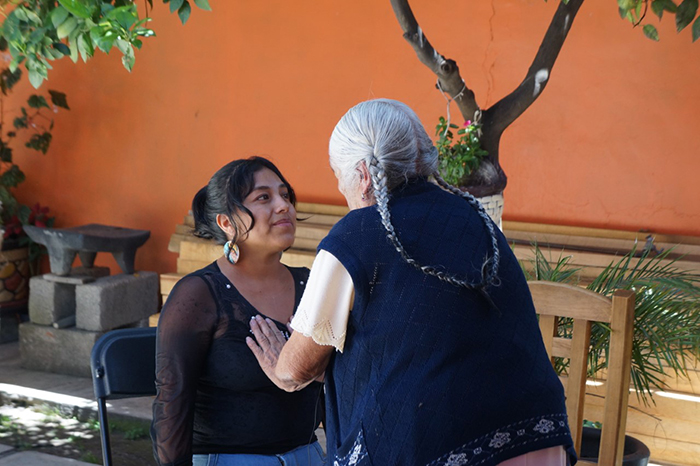
The researchers’ approach to exploring this relationship is innovative in several ways. Most significantly, it is not based on the retention or knowledge of language but rather on its actual everyday practice and the positive emotions associated with communication in the language. They used an emic well-being scale developed during qualitative fieldwork in these Nahuatl language–speaking communities, recognizing the Indigenous population’s holistic, relational, and collective view of health, happiness, and a good life. Indigenous conceptualizations of well-being are strongly grounded in family and community-based relationships that provide social support. In addition, the researchers decided to focus on the use of Nahuatl in the family domain because such use is crucial for intergenerational transmission of the language and for preserving traditional socialization spaces and community-level interactions. The researchers also took into account the role of positive emotions related to speaking the heritage language as a mediator of the influence of the language use on community-based well-being.
Nahua communities in Mexico participating in the Language as a Cure project. Map by Joanna Maryniak.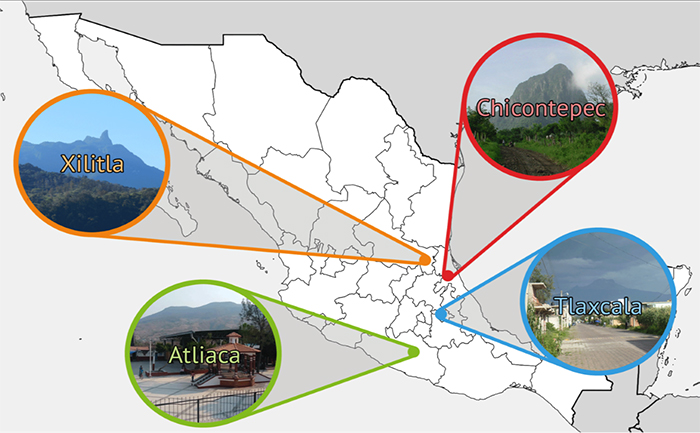
Analyses revealed that the relation between the frequency of Nahuatl use at home and community-based well-being in the total sample was partially mediated by positive emotions experienced when speaking Nahuatl. Furthermore, the relation between Nahuatl use and well-being was also found to be moderated by group membership. Thus, the positive emotions from heritage language use turned out to be a significant mediator in the community of Atliaca in Guerrero, where Nahuatl is still spoken by the majority of community members. The direct relationship between speaking and well-being was significant for communities in the remaining three regions studied, but the effect was strongest for people in the region of Contla in Tlaxcala, who experienced the biggest loss of their heritage language while shifting to Spanish.
Zohuameh Citlalimeh, a female song and dance group from San Francisco Tetlanohcan, Tlaxcala, 2017. Photo by Justyna Olko.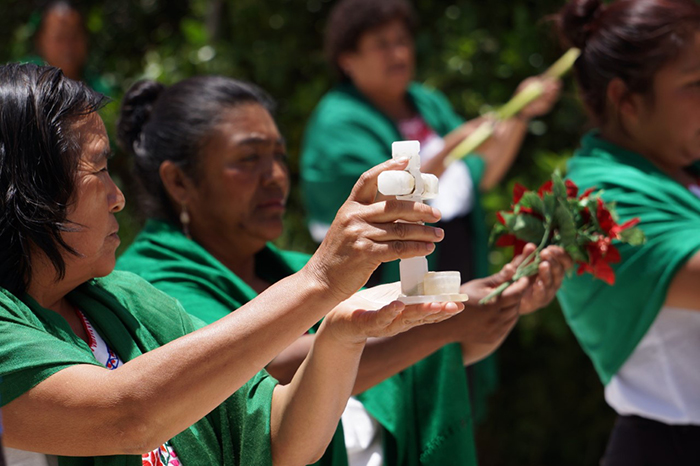
Indigenous communities today face strong assimilation pressures, and their languages are falling out of use. Olko et al.’s study, however, contributes to the solution for this pressing societal problem by showing that the use of heritage languages positively relates to their speakers’ well-being. Notably, this effect is significant in communities strongly affected by language loss and assimilation. The mechanism the researchers propose is based on actual language use as a factor in reinforcing bonds between an individual and their community, a relationship experienced through and strengthened by positive emotions linked to communicating in the ancestral language, which leads to increased levels of well-being. This knowledge should inform more appropriate and efficient strategies for language revitalization, social and psychological support for Indigenous groups, and educational policies.
This article is in the Social Psychology and Social Processes topic area. View more articles in the Social Psychology and Social Processes topic area.