

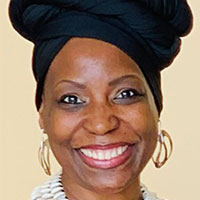
 Shinzira Shomade is a native of Washington, D.C., and a graduate of Bowie State University. She graduated summa cum laude with a Bachelor of Science degree in psychology in December 2016. A self-described nontraditional student, Shinzira resumed her education after a 14-year hiatus. She balanced motherhood of three young girls, work, research, and active leadership in student organizations, including Psi Chi International Honor Society, while sustaining high academic achievement. Her tenacity led to numerous awards, including the 2016 Undergraduate Presidential Leadership Award, and several academic scholarships. Shinzira credits her success to being surrounded by committed and selfless educators and administrators at Bowie State University. Shinzira is currently completing her internship for the Mental Health Counseling graduate program at Bowie State University and is giving back to her alma mater by supporting student success as the Retention Specialist for the College of Professional Studies.
Student Researcher of Color:
Shinzira Shomade
Research
Tell us about your research and accomplishments.
Research, research, research…once my Achille’s heel, is now music to my ears! I was fortunate to be involved in several hands-on research experiences at BSU which, unbeknownst to me, would propel me towards graduate studies and continued academic success. I have been on various research teams across disciplines that have explored factors that influence college students’ experiences, including the role of social media and advertising on self-image, risks and protective factors for student success among freshmen and the impact of substance use on retention and graduation rates. These experiences allowed me to present at local and national conferences, several of which, I am proud to say, received awards for individual and team presentations. Today, I am passionate about sharing the importance and impact of undergraduate research. Determined to reciprocate what I gained as an undergraduate, I have enjoyed serving as a Research and Teaching Assistant and supporting faculty-led Freshman Research Teams by proctoring assessments and designing and conducting surveys. Currently, as a graduate student, my research is focused on marijuana and alcohol use and abuse among HBCU students as a coping defense for COVID-19—related stress and anxiety.
Area of study
What inspired your interest in this area of study?
While previously serving as a Student Success Coach, I recognized that there were factors outside of academia that contributed to students’ overall motivation and achievement. Collaborating with faculty and tutors to create additional resources was essential to supporting students. However, it was imperative that we first identify which variables either supported or created barriers for academic persistence and achievement. Our initial study showed that—by students’ own report—marijuana use was positively correlated with stress and anxiety, and directly and indirectly impacted their academic performance. Given how much this global pandemic is impacting everyone’s stress levels, I am even more interested in exploring how college students are managing their mental health during COVID-19 and if their marijuana and alcohol use or abuse has increased during this time.
Field of psychology
How do you see your research moving the field of psychology?
Adjusting to masking, social distancing, and virtual learning throughout the pandemic has increased the levels of anxiety and stress for college students. Young adults are generally more likely to engage in risky behavior. However, even during a global pandemic, many college students are willing to break social distancing rules to use marijuana and alcohol with friends. Overconsumption and dependence on substances among young adults can adversely affect their academic, social and professional experiences. Close social and physical contact while sharing marijuana and alcohol also poses serious threats of community spread of COVID-19. If we do not intervene now, substance use and abuse among college students has the potential to become a public health crisis. I see my research as contributing to ways to avoid this outcome while helping students effectively manage COVID-19—related stress.
I also see my research as helping to shift the cultural perceptions about students of color and historically Black colleges and universities (HBCUs). Narrative and representation are critical, including in research. Our studies have intentionally examined student success experiences among HBCU students, which has not been the focus of most research involving African American college students. I feel strongly that African American scholars studying African American students enrolled at predominately African American institutions can shift and elevate societal perceptions of both students and scholars of color. As an alumna of—and current graduate student and Retention Specialist at—an HBCU, it is imperative to me to use empirical research to gain insight about critical and cultural factors that directly affect matriculation rates of students of color. Although there are numerous studies showing the adverse effects that alcohol and marijuana use have on academic persistence, very few have exclusively involved African American students or HBCUs. This research will help educators and administrators identify resources and develop effective strategies to support our deserving scholars.
Significance
What is something you wish you knew about the research process before you started?
Before I became intimately acquainted with research, it seemed intimidating and overwhelmed by statistics. What I fully understand now is that research is simply a response to our own curiosity. In fact, we are all researchers and engage in research activities daily, from surfing what’s trending on social media to trying different products to conceptualizing new ideas. Research is more approachable and engaging than students typically realize, and it has the potential to become quite addictive. Once you complete a study, it will spark more ideas and, like potato chips, you’ll want another and another and another.
Plans
What’s next for you?
I honestly don’t know what’s next. When I started this journey a few years ago, I was very clear about becoming a counselor in a university setting and applying to a doctorate program for Neuropsychology. I enrolled in the Mental Health Counseling Master’s degree program with the goal of investigating innovative methods for integrating healing and alternative coping strategies for stress, depression, and anxiety to improve clients’ quality of life. However, within the past year, my entire trajectory changed course. My approach to education, personal and professional opportunities, and mapping out my goals transitioned from being very fixed to fluid. As an undergraduate, I would create rigid plans of how and where I would be in life by a certain time and that type of planning never manifested in tangible results. I eventually learned to create a vision for myself, set specific goals, and move with intention. Most important, I learned to be present and flexible. “Be stubborn about your goals, and flexible about your methods” is the mantra that empowered me to be completely comfortable with not having a clear vision of what happens next. My experiences as an undergraduate and graduate student and, now, an intern working with clients with mental health challenges, has reminded me to value a vital part of the human psyche—learning to sit quietly in the mind and body, aligning our talents with our dreams and passions, and moving with trust in the journey. I look forward to seeing where the rest of the path leads me.
