Why is the Journal of Diversity in Higher Education important for the field?
Colleges and universities across the country are in the midst of great change. The increasing representation and visibility of communities of color, first-generation college students, members of the LGBTQ+ community, individuals with disabilities, international and immigrant students and faculty, undocumented students, and individuals embracing a wide range of faith traditions creates increased opportunities for learning, growth, and development.
At the same time, campuses have not been fully prepared to meet the needs of this diverse body and have been widely critiqued for perpetuating environments that marginalize and exclude vulnerable populations.
How can campuses create the diverse, inclusive environments that would allow all to thrive? Journal of Diversity in Higher Education (JDHE) is a critical scholarly voice that aims to answer this question, showcasing cutting-edge research on issues related to diversity, equity, and inclusive excellence in postsecondary contexts.
While there are a number of journals specific to higher education or the experiences of marginalized and minoritized populations in education or society, our work uniquely focuses on issues related to equity, inclusion, diversity, and justice in the context of colleges and universities.
Describe the journal’s target audience. What are your plans for growing readership from these groups?
The work we publish has implications for scholars, educators, administrators, policymakers, and practitioners with an interest in diversity, equity, and inclusion in higher education institutions. We want to speak to diverse audiences within and outside of the academy.
As part of this effort, we consistently revisit how well we are balancing timely research that addresses real issues and problems facing campus communities with specific data-informed recommendations and strategies that can be implemented on the individual, institutional, and societal levels.
Increasing our visibility is one of the core parts of my editorial vision, and I continue to think about new and innovative ideas that will broaden the journal’s reach. Our partnership with the National Association of Diversity Officers in Higher Education (NADOHE) has been wonderful in keeping us focused on practice and encouraging our efforts to disseminate our work beyond academic conferences and journals. All NADOHE members have a subscription, and we plan to host conversations with our authors to encourage more engagement with the journal. We frequently use the journal’s Twitter account to feature articles and call attention to our work.
Finally, we will be introducing a new form of submission to our journal: practice briefs. These are shorter articles that offer research- and theory-based recommendations and guidance. Their length and specificity make them an ideal resource for policymakers, practitioners, and institutional leaders, and we hope that this new section will increase our connection to those groups.
What do you look for in a manuscript?
When I review manuscripts I ask myself, “What did I learn from this work?” The work we publish must contribute something new, interesting, and important to our field. Our editorial team is committed to providing insight into understudied areas and the complex dynamics of the diversity, equity, and inclusion challenges campuses are facing. As I review, I am always asking myself how much a manuscript is helping us reach those goals in new ways that I haven’t necessarily heard before.
I am also very attentive to whether and how manuscripts can inform policy and practice in higher education. We want to publish rigorous and thoughtful research that has real implications for practice and offers clear guidance to policymakers, institutional leaders, administrators, and faculty. I am particularly interested in how a study aims to inform the work of diversity professionals.
Our partnership with the NADOHE informs much of our mission and vision as a journal. As I put an issue together, I often think about whether the collection of papers we’ve assembled is going to help them do their work.
Perhaps this is something that all journal editors are looking for, but the work we publish must be methodologically rigorous. We welcome all forms of qualitative, quantitative, and mixed methods research, and I am especially excited about methodological innovations. I learn so much from how authors describe their approaches to the research process.
In your inaugural editorial, you mention your commitment to “collective leadership.” Can you tell us a bit about how you’ve engaged in this approach as editor? What does this mean for the journal’s authors and readers?
I very much see myself as part of a team that is working together to produce JDHE. I work in close partnership with our four associate editors (Pat Garriott, Chrystal George Mwangi, Deryl Hatch-Tocaimaza, and Stephen Quaye), our APA Peer Review Coordinator (Charlie Retzlaff), our Associate Publisher (Steven Smith), and our Journal Production Manager (Anthony Ouellette). We speak freely about new ideas and issues that we’re managing, considering how to address them with a commitment to supporting each other in the decisions we make.
I also consider the members of the NADOHE board, particularly current president Paulette Granberry-Russell and past president Archie Earvin, as thought partners in the development of the journal, ensuring that we adhere to our mission and develop our efforts to expand our reach.
My commitment to collective leadership is particularly evident in the development of the practice brief initiative. I was inspired by Dr. Hatch-Tocaimaza’s work in this area, and we started meeting and engaging in conversations about what practice briefs could look like for JDHE. The editorial team, NADOHE leadership, and I worked together for about 6 months to determine whether this kind of manuscript would be a good fit for the journal and consistent with our mission before moving forward with the initiative. We’ll benefit from Dr. Hatch-Tocaimaza’s leadership and the work of an advisory panel composed of members of the JDHE Editorial Board, NADOHE Board, scholar experts, and myself, as we continue to develop our collective vision.
What advice do you have for prospective authors who want to make their research more equitable and inclusive?
I would remind authors that equity issues are everywhere. It is becoming clear to me that there is no divide between equity and everything else. No matter what we are talking about—budgets and finance, mentoring, hiring, classroom dynamics, facilities, COVID-19 responses—everything has an equity dimension. We need more contributions that address how equity intersects with university functions, policies, and programs that do not immediately appear to be connected to social justice.
I also recommend that authors think about intersectionality in their work. How do people’s multiple identities uniquely expose them to oppression or privilege? For example, as we study how sexism may influence the way women navigate campus, it is important to think about how being from a lower income background, identifying as a member of the LGBTQ+ community, or being a person of color may mean additional or unique experiences with hostility and marginalization.
Our identities do not neatly fit into buckets; figuring out how to account for and talk about the unique ways they come together informing our access to resources, experiences, and outcomes makes our research better and potentially more impactful.
What problems do you see as important for the field to address more broadly, such as replicability, publishing concerns, communicating science to the public, translating research findings to policy change?
Perhaps because of our close connections to NADOHE and emphasis on generating research with implications for practice, I think a lot about how we communicate research to multiple audiences and inform policy development and change. My interest and investment in research started with my own commitment to solving real problems and my belief in the ability of data to help us address the most persistent social issues.
I think that academic structures and systems are not necessarily set up in ways that encourage faculty and researchers to think beyond the academy when they consider their audience and purpose. Broadening the effect of our research requires scholars to think differently about what they say, how they say it, and how they put it out into the world.
JDHE is a traditional journal in many ways, but I hope that we can do a better job of taking the findings and implications of our work beyond the pages of our publications and out into the hands of those who need it most.
Become a JDHE Author



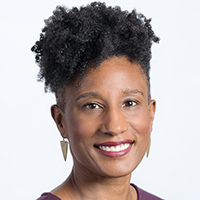 Kimberly Griffin, PhD, is an Associate Professor of Student Affairs at the University of Maryland and the editor-in-chief of the Journal of Diversity in Higher Education (JDHE). She is committed to publishing high-quality research with practical implications for policymakers, institutional leaders, administrators, and faculty.