

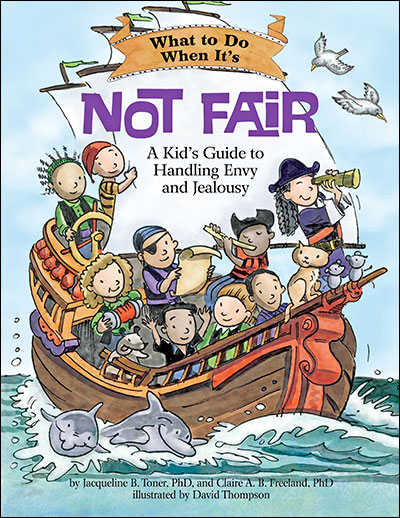
What to Do When It's Not Fair
Is life feeling unfair? This workbook helps kids turn envy into empowerment!
Sometimes it feels like everyone else has more—more toys, more fun, more everything. When those “it’s not fair!” feelings bubble up, it can be hard to know what to do. But kids don’t have to stay stuck in jealousy. They can learn to shift their focus and feel better about themselves—and this book shows them how.
What to Do When It’s Not Fair is a playful, practical guide that helps kids understand envy and jealousy, and gives them tools to manage those tricky emotions. With engaging activities, colorful illustrations, and expert strategies, this interactive workbook helps kids build self-awareness, gratitude, and confidence. Whether your child feels left out, frustrated, or just stuck in the “it’s not fair” mindset, this book offers a compassionate and creative path toward feeling better—and seeing the good in themselves and others.
Key features:
- empowers kids ages 6–12 to recognize and manage feelings of envy and jealousy
- uses proven cognitive-behavioral techniques to help kids reframe thoughts and build emotional resilience
- encourages self-esteem and gratitude through fun, hands-on exercises
- part of the trusted What-to-Do Guides for Kids series—used by parents, educators, and therapists for over 20 years
- includes a supportive guide for parents and caregivers to help kids navigate tough emotions
- award-winning resource—Gold Medal recipient of the Mom’s Choice Awards
- created by Magination Press, the children’s imprint of APA—trusted leaders in children’s mental health and well-being
Jacqueline B. Toner, PhD, and Claire A. B. Freeland, PhD, are clinical psychologists in Baltimore, Maryland, each with over thirty years of experience in private practice working with children and parents.
David Thompson lives in Baltimore, Maryland, with his wife and two daughters. A third-generation artist, he can't remember a time when he didn't draw.
- Gold Medal, 2013 Mom's Choice Awards
The black-and-white illustrations and spot-on text in the thought and speech bubbles combine to create an appealing volume. The author successfully incorporates examples that will ring true with the intended audience, making this book valuable for home and school use.
—School Library Journal