


Introduction
Work stress, economic uncertainty, and technological changes driven by AI are continuing to take a toll on American workers, according to APA’s 2026 Work in America™ survey. However, workers with higher levels of psychological capital (PsyCap)—a synergistic construct that includes hope, efficacy, resilience, and optimism—are experiencing these stressors and changes differently.
The 2026 Work in America survey revealed substantial differences among workers with different levels of PsyCap, spanning relationships, feelings of value and belonging, workplace strain, well-being, and confidence about the future.
PsyCap: A renewable resource
PsyCap combines four related psychological capacities: hope, efficacy, resilience, and optimism. It is associated with how people experience work, respond to workplace challenges, and perform. The 2026 Work in America survey measured PsyCap using a validated 5-item instrument and used the results to identify respondents with low, moderate, and high PsyCap scores.
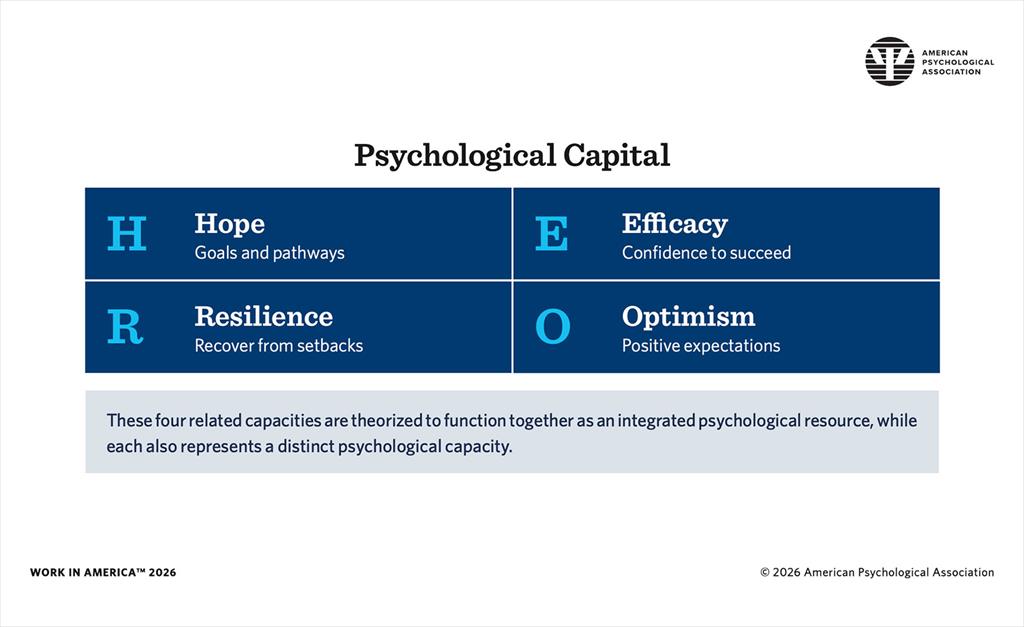
Importantly, PsyCap is not fixed. It can be developed through intervention and influenced by external circumstances—meaning that employers can invest in workers with low PsyCap to enhance performance across their entire workforce.
More 2026 Work in America
Work in 2026: Less healthy, more stressful
Nearly all workers (95%) reported that it is important to them to work for an organization that values their emotional and psychological well-being. Despite the importance workers place on psychologically healthy workplaces, fewer workers described their workplace as healthy in 2026 (80%) than in 2025 (85%), and fewer reported feeling valued at work (80% vs. 84%). In addition, significantly higher percentages of workers reported feeling tense or stressed during the workday and having their mental health negatively affected by their work environment in 2026 than in 2025.
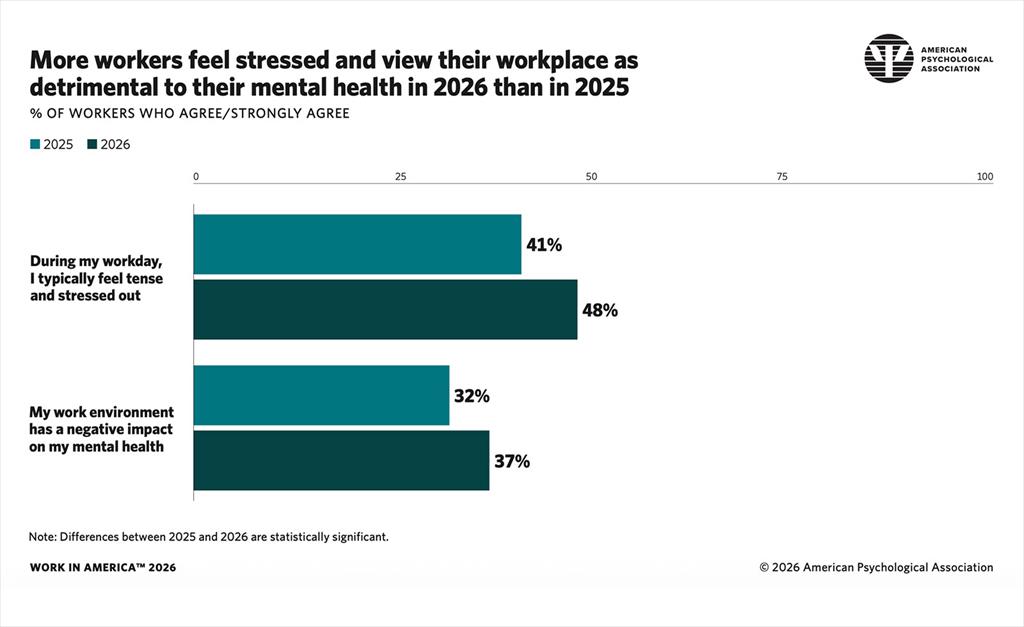
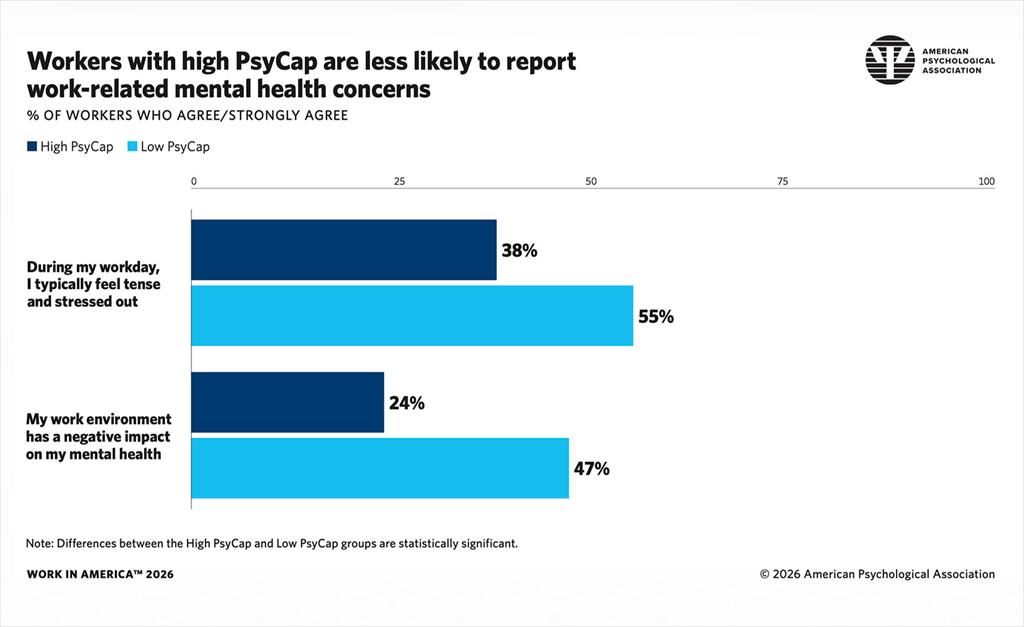
But when respondents were grouped by PsyCap level, different patterns emerged. Workers with high PsyCap were less likely to report feeling tense or stressed during the workday or report that their work environment negatively impacted their mental health than their low-PsyCap peers. Even more striking, nearly all workers with high PsyCap (95%) described their workplace as very or somewhat healthy, compared with less than two-thirds (63%) of workers with low PsyCap.
Economic uncertainty and workplace stress
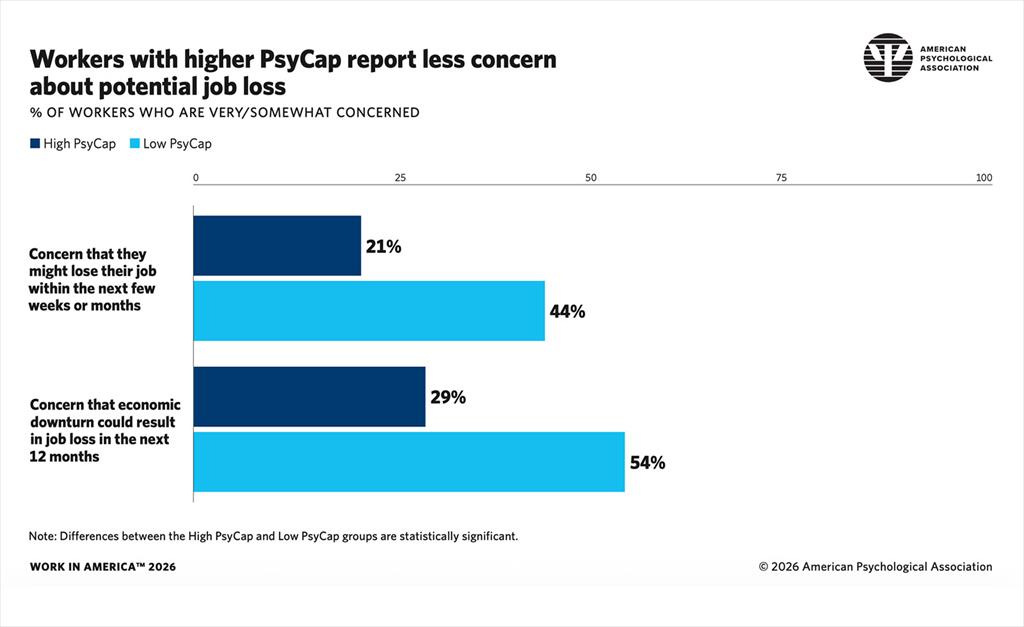
Concern that an economic slump, downturn, or recession could result in being laid off, furloughed, or losing a job within the next 12 months held steady at 44% of surveyed workers, the same percentage as in 2025. However, the number of workers concerned that they may lose their job in the next few weeks or months increased to 32%, up from 26% in 2025.
Examining responses by level of PsyCap again reveals substantial differences. Workers with low PsyCap were nearly twice as likely as workers with high PsyCap to report concern that an economic downturn could result in job loss over the next year. A similar pattern emerged for immediate job security: 44% of workers with low PsyCap reported concern about losing their job within the next few weeks or months, compared with 21% of workers with high PsyCap.
AI use increasing, alongside fears
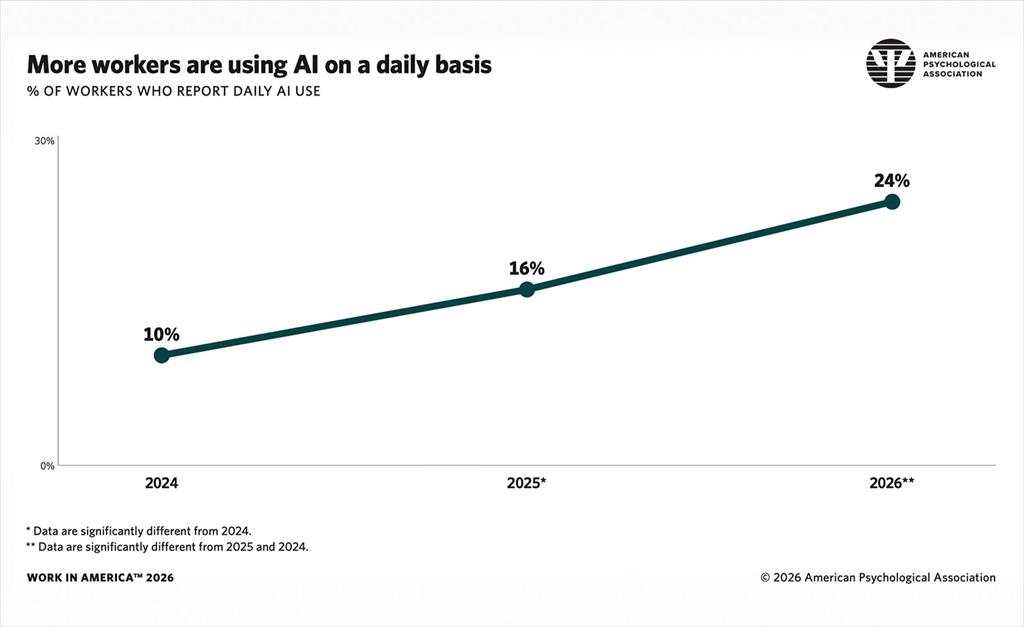
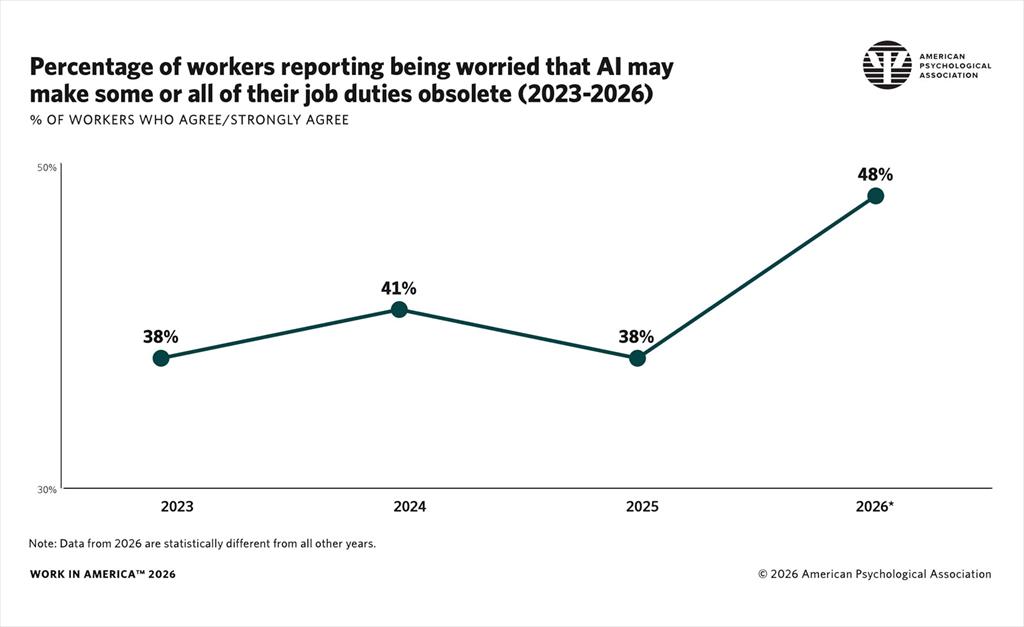
Since the Work in America survey began tracking intentional AI use in 2024, daily use has climbed steadily, even as more workers grow anxious about what that technology means for their jobs. Nearly half of workers (48%) reported worrying that AI could make some or all of their job duties obsolete, the highest rate recorded since Work in America started asking this question in 2023.
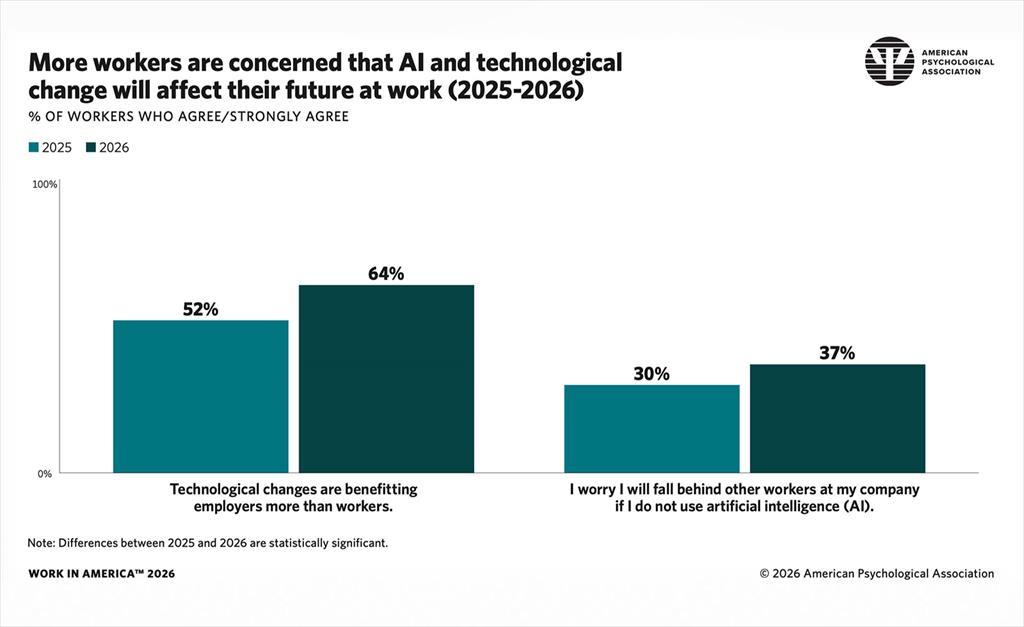
Workers also became more likely to report believing that technological change is benefiting employers more than workers. In 2026, 64% expressed that view, compared with 52% in 2025. Further, in 2026, 37% of workers reported worrying that they will fall behind other workers at their company if they do not use AI, compared with 30% in 2025.
However, respondents with high PsyCap ratings were more likely to see AI as an opportunity, rather than a threat. They were significantly less likely to be concerned that AI could make some or all of their job duties obsolete (37% of the high PsyCap group to 53% of the low PsyCap group), and nearly two-thirds of workers with high PsyCap (64%) reported that technological changes had created new opportunities in their current role or career path.
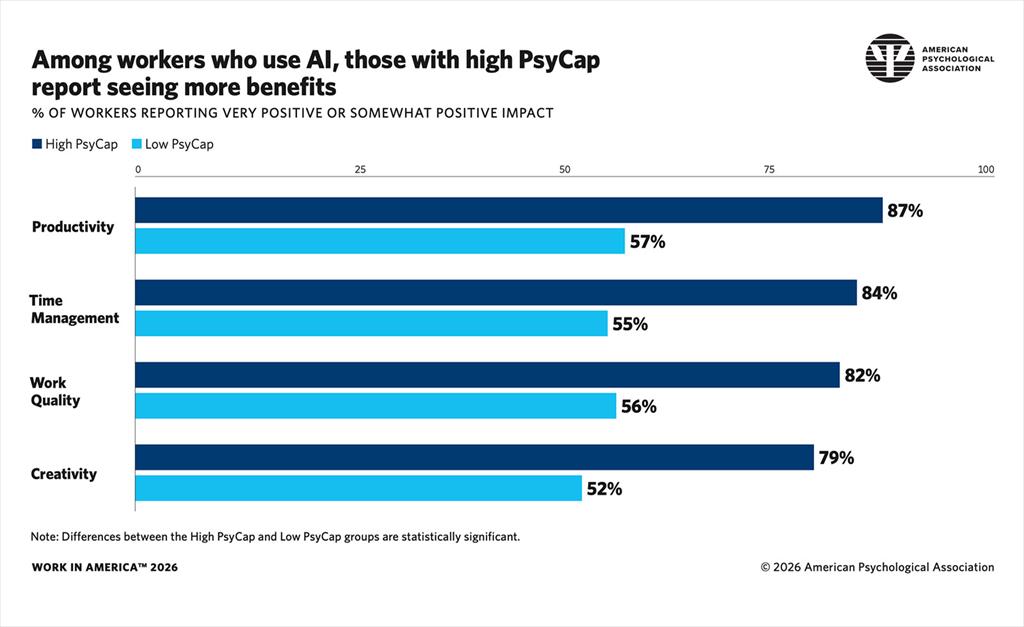
An even greater percentage of workers with high PsyCap reported that AI improved their productivity as well as their time management, work quality, and creativity, compared with workers with low PsyCap.
Building PsyCap at work
These findings suggest PsyCap deserves attention as organizations develop leaders, prepare employees for change, and design effective workplaces. Three practical implications stand out for organizational leaders:
Broaden the definition of performance
Assessing whether employees can do the work isn’t enough. Leaders should also consider whether employees have the PsyCap to adapt to change and respond to challenges.
Invest in people, not just technology
Technology investments deliver less value when they aren’t paired with investment in people’s ability to adapt. Before approving a major technology or workplace change initiative, leaders should ask:
- What technical capabilities are we building?
- How are we preparing people, psychologically, to succeed in this new environment?
Design workplaces to strengthen psychological capacities
While this survey can’t establish causality, these findings and prior research suggest workplace conditions and psychological capacities reinforce one another over time. Leaders should treat culture not just as an outcome to manage, but as a condition that shapes employees’ PsyCap. When evaluating policies, leadership practices, and culture, leaders should ask:
- What psychological experience are employees having in our workplace?
- Do employees feel valued and supported?
- Are we creating conditions that help people respond confidently to challenges and change?
Methodology
The research was conducted online in the United States by The Harris Poll on behalf of APA among 2,009 employed adults. The survey was conducted May 21–June 1, 2026.
Data are weighted where necessary by age, gender, race/ethnicity, region, education, marital status, household size, work status, household income, and smoking status to bring them in line with their actual proportions in the population.
Respondents for this survey were selected from among those who have agreed to participate in our surveys.
The sampling precision of Harris online polls is measured using a Bayesian credible interval. For this study, the sample data is accurate to within ±3.1 percentage points using a 95% confidence level. This credible interval will be wider among subsets of the surveyed population of interest.
All sample surveys and polls, whether or not they use probability sampling, are subject to other multiple sources of error, which are most often not possible to quantify or estimate, including, but not limited to coverage error, error associated with nonresponse, error associated with question wording and response options, and postsurvey weighting and adjustments.