


After more than a year of working during the pandemic, the American workforce reports compounding pressures that are impacting the stress they feel, their ability to do their jobs, and whether they’ll look for a new workplace in the next year.
What’s striking is that more than two in five said they intend to seek employment outside their company in the next year, up from one in three in 2019, which could impact many industries already facing a shortage of workers, particularly the hospitality and health care sectors.
This survey was commissioned by APA to look at workplace experiences during the pandemic, measure employee stress related to work, and capture what employees are looking for from their employers as it relates to their mental health, specifically in the context of the pandemic and changing priorities. This survey builds upon prior APA work and well-being surveys that have explored Americans’ attitudes toward the workplace and workforce.
More than two in five intend to change jobs, up from one in three in 2019
The survey found that there is an association between the stress an employee feels during the day and the likelihood that they will seek new job opportunities within the next year.
- Those who typically feel tense or stressed out during the workday are more than three times as likely to say they intend to seek employment elsewhere in the next year (71% vs. 20%).
View a full-sized version of the image available for download.opens in new window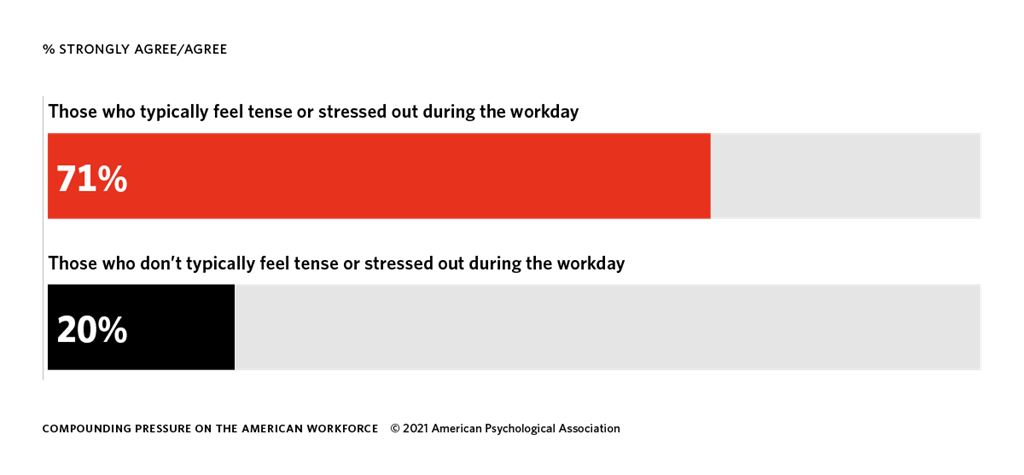
- Hispanic and Black adults are more likely than White adults to say they intend to seek employment outside of their organization in the next year (58% and 57% vs. 37%, respectively).
- More than half of LGBTQ+ employees intend to seek other employment in the next year (56% vs. 43% of non-LGBTQ+ employees).
- People with disabilities are more likely than those who do not have a disability to say they intend to seek employment outside of their company or organization in the next year (63% vs. 41%).
- Those who say they have experienced or witnessed discrimination in their current workplace are more than twice as likely as those who haven’t to say they intend to seek employment outside of their company or organization in the next year (68% vs. 33%).
- Groups more likely to say they have been the target of discrimination in their current workplace:
- Men (28% vs. 18% of women) LGBTQ+ employees (32% vs. 23% of non-LGBTQ+ employees*)
- Black and Hispanic employees (31% and 27%* vs. 20% of White employees)
- Have a disability (47% vs. 19% of those who do not have a disability)
View a full-sized version of the image available for download.opens in new window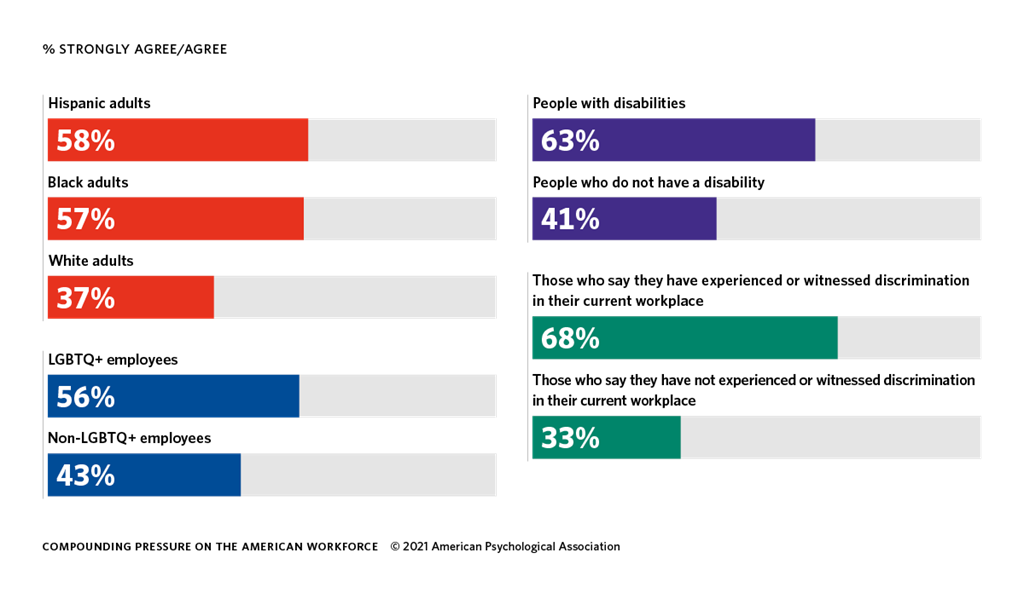
Compensation, lack of involvement in decision-making are key workplace stressors
When it comes to the impact of different factors on employee stress levels at work, low salaries (56%, up from 49% in 2019), long hours (54%, up from 46%), and lack of opportunity for growth or advancement (52%, up from 44%) are most commonly reported as very or somewhat significant.
- Other factors such as too heavy of a workload (50%), lack of paid time off or sick leave (50%), and commuting (50%) are mentioned by half of employees.
- Nearly half of employees (48%) say lack of involvement in decisions contributes to stress in the workplace, a significant increase from the last time this question was asked in 2019 (39%).
- More than two in five employees say health and safety factors, such as physical illnesses and ailments (45%) and unpleasant or dangerous physical conditions (44%), impact stress level at work.
- Those with a disability are more likely to cite these as having a significant impact on their stress at work (physical illnesses and ailments: 71% vs. 41% of those who do not have a disability; unpleasant or dangerous physical conditions: 69% vs. 39%).
More than half say low salaries impact stress levels at work
Low salaries, heavy workloads, and unrealistic job expectations have a significant impact on stress levels, with workers more commonly citing these as stressors than in 2019.
View a full-sized version of the image available for download.opens in new window
Lack of growth and development opportunities impacts stress at work
However, most are satisfied with the growth and development opportunities offered by their employer–especially those who feel their workplace is psychologically healthy.
View a full-sized version of the image available for download.opens in new window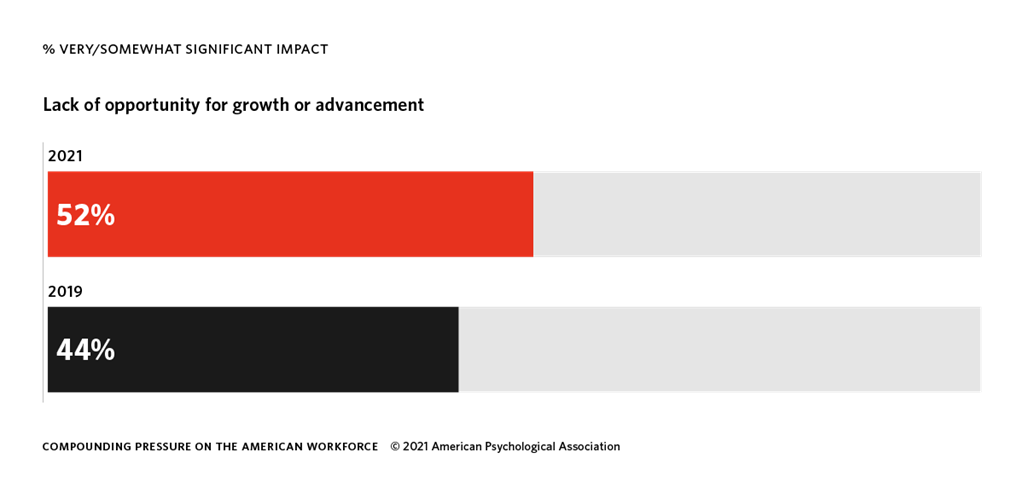
Nearly half say lack of involvement in decisions contributes to stress
More than two in five report problems with a supervisor or coworkers significantly impact their stress level at work, both up from 2019.
View a full-sized version of the image available for download.opens in new window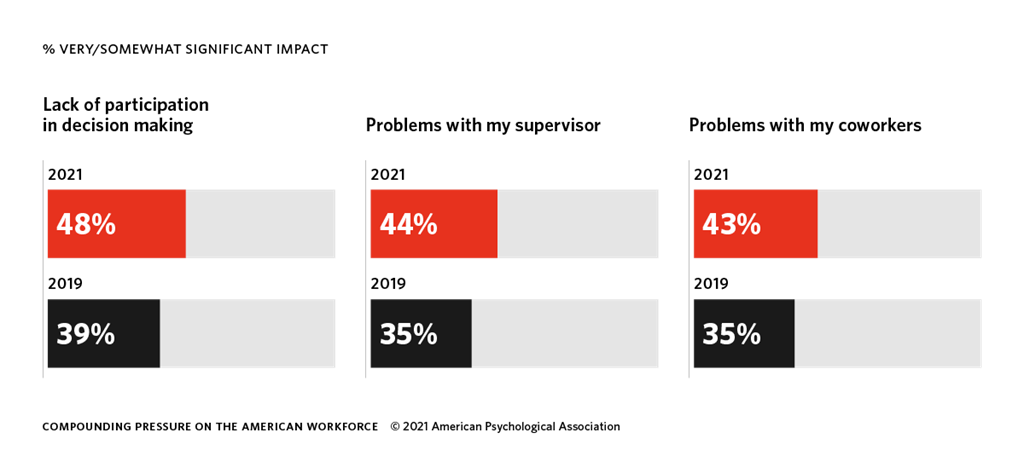
For three in five, work-related stress negatively impacts performance
Nearly three in five employees (59%) have experienced negative impacts of work-related stress in the past month, including a lack of interest, motivation or energy (26%), difficulty focusing (21%), and a lack of effort at work (19%).
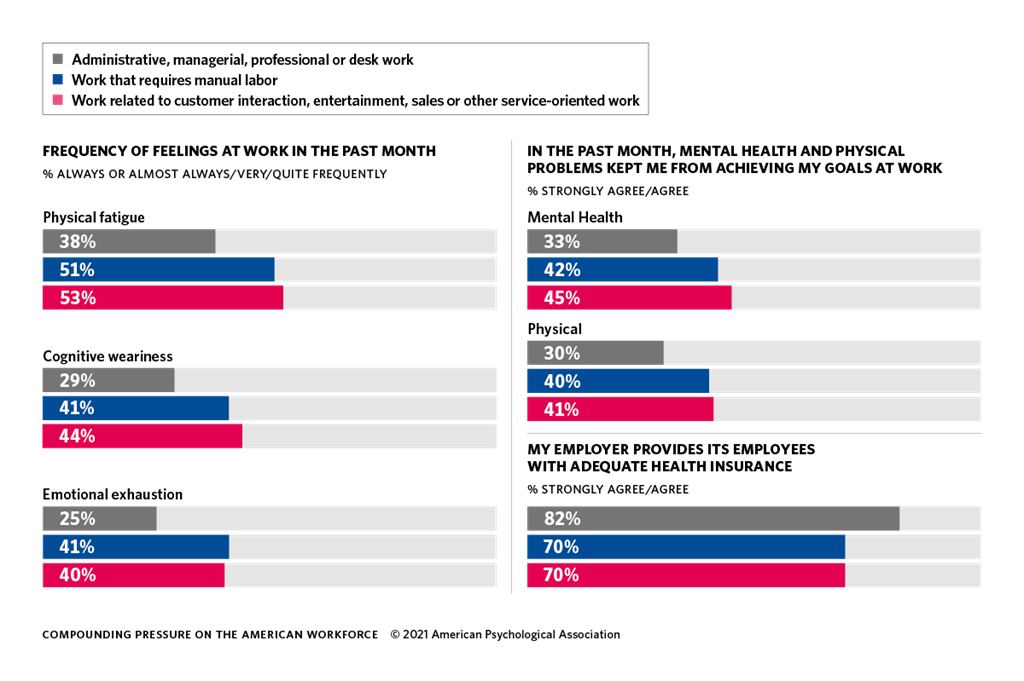
- Looking across type of work, adults who perform manual labor or work in customer service, sales, or entertainment are more likely than adults who work in administration, management, or desk jobs to say they have experienced symptoms of physical fatigue (51% and 53% vs. 38%, respectively), cognitive weariness (41% and 44% vs. 29%), and emotional exhaustion (41% and 40% vs. 25%) at work quite frequently or more often in the past 30 workdays.
- Adults who perform manual labor or work in customer service, sales, or entertainment are also more likely to say that in the past month, mental and physical problems kept them from achieving their goals at work.
- Mental health problems: 42% of adults who perform manual labor and 45% adults who work in customer service, sales, or entertainment vs. 33% those who work in administration, management, or desk jobs
- Physical problems: 40% and 41% vs. 30%
- When it comes to job level, lower-level employees are more likely to experience negative impacts of work-related stress (67% front line and 64% mid-level vs. 54% upper-level) and more than one in three front line workers (35%) have felt fed up at work quite frequently or more often in the past 30 days.
- On the other hand, upper- and mid-level workers, in general, tend to have more positive experiences than front line workers and individual contributors, including being more likely to say they are satisfied with their job (89% and 87% vs. 68% and 67%, respectively), motivated to do their best (86% and 85% vs. 72% and 74%), and feel valued (86% and 80% vs. 62% and 55%).
View a full-sized version of the image available for download.opens in new window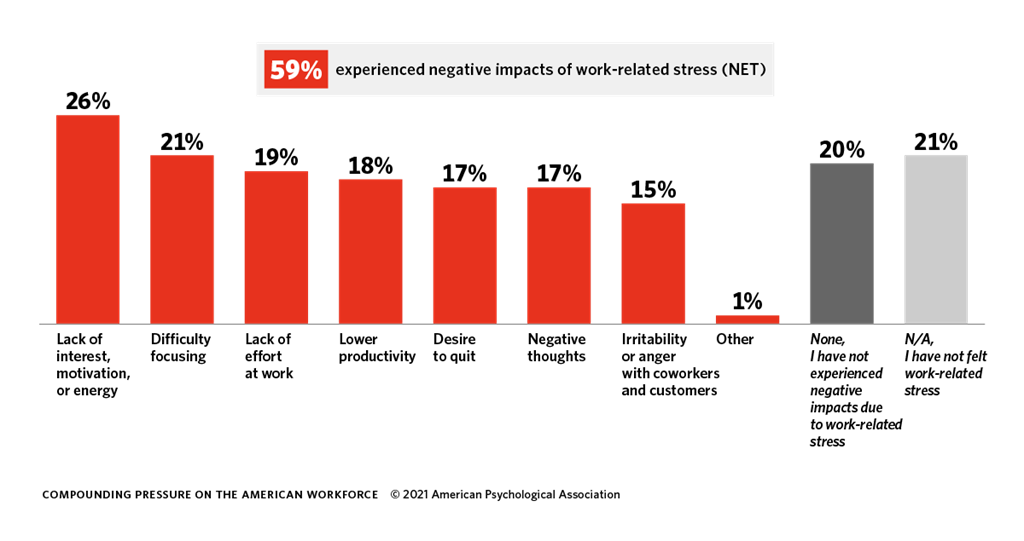
Adults who perform manual labor or work in customer service, sales, or entertainment impacted by mental, physical problems at work
Upper-level employees more likely to be engaged, fully satisfied
Lower-level employees are more likely to experience negative impacts of work-related stress, and more than one in three front line workers have quite frequently felt fed up at work in the past 30 days.
View a full-sized version of the image available for download.opens in new window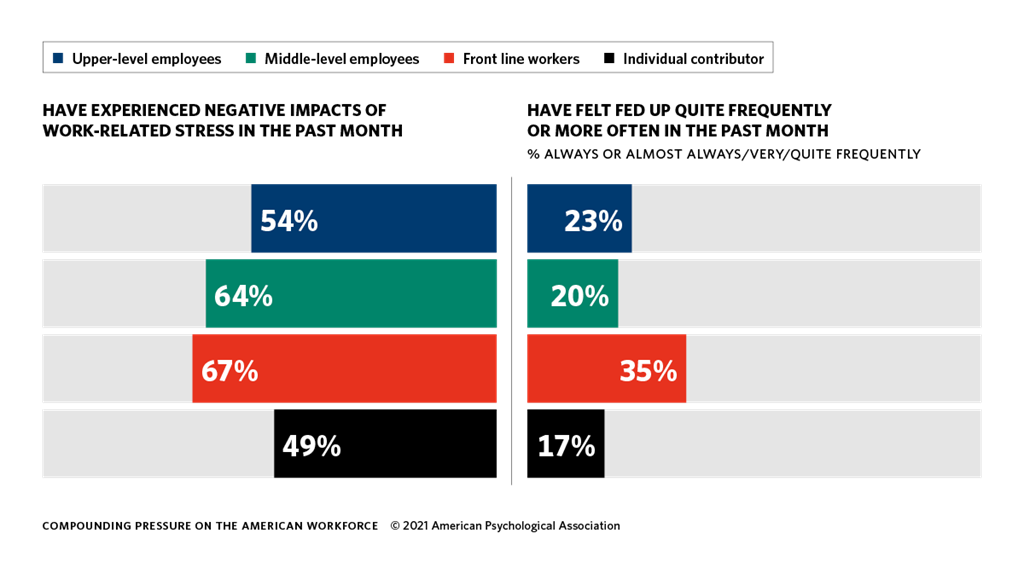
What can employers do?
There are certain actions employers can take to create a psychologically healthy workplace and support employees’ mental health.
- The vast majority (87%) of employees think actions from their employer would help their mental health, most commonly offering flexible hours (34%), encouraging employees to take care of their health (32%), encouraging employees to use paid time off (30%), and encouraging breaks during the workday (30%).
- Further, providing mental health resources (37%) and regularly recognizing employee contributions (36%) may help employers achieve a psychologically healthy work environment for their employees.
- If employees could have only one extra perk, one-third (33%) want more money—especially women (36%).
- But what workers want is not exactly the same.
- Women are more likely than men to say in order to achieve a psychologically healthy workplace, employers should pay employees fairly (50% vs. 43%) and allow flexibility (47% vs. 36%). The focus on pay is not surprising considering that women are less likely than men to say they receive adequate monetary compensation for their contributions at work (65% vs. 74%).
- If they could only have one extra perk from their employer, those who are not parents are more likely than parents to want more money (41% vs. 24%), while parents are more likely to say more flexibility (17% vs. 11%).
- Those who have women and people of color in senior leadership positions are more likely to agree their current workplace is psychologically healthy.
- When looking to the future of the maturing workforce, the findings reveal employees increasingly want their employers to have a holistic approach. Adults aged 25–42 are more likely than all other adults to say employers could encourage employees to take time off (45% vs. 33% of adults aged 18–24, 35% of adults aged 43–56, and 33% of adults aged 57+), provide mental health resources (43% vs. 31%, 31% and 30%, respectively), and promote diversity, equity, and inclusion efforts (39% vs. 28%, 27% and 26%) to achieve a psychologically healthy workplace.
If employees could have only one extra perk, one-third want more money
A distant second is more flexibility, followed by more time off.
View a full-sized version of the image available for download.opens in new window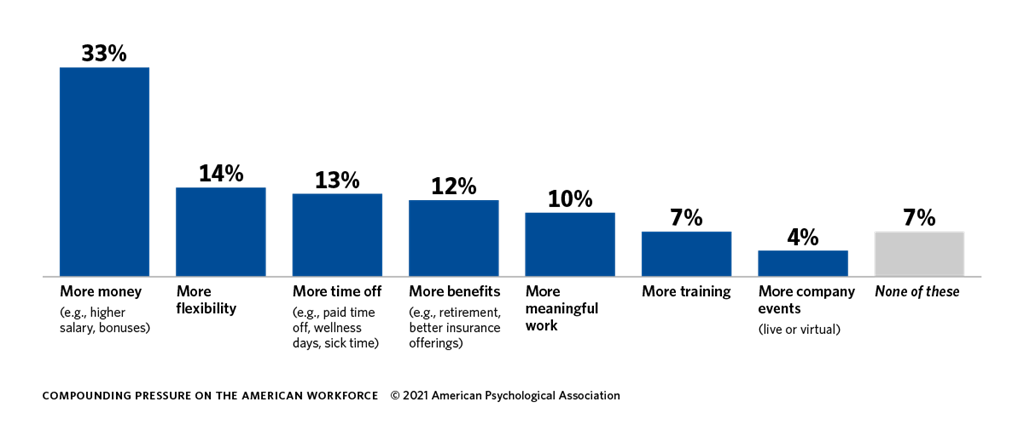
Diverse leadership representation may promote a healthy workplace
Women, people of color, and LGBTQ+ employees are more likely to be working at organizations that have those individuals in senior leadership positions.
Agree their current workplace is psychologically healthy:
View a full-sized version of the image available for download.opens in new window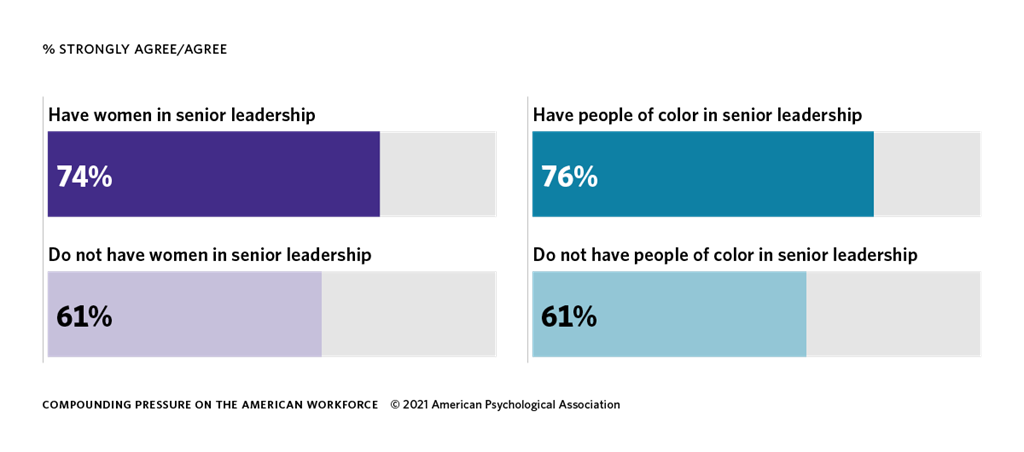
Related resources
Related Work and Well-being resources:
- Survey questions (PDF, 226KB)opens in new window
- Press release
- 2018 Work and Well-being Survey report
- Press contact: Sophie Bethune (email)
Telephone: (202) 336-6134
Related psychology and workplace resources:
- What motivates people at work and what doesn't
- Constructive criticism that works
- Parental burnout: How to recognize and overcome it
- Office of Applied Psychology: Using psychological research, theory, and methods to address real-world issues