skip to main content

Everyone benefits from culturally responsive community-based research partnerships

APA Style leaf logo Cite This Article in APA Style
Palmer, C. (2025, March 25). The benefits from culturally responsive community-based research partnerships. https://www.apa.org/research-practice/conduct-research/culturally-responsive-partnerships

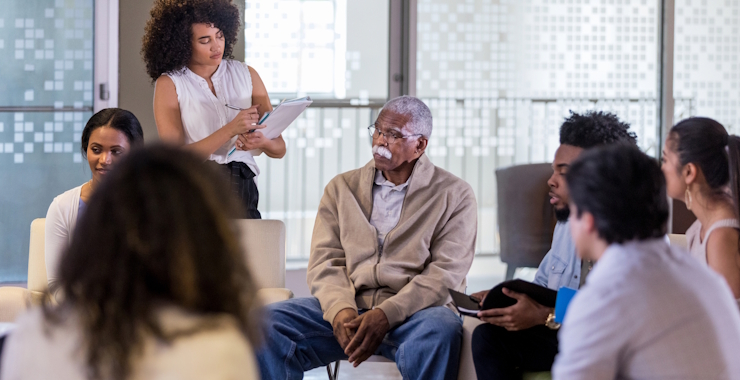
Diverse community group meets to discuss new laws

Integrating cultural responsiveness and community participation leads to more ethical, impactful, and sustainable research. These partnerships are especially useful in addressing inequities, health disparities, and social injustices, as they center on the voices of those most affected. 

An example involves trauma-focused cognitive behavioral therapy (TF-CBT), an evidence-based psychotherapy approach specifically designed to treat individuals who have experienced traumatic events, such as sexual abuse, physical abuse, or natural disasters. Although TF-CBT was developed decades ago and tens of thousands of clinicians worldwide are certified practitioners, the treatment was not designed to benefit a population historically at elevated risk of experiencing trauma: Black youth in America. 

Isha Metzger, PhD
Isha Metzger, PhD
That began to change when Isha Metzger, PhD, an associate professor of psychology at Georgia State University and director of the EMPOWER Labopens in new window, went into Black communities in Charleston, South Carolina, in the 2010s and used an approach called culturally responsive community-based research partnership (CBRP) to create TF-CBT+RS (racial socialization), an application of TF-CBT tailored to Black youth and their caregivers. 

“The TF-CBT treatment that I modified is a gold standard. It works very well,” said Metzger, who is also a visiting research faculty member at Yale University and adjunct faculty at the University of Georgia. “CBRPs allow us to ask, ‘How does it work best for this specific subgroup of the population?’” 

Culturally responsive CBRP is a powerful research technique for advancing health equity and reducing mental and behavioral health disparities for marginalized groups. At its heart are collaborations between researchers and communities that prioritize cultural awareness, mutual respect, and shared decision-making. These partnerships recognize that communities have valuable knowledge and lived experiences that should guide research efforts. Instead of imposing outside perspectives or research questions, or even having participants come into a laboratory setting, culturally responsive CBRPs actively involve community members in shaping the questions, methods, and solutions. 

“When you’re doing CBRP, you can go into the community and start asking qualitative questions about community needs, risks, and strengths before you ask quantitative questions and before you design an intervention,” Metzger said. “You can, like I did, take a traditional treatment and ask members of the community what barriers might prevent them from engaging in a treatment or accepting the treatment as designed, and as you adapt it, they can tell you, ‘Yes, this works for us,’ or ‘No, it doesn't work.’” 

A key feature of culturally responsive CBRPs is researchers acknowledging and adapting to the cultural values, traditions, and social contexts of the communities they are working with. This helps build trust, reduces power imbalances, and ensures that research findings are relevant and beneficial to the community.

Building trust

Traditional Western research has been one directional, with researchers reaping the lion’s share of benefits from the interactions with participants, while participants give their time and energy and often are left with little to show for it, according to Metzger. This inequity leads to systemic mistrust, including mistrust of mental health professionals.

“You build trust by being upfront about historical inequities or harm,” said Metzger, who is leading an APA Science Training Session on CBRPs on April 3. “You build trust by immersing yourself in a community and by asking people how your skills can contribute to something they need. You build trust by saying, ‘This is how we as a field have fallen short in the past. My goal is to stay engaged with you as a community for the long-term.’”

Register for a free APA Science Training Session on this topic, Building Bridges: Best Practices for Culturally Responsive Community-Based Research Partnershipslogin required, with Isha Metzger, PhD, on April 3.

Reducing power imbalances

The bidirectional approach of CBRPs rebalances historical inequities by having community members and researchers work as equal partners throughout the research process. This includes co-designing studies, collecting and analyzing data together, and co-interpreting results to ensure that they reflect community realities.

For example, when creating a study to improve physical health, the traditional top-down approach would be to go into a community and map out walking trails. The CBRP approach would be to go into the community, ask people about their physical activity and barriers to being active, and design an intervention based on the strengths of that community. Those strengths might be not walking trails but perhaps a shuttered shopping mall that can be repurposed into a community activity center.

“This approach is captured in one of my favorite quotes by Murri artist and academic, Lilla Watson: ‘If you have come to help me, then you are wasting your time. But if you’ve come because your liberation is bound up with mine, then let us work together,’” Metzger said.

Ensuring outcomes are meaningful to community partners

Community members may often perceive researchers as coming in, asking questions and gathering data, and then disappearing without really benefiting the community at all. Instead, researchers need to come to the table with something of value to the community, Metzger said.

When launching into the research that would form the basis of TF-CBT+RS, Metzger began attending community meetings in her neighborhood and near her graduate school.

I would say, ‘I’m training to become a psychologist. How can I be of service to you?’
—Isha Metzger, PhD

For Metzger, that service began in 2015 in Charleston, following the murders of 9 parishioners at “Mother Emanuel,” the historic African Methodist Episcopal church, by a 21-year-old white man. In the city on internship at the time, Metzger began leading healing circles and offering family counseling for free in response.

“Service can also look like conducting a strength-based assessment of an organization or a community or delivering a training session on effective conflict resolution,” she said. “It can really be anything that shows I’m valuing your time by using my skills to give something back to you.” Further, when researchers analyze and report their data, they can go back to the community and present the results and show the community how the findings can improve their lives.

“CBRPs benefit everyone,” Metzger said. “Researchers get more accurate data from community members. The data may be less generalizable, but it is more likely to speak to the intersection of identities within community members and to benefit the community as a whole. Participants get to be engaged in identifying the questions that researchers are asking, and they can help identify the strengths that they’re bringing to the community-based interventions. And, of course, both groups gain by developing more trusting relationships.”

Learn more by attending the APA Science Training Session, Building Bridges: Best Practices for Culturally Responsive Community-Based Research Partnershipslogin required, with Isha Metzger, PhD on April 3.

Influential papers about community-based research partnerships

Recommended Reading

You may also like