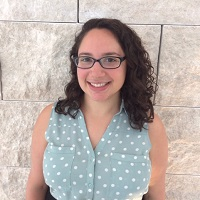
 The causes, correlates, and consequences of racism and other group-based biases in the United States are deeply rooted, widely spread, multi-faceted and multi-level. Hence, efforts to mitigate bias and its impacts must be long-term and large-scale. They must target multiple sectors and be implemented at multiple levels. When I completed my doctorate in social psychology in June 2018 at Yale University, I understood and could address issues surrounding interpersonal bias, but I knew that would not be enough if I wanted to enact long-lasting large-scale changes for disadvantaged populations.
During graduate school, I worked to gain experience in these larger-scale methods. As the Society for the Psychological Study of Social Issues Dalmas A. Taylor Memorial Summer Minority Fellow, I had learned legislative methods of enacting change by writing letters of support and advocating on Capitol Hill. While working for the Office for Graduate Student Development and Diversity at Yale and thinking about ways to improve outcomes for students from underrepresented groups, I had explored organization-level strategies. In my graduate research, I had investigated the effects of bias on judgment and decision-makingopens in new window and interventions to reduce biasopens in new window.
At the end of my five years, I had gained expert knowledge of group-based prejudice, and I sought to translate that scientific knowledge into large-scale, long-lasting policies and programs that advance the well-being of disadvantaged populations. I decided my best chance for that would be in federal policymaking. Federal programs have the potential to improve the lives of millions of people, and I wanted to play a role in that. As soon as I became eligible, I applied for and was awarded the American Psychological Association’s 2019-2020 Executive Branch Science Fellowship.
Working at the National Institute on Minority Health and Health Disparities
I was thrilled to learn that, as part of the fellowship, I would be placed at the National Institute on Minority Health and Health Disparities (NIMHD), a component of the National Institutes of Health (NIH). NIMHD conducts and supports research on minority health and health disparities, supports training for scientific workforce diversity, shares research findings with the public and other federal agencies, and fosters collaborations with government and nongovernment entities. As part of my work in the NIMHD Office of the Director over the past year, I played a role in planning several large-scale initiatives that advance health and well-being for individuals from vulnerable populations.
Funding opportunity for research on maternal health
In the United States, there are stark racial disparities in maternal mortality and morbidity. Racial and ethnic minority women, and especially Black/African American women and American Indian/Alaska Native women, have higher rates of maternal mortality and morbidity compared with White women. Much researchopens in new window has documented these disparities but less is known about why these disparities exist. Consequently, there is a great need for research to understand the mechanisms underlying these disparities and to develop, implement, and evaluate interventions to reduce the disparities.
In reviewing this literature, I recognized the opportunity for NIMHD to fund this needed research. My proposal for a funding opportunity announcement (FOA) supporting research addressing racial disparities in maternity mortality and morbidity was approved by NIMHD Director Eliseo J. Pérez-Stable and then by the National Advisory Council on Minority Health and Health Disparitiesopens in new window. I worked with program staff to develop the content of the FOA, which was published in April 2020 (RFA-MD-20-008: Addressing Racial Disparities in Maternal Mortality and Morbidityopens in new window). Review of applications submitted in response to the FOA is in progress.
This FOA will award over $5.5 million, from NIMHD and three other NIH components, to support research investigating the key underlying mechanisms of racial and ethnic disparities in maternal mortality and morbidity and implementing ground-breaking interventions to reduce these disparities. I am immensely proud of my role in enabling this research.
Science Day for Students
I was pleased to participate in the Science Day for Students at NIHopens in new window, an event that encourages and empowers youth from disadvantaged communities to pursue careers in STEM. As part of this event, about 500 middle school and high school students from the Washington, D.C., metropolitan area engaged in hands-on science activities, heard biomedical professionals talk about their personal journeys, and met with individual scientists. Working as part of a trans-NIH committee, I organized and coordinated the “Lunch with a Scientist” event in which groups of 5-10 students each met with an NIH scientist. I also got to have lunch with a group of students and tell them about my experiences.
COVID-19
A little over halfway through my fellowship year, the COVID-19 pandemic struck. Because of the pandemic, some of my projects were shelved indefinitely, but there were also many new projects to get involved in. For example, because all in-person outreach events were paused, we have developed other ways of connecting with the public. One new outreach initiative is a national art competitionopens in new window celebrating NIMHD’s vision of health equity. As the lead on this project, which was announced on Oct. 22, I have worked with my team to develop the competition format, rules, submission guidelines, judging criteria, and prize money amounts.
Further, I had the opportunity to participate in NIMHD’s grant review process. We received many applications in response to our Notice of Special Interestopens in new window announcing that current grantees could apply for supplemental funds to study the effects of COVID-19 on minority health and health disparities—so many that all NIMHD staff were called upon to review the applications. Not only did I improve my ability to evaluate research proposals, but I also had the privilege of learning about our grantees’ creative and ambitious plans to improve minority health and reduce health disparities in the context of the COVID-19 pandemic.
Reflections and next steps
My year as the 2019-2020 APA Executive Branch Science Fellow was everything I could have imagined and so much more. NIMHD does exactly the kind of large-scale, long-term, multi-sector, multi-level work needed to achieve equity in health and well-being for all populations. I am honored to be able to continue my work at NIMHD as a health policy analyst contractor.
Gina Roussos, PhD, can be reached via email.
About the APA Executive Branch Science Fellowship Program
APA Executive Branch science fellows spend one year working in executive branch science mission agencies, most often in research funding and coordinating offices. Activities may involve soliciting research applications and running peer review panels, staffing intergovernmental scientific task forces and committees, producing scientific media materials, responding to congressional inquiries, working on agency budgets and programming, and preparing briefs and speeches.