Episode 396: Are you a workaholic or just a hard worker? With Malissa Clark, PhD
October 7, 2026
Many of us have trouble switching off from work, whether it's staying late at the office, checking messages on vacation, or lying awake running through tomorrow's to-do list. Malissa Clark, PhD, of the University of Georgia, discusses how workaholism differs from simply working hard; why it's about more than hours on the clock; how it affects physical health, mental health, and relationships; and how workplaces can encourage a healthier relationship with work.
Episode 395: Can envy be good for you? With Jens Lange, PhD, and Sara Protasi, PhD
September 30, 2026
We’ve all felt a pang of envy watching a friend’s success or a colleague’s promotion. But does this much-maligned emotion deserve its negative reputation? Psychologist Jens Lange, PhD, and philosopher Sara Protasi, PhD, discuss the difference between envy and jealousy; why we’re often most envious of the people closest to us; and how envy may, in the right circumstances, motivate us to grow.
Episode 394: Are you burned out or ‘bored out’? With Lotta Harju, PhD, and Sharon K. Parker, PhD
September 23, 2026
Burnout gets all the attention, but some employees struggle with a different problem: chronic boredom on the job, sometimes called “boreout.” Lotta Harju, PhD, of EM Lyon Business School, and Sharon K. Parker, PhD, of Curtin University, discuss how boreout differs from burnout, how it can affect workers’ health and well-being, and what individuals, managers and organizations can do to design more engaging work.
Episode 393: The science of suicide prevention, with Matthew Nock, PhD
September 16, 2026
The U.S. suicide rate today is almost identical to what it was a century ago, even as death rates from many other causes have dropped. Matthew Nock, PhD, of Harvard University, discusses why it’s so hard to predict who will act on suicidal thoughts—and when; how new tools, from electronic health records to smartphone sensors, are helping researchers understand risk in real time; what interventions show the most promise; why stigma and fear keep us from discussing suicide; and why open conversations are key to prevention.
Episode 392: Why does music move us? With Robert Zatorre, PhD
September 9, 2026
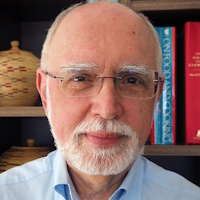
Why does music give many of us goosebumps, bring back vivid memories and make us want to dance—while leaving some people cold? Robert Zatorre, PhD, author of
From Perception to Pleasure: The Neuroscience of Music and Why We Love It
, discusses how music engages the brain’s reward system; why expectation and surprise are a key part its appeal; what we can learn from musical anhedonia, or the inability to enjoy music; and how scientists are making strides in understanding music therapy and the healing potential of music.
Episode 391: How teaching and learning will change in the age of AI, with C. Edward Watson, PhD, and Beth Schwartz, PhD
September 1, 2026
Over the past several years, generative AI has moved into classrooms at lightning speed. C. Edward Watson, PhD, author of
Teaching with AI: A Practical Guide to a New Era of Human Learning
, and Beth Schwartz, PhD, senior director of teaching and learning at APA, discuss how students and educators are navigating these changes; how AI can help or hinder learning; how teachers can redesign assignments and assessments; and what schools and universities should be teaching students about using AI responsibly.
Episode 390: Why people cheat—and can relationships recover, with Galena Rhoades, PhD
August 26, 2026
Infidelity can shatter trust and leave people questioning their relationships and themselves. Galena Rhoades, PhD, discusses why people cheat; infidelity in the age of dating apps, social media, and AI chatbots; what makes some betrayals harder to overcome than others; and how psychologists help individuals and couples begin to heal after an affair.
Encore episode: The psychology of sports fans, with Daniel Wann, PhD
August 19, 2026
Speaking of Psychology
is taking a summer break, so we’re rerunning some of our favorite episodes from the past. In 2024, I talked to psychologist Daniel Wann about sports fandom. What drives sports superfans, why are some people fair-weather fans while others love to root for the underdog, and whether a crowd of supportive fans can affect the outcome of a game. I hope you enjoy this episode from the archives. We’ll be back with new episodes beginning August 26th.
Encore episode: Why psychopathy is more common than you think, with Abigail Marsh, PhD
August 12, 2026
Speaking of Psychology
is taking a summer break, so we’re rerunning some of our favorite episodes from the past. In 2022, I talked to psychologist Abigail Marsh about her research on psychopathy, why psychopathic traits are far more common than most of us realize, and why psychopaths in real life don’t look like those in the movies. I hope you enjoy this episode from the archives. We’ll be back with new episodes beginning August 26th.
Encore episode: How living with secrets can harm you, with Michael Slepian, PhD
August 5, 2026
Speaking of Psychology
is taking a summer break, so we’re rerunning some of our favorite episodes from the past. In 2022, I talked to psychologist Michael Slepian about why people keep secrets, why keeping a secret bottled up inside can be harmful, and how keeping secrets—and sharing them—affects people’s relationships with each other. I hope you enjoy this episode from the archives. We’ll be back with new episodes beginning August 26th.
The New York Times
named
Speaking of Psychology
as second on their list of health podcasts that are “entertaining and enlightening but firmly grounded in science.”
Your host: Kim I. Mills
Kim I. Mills created Speaking of Psychology in 2013 and took over as host in 2020. She is the former senior director of strategic external communications and public affairs for the American Psychological Association and spent 14 years as a reporter and editor for The Associated Press. Mills has also written for publications including The Washington Post, Fast Company, American Journalism Review, Dallas Morning News, and Harvard Business Review.
Podcast advertising
Interested in advertising on the Speaking of Psychology podcast? Visit the APA Advertising microsite to learn more.


 Many of us have trouble switching off from work, whether it's staying late at the office, checking messages on vacation, or lying awake running through tomorrow's to-do list. Malissa Clark, PhD, of the University of Georgia, discusses how workaholism differs from simply working hard; why it's about more than hours on the clock; how it affects physical health, mental health, and relationships; and how workplaces can encourage a healthier relationship with work.
 We’ve all felt a pang of envy watching a friend’s success or a colleague’s promotion. But does this much-maligned emotion deserve its negative reputation? Psychologist Jens Lange, PhD, and philosopher Sara Protasi, PhD, discuss the difference between envy and jealousy; why we’re often most envious of the people closest to us; and how envy may, in the right circumstances, motivate us to grow.
 Burnout gets all the attention, but some employees struggle with a different problem: chronic boredom on the job, sometimes called “boreout.” Lotta Harju, PhD, of EM Lyon Business School, and Sharon K. Parker, PhD, of Curtin University, discuss how boreout differs from burnout, how it can affect workers’ health and well-being, and what individuals, managers and organizations can do to design more engaging work.
 The U.S. suicide rate today is almost identical to what it was a century ago, even as death rates from many other causes have dropped. Matthew Nock, PhD, of Harvard University, discusses why it’s so hard to predict who will act on suicidal thoughts—and when; how new tools, from electronic health records to smartphone sensors, are helping researchers understand risk in real time; what interventions show the most promise; why stigma and fear keep us from discussing suicide; and why open conversations are key to prevention.
 Why does music give many of us goosebumps, bring back vivid memories and make us want to dance—while leaving some people cold? Robert Zatorre, PhD, author of
From Perception to Pleasure: The Neuroscience of Music and Why We Love It
, discusses how music engages the brain’s reward system; why expectation and surprise are a key part its appeal; what we can learn from musical anhedonia, or the inability to enjoy music; and how scientists are making strides in understanding music therapy and the healing potential of music.
Why does music give many of us goosebumps, bring back vivid memories and make us want to dance—while leaving some people cold? Robert Zatorre, PhD, author of
From Perception to Pleasure: The Neuroscience of Music and Why We Love It
, discusses how music engages the brain’s reward system; why expectation and surprise are a key part its appeal; what we can learn from musical anhedonia, or the inability to enjoy music; and how scientists are making strides in understanding music therapy and the healing potential of music.

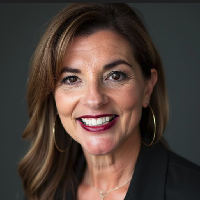 Over the past several years, generative AI has moved into classrooms at lightning speed. C. Edward Watson, PhD, author of
Teaching with AI: A Practical Guide to a New Era of Human Learning
, and Beth Schwartz, PhD, senior director of teaching and learning at APA, discuss how students and educators are navigating these changes; how AI can help or hinder learning; how teachers can redesign assignments and assessments; and what schools and universities should be teaching students about using AI responsibly.
Over the past several years, generative AI has moved into classrooms at lightning speed. C. Edward Watson, PhD, author of
Teaching with AI: A Practical Guide to a New Era of Human Learning
, and Beth Schwartz, PhD, senior director of teaching and learning at APA, discuss how students and educators are navigating these changes; how AI can help or hinder learning; how teachers can redesign assignments and assessments; and what schools and universities should be teaching students about using AI responsibly.
 Infidelity can shatter trust and leave people questioning their relationships and themselves. Galena Rhoades, PhD, discusses why people cheat; infidelity in the age of dating apps, social media, and AI chatbots; what makes some betrayals harder to overcome than others; and how psychologists help individuals and couples begin to heal after an affair.
 Speaking of Psychology
is taking a summer break, so we’re rerunning some of our favorite episodes from the past. In 2024, I talked to psychologist Daniel Wann about sports fandom. What drives sports superfans, why are some people fair-weather fans while others love to root for the underdog, and whether a crowd of supportive fans can affect the outcome of a game. I hope you enjoy this episode from the archives. We’ll be back with new episodes beginning August 26th.
Speaking of Psychology
is taking a summer break, so we’re rerunning some of our favorite episodes from the past. In 2024, I talked to psychologist Daniel Wann about sports fandom. What drives sports superfans, why are some people fair-weather fans while others love to root for the underdog, and whether a crowd of supportive fans can affect the outcome of a game. I hope you enjoy this episode from the archives. We’ll be back with new episodes beginning August 26th.
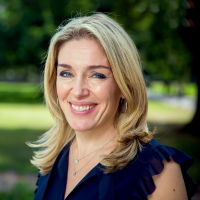 Speaking of Psychology
is taking a summer break, so we’re rerunning some of our favorite episodes from the past. In 2022, I talked to psychologist Abigail Marsh about her research on psychopathy, why psychopathic traits are far more common than most of us realize, and why psychopaths in real life don’t look like those in the movies. I hope you enjoy this episode from the archives. We’ll be back with new episodes beginning August 26th.
Speaking of Psychology
is taking a summer break, so we’re rerunning some of our favorite episodes from the past. In 2022, I talked to psychologist Abigail Marsh about her research on psychopathy, why psychopathic traits are far more common than most of us realize, and why psychopaths in real life don’t look like those in the movies. I hope you enjoy this episode from the archives. We’ll be back with new episodes beginning August 26th.
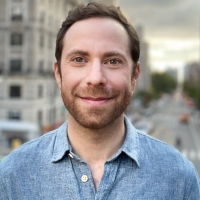 Speaking of Psychology
is taking a summer break, so we’re rerunning some of our favorite episodes from the past. In 2022, I talked to psychologist Michael Slepian about why people keep secrets, why keeping a secret bottled up inside can be harmful, and how keeping secrets—and sharing them—affects people’s relationships with each other. I hope you enjoy this episode from the archives. We’ll be back with new episodes beginning August 26th.
Speaking of Psychology
is taking a summer break, so we’re rerunning some of our favorite episodes from the past. In 2022, I talked to psychologist Michael Slepian about why people keep secrets, why keeping a secret bottled up inside can be harmful, and how keeping secrets—and sharing them—affects people’s relationships with each other. I hope you enjoy this episode from the archives. We’ll be back with new episodes beginning August 26th.