Kim Mills: Do you remember where you were on April 10th, 1999? What day of the week was it? What about the weather? What were you wearing, and what did you do all day? Chances are you can't answer any of those questions. For most of us, our autobiographical memory is a bit of a blur. Sure, some special occasions stand out, weddings, birthdays, vacations, along with a bundle of random memories that stick with us for no special reason, but for people with highly superior autobiographical memory, or HSAM, every day is memorable. Ask someone with HSAM what they were doing on April 10th, 1999, or the 11th or the 16th, and they'll be able to tell you, along with a bunch of other checkable facts. How do they do that? How do the brains of people with HSAM store and retrieve this vast amount of detailed autobiographical information? What's it like to be able to remember every day of your life? Is it a blessing or curse? And what can studying this unusual ability teach us about how memory works for the rest of us?
Welcome to Speaking of Psychology, the flagship podcast of the American Psychological Association that examines the links between psychological science and everyday life. I'm Kim Mills. We have two guests today. Dr. Michael Yassa is the director of the Center for the Neurobiology of Learning and Memory at the University of California Irvine. The center was established in 1983 by Dr. James McGaugh, and it's where the first research on highly superior autobiographical memory began about 15 years ago. Today, Dr. Yassa and his colleagues continue to study HSAM along with how we learn and remember information, how learning and memory change with age, and how to better diagnose and treat disorders like Alzheimer's disease.
Our second guest is Markie Pasternak, one of the few people in the world confirmed to have HSAM. In 2014, when she was a junior in college, Ms. Pasternak learned about highly superior autobiographical memory in one of her psychology courses, realized that it described her special memory, and began participating in research at UC Irvine. She went on to earn a master's degree in education, and today works in student affairs at Auburn University doing mental wellness and health education outreach. She also blogs and speaks to the media about living with HSAM. Thank you both for joining us today.
Dr. Michael Yassa: Thank you for having me.
Markie Pasternak: Yes. Thank you so much for having us.
Mills: Dr. Yassa, you get the first questions. When people with HSAM retrieve autobiographical memories, are they doing the same thing that most of us do when we remember our past, but they're just much better at it than the rest of us?
Yassa: You started with a very difficult question, Kim. I think this is really what we're trying to get to the bottom of. And part of the problem is that when we were first exposed to this phenomenon, it violated all of our assumptions about how memory works. So one of the first thoughts was, well, they must be using a different mechanism. But pushed to the extreme, one can imagine that our regular memory systems just have a degree of variation in them, that it could be part of the regular mechanisms, just like I said, pushed to the extreme. And we're still not sure if they're a part of that natural variation, or if they're using very distinct mechanisms, and that's what we're hoping to uncover in the coming years with some brain imaging techniques and various other methods that look deep into the neurobiology of the brain.
Mills: Markie, can you talk about how this works for you? When you remember a particular day from 10 years ago, what are you doing? Does the memory just pop up, or do you have to work to retrieve it?
Pasternak: So, it kind of depends on the day. I was actually talking to a psychology professor at Auburn about this about a year ago, because it's fun working at universities, because the psychology departments get real excited. And what I told him, and we kind of coined them–I have these things called go-to dates, dates that just stick in my memory, because of an event that happened that maybe had more of an emotional connection to it. So for example, I know, sad example to start off with, but if you asked me the day my father died, I'd be like March 16th, 2014, and most people could probably do that. But then I also can remember the day I saw a boy I had a crush on in seventh grade for the first time in a while, and that was June 26, 2007. It was a Tuesday, and I can tell you all about that. So, you have more random days that you hold with these things, but if I can go back to, let's say go to that 2007 date, if I can go back and say, yeah, I saw this guy at the ice rink because I was a figure skater, and he was a hockey player, and I bumped into him there, and I can tell you all about that, I can also piece around the days around it, and that's where the memory kind of starts coming into fruition. And so I can say, oh, I went to that ice skating practice that day, even though I didn't usually skate on Tuesday nights over the summer, because I had stayed with another friend on my figure skating team that day. And it was her birthday in a couple of days, and so I was spending time with her because it had just been her birthday party the day before.
So, that context kind of comes in, and I can start piecing around it. So, sometimes if you ask me a date, I might be like, "Oh wait, I don't know exactly what I did on that day quite yet, but I can go to my nearest go-to date, put the context together and kind of crawl to it." And it's like a mental image for me. And I know this is different between different people with HSAM. I know I've talked to some friends with HSAM who say they just picture a calendar, a black and white regular calendar, that's not me. I have some synesthesia as well. So for me, what it looks like is it's like a giant Candyland board sort of a thing, I think of it, or a giant map, or a road. It's a journey, and it's all different colors, and there's dates everywhere, and there's people and images and places, and it's this fun place in my brain I can kind of go to and hop around in different days, and I can zoom in on the days and the years and the times and all that stuff.
Mills: That sounds amazing. Well, Markie, when did you first realize that your memory was different from that of other people? How old were you, and what triggered that realization?
Pasternak: Yeah. So I'm going to be honest, I feel like sometimes when I answer this question, I feel like it's supposed to be an aha moment, this big, "Oh my gosh, my brain's different." But the reality is, is that it was just a series of little moments that added to the realization over a lot of years, because it's so unique and difficult to figure out, especially when it's happening to you as a kid and you don't really have all the vocabulary to describe what's going on. And so the first time I noticed it was different was probably in 2006. I had just turned 12 years old, and I started realizing I could remember what I was doing a year ago every day. I was like, "Oh, it's May 11th, a year ago was our band concert, and then we left for Florida the next day."
But no one else really cared to remember that our band concert was a year ago that day, but for some reason I just knew. And I remember being like, "What's happening? I should check this out." So I went to the home video, and there it was, May 11th, 2005, and I was like, "Okay." And so I started realizing it then. And then as the years went on, I realized I could keep doing it, it wasn't just I had a good memory for 2005, 2006 stuck, 2007 stuck, 2008 stuck. And so when I was in eighth grade, I really got obsessed with memories and old pictures and dates and things like that, and it was just becoming something that was kind of crystallizing in my brain more.
And I realized that the first week I could remember was the week of February 9th through the 13th of 2005. And the ninth was a Wednesday. And everything just kind of starts on that Wednesday, and then the next days are real vivid, and then the next week or two is kind of blurry, but then after that, everything's really vivid. And I was like, "Do I have those dates right?" And so remember I was at a figure skating competition, as I was talking about figure skating earlier, that weekend in a place called Beaver Dam, Wisconsin, or as my father liked to call it, Beaver Darn. And I went in the basement and I dug through my mom's totes of old memorabilia and scrapbooking stuff, and I found the brochure from that competition, and it said February 13th, 2005. And I was like, "All right, I have something here," and that was kind of the realization of it as a kid.
Mills: Wow. There are 7.9 billion people in the world today, give or take a few thousand, Dr. Yassa, how many people have been confirmed to have HSAM, and how do you find these people?
Yassa: Another tricky question, Kim. So, I'll give you the answer that we have, but there's a caveat. So, it's smaller than 100 that we have identified in the laboratory, but we are also getting reports from our colleagues actually around the world in different countries of also having individuals come to them and say, "I have this extremely vivid memory of the past." And they may not have seen a 60 Minutes piece or read about it in a book or a paper, but just sort of think it's curious. But that's really the issue, is that until maybe Markie has gone through this exercise and really confirmed it, or somebody has seen a piece on 60 Minutes, or read a paper, or heard about it in a class, it's really difficult to see this as something different from everybody else.
So, my guess is that actually there's a lot of people out there that have it, and just don't know, and have no reason to suspect that it's all that different. They may just be on the extreme. They might think of themselves as having a really good memory, but they may not think of it as a unique condition. And they might look at others around them and think, "Well, why does everybody else have really crappy memory?" As opposed to them being the unique ones. So, I think we're probably underestimating the number of folks who have it. I don't think it's limited to 100, I think it's more likely to be in the thousands, which still makes it a unique enough condition. But we have to have a better means to get those numbers.
Mills: What are the tests like when you're trying to confirm that somebody actually has it?
Yassa: Yeah. So, you've gone through this already, Markie, and here's the problem with the tests, is that the initial phase of the testing was really based on Almanac-type knowledge. Let's pick something that can have a record that could be confirmed, so public events, things that it's very clear what the actual answers are. But it turned out as we–And we were able to identify a lot of people that way. But it turned out as time went on, we recognized that there are folks who this may not be their area of expertise, they may not be very attuned to celebrities and particular public events, but they have incredibly good autobiographical memory.
So, how do you derive a test that is sensitive to those variations of expertise? And in fact, that's work that's ongoing in our lab right now. We're trying to devise a more individualized approach that takes the categories of expertise of the individual, and then selects the questions for the tool based on the areas that they have selected in a pre-test to say, "Those are the things I'm comfortable with. Those are the areas where I think I have a lot of knowledge that are related to my autobiography. I was a big TV buff when I was growing up. I love sports." Whatever it may be. And then we can be a little bit more sensitive to their special abilities in those kinds of domains.
Mills: Do people with HSAM have above average memories in general, like for facts and figures and non-autobiographical knowledge?
Yassa: That's the part that's really, really interesting, not at all. So, it really is just autobiographical. I know Markie is making that expression that suggests that you wish it was better for everything else, and I think that's the reaction that we hear from most people. They weren't maybe all that exceptional in terms of their school. It's not like they could memorize all Shakespeare and all of these things. Their memorization is really just average. And if you test them on standardized memory tests, word list recall and things like that, it's really just average. It seems to be highly specialized for the person's own narrative, for their own autobiographical memories and events, things that have happened to them, and other things that are related to that narrative.
Mills: So if say you're studying French in school and you have HSAM, does that mean that you're going to have a better memory for vocabulary and verb conjugations, for example?
Yassa: Not at all, unless you can figure out a way to make French really be part of your autobiographical narrative. So if you've traveled to France and spent time there, it became sort of part of your background and autobiography, that I think that's a possibility. But just naturally taking it in class, I think the reaction is the same one that you get from everybody else. I'm not going to remember much until I practice it.
Mills: Markie, what was it like to take the test to confirm that you actually have this?
Pasternak: I love this question, because not a lot of people ask it, and that's what's cool about being on this podcast in particular. I was nervous. I was really nervous, because for me, the stakes were high, the stakes for me taking this test were, if they ask dates and events that I don't get right, I'm going to be excluded from this group of people that I know I belong to, and that could give me some sort of solidarity in a community where I feel isolated in a lot of the world because of my memory. So, I was really nervous. And so I was a junior in college at Marquette University. I had just learned the previous semester about HSAM in a class, like you had said in the introduction, and my professor was confident I had it. She was a neuroscientist, and a neuroscience professor studying Alzheimer's. She was studying the opposite of what was going on with me, and she knew a lot. She had done her postdoc at UC Irvine and knew a lot of the folks over there, and was like, "You have it."
Mills: And these are the people you need to talk to.
Pasternak: Yes, exactly. And so I did the test over the phone, and I believe my first test was on March 1st of 2015. And what had happened was, my friends actually helped me practice a little bit. So what they did was, they would throw me a week, randomly I'd be studying for a test, and they'd be like, "When was the Sandy Hook shooting?" I'd be like, "December 14th, 2012." Just so I get my brain in that mode of, I can do it quick. Because I can do it if you allow me enough time, but I didn't know how long these researchers were willing to give me to answer the questions. And so I had some nice collaborative roommates and friends on campus who were like, "We know you have this. We're going to help you. We got this." And the test ended up going well.
But to kind of jump on what Dr. Yassa was saying as well, is that it's a really difficult thing to test, because I was one of the youngest people they had ever tested at the time back in 2015, so they were asking a lot of questions that were not relevant to me, and they were not in my timeframe. So they asked me... Gosh, I'm just trying to think. When the Oscars were in '97, I didn't know that, because I was three years old, and I did not care about the Oscars, but I didn't want that to be a point against me.
So, they had to ask me different questions, and I think that's another hard part about testing HSAM, is that you've got these age groups who can remember different things at different times. So it's not only the interests, but it's the ages. Because even if I can remember in 2005, and there's a political event that took place, a fifth grader doesn't care, and I was privileged enough to probably not even have to care at the time if it didn't affect my population. And so that can be, I think, really difficult too, and that's what we ran into in the testing a lot, was there are just some events that they had asked that were in my timeframe, but I didn't hear about in sixth grade. But they were able to do some replacements.
Mills: It sounds a little bit like you were studying to go on Jeopardy.
Pasternak: Yeah. A little bit. A little bit. But just again, getting my brain in that mode. Because I knew I could do it. I wasn't memorizing dates or anything, it was just kind of getting in that recall mode where I could go fast with it, so there was that.
Mills: Dr. Yassa, what do we know about the causes of HSAM? Is there a genetic component to it, or any other hints about the etiology?
Yassa: Yeah. So, we're trying to get to the bottom of the potential heritability. So we don't think it's a direct genetic component, as in if somebody has it, they're going to pass it on to their children. But interestingly, in some of the cases, it turns out that there's also extended family relatives, cousins maybe, who have some traces of it as well. So it's a complex heritability pattern, if there is one, and we're working with some colleagues who are really exceptional in terms of working on genetics to try to reveal the basis of this. Interestingly, one thing that might give us some clues is a set of identical twins, and one of them has it, the other one does not. So it automatically tells us that it cannot be genetically inherited directly, because otherwise they would share that. But there may be something that happens after the original splitting of that DNA that might be different, and we're trying to get to the bottom of that.
But it is complicated, because we don't have a huge sample to test. And certainly even within that smaller sample, the number of folks where there might be a trace of heritability is even smaller. So, it's not entirely clear how much of it is heritable and how much of it is environmental. With respect to the onset, it does vary from individual to individual. Usually, there's a precipitating period or event, usually it's during adolescence, where that comes fully to fruition, and it may be the first person's first realization that this is what's going on, or it may be that memory starts to get really, really strong after a particular event that could be a big change. It's possible that it's traumatic, it’s also possible that it's just kind of a big event that happened in a person's life that is highly salient, consequential, maybe a move or something like that. And then typically folks would report that from that point onwards they've had these experiences be sealed more into their memories.
Mills: Markie, are you aware of any relatives you have who also have HSAM?
Pasternak: No, but at Marquette, when I was working with Dr. Neilson in their psychology department, she asked a lot of questions about my parents, and actually brought my mom in to do some cognitive testing and an interview. And what we found is that my mom is really good with verbal recall, and she's also good at–she has a very strong autobiographical memory. Not as strong as mine, like remembering certain dates, but if you ask her, she could tell you about events, where we sat when we were at this concert, or what was going on in our family last Christmas, or whatever it was.
My dad was already passed away by the time that we realized I had HSAM, and there was a name to call it. And so he died the same year I found out I had HSAM, so a couple months before, but what we remember about my father is he had an incredible ability to remember numbers. He knew people's addresses from his childhood, people's phone numbers from his childhood that he didn't need anymore. He had our whole family's social security numbers memorized, that he could just say. And so he had that, and then my mom had the memory thing, so it's kind of interesting how for me those kind of combined into a memorization of numbers or an ability to remember numbers like dates, and then also the autobiographical part of it as well.
Mills: I understand there is some links between HSAM and some mental health conditions. Markie, you've written about the connection between your HSAM and obsessive compulsive disorder, can you talk about that?
Pasternak: Okay. Yeah. So I really feel like my HSAM and OCD are pretty heavily linked, and it is because any time after I got diagnosed with OCD, people would be like, "What are you obsessed with? What are you obsessed with?" And I honestly didn't know. I was just like, "I have compulsions, and I feel like I have to do things, and I have a lot of anxiety, and I have a tendency to hoard things." All things I've been treated for and whatnot. But then as I started working with HSAM and stuff, I realized my obsession was dates, dates and calendars, and my own events in my life, because it helped the OCD flourish in a lot of ways when I was younger, because I could remember exactly how something happened, and then I'd create a ritual to reinforce it.
So what would happen was, let's say I wore a particular shirt the day I was taking a math test I was really nervous about. Because of my memory, I could remember everything I did that day, the shirt I wore, what I ate for breakfast, who I talked to that day, and then the part of my brain that was responsible for my OCD would be like, "All right. Well, next time you've got a math test, if you want to get an A, guess who you have to talk to? Guess what you have to eat for breakfast? Guess what you have to wear?" And it started reinforcing that. So, I think my memory played a large role into creating a lot of rituals that I was kind of a slave to for a long, long time.
Mills: Dr. Yassa, is that common among the people you work with?
Yassa: Absolutely. So we see elements of this, perhaps maybe not at the level of a full diagnosis of obsessive compulsive disorder, but certainly obsessive tendencies and obsessions, so the thoughts themselves. That seems to be much more highly represented in the group with HSAM. And it's interesting actually for me really to hear Markie speak about it, because we've struggled to try to understand the causality chain. In other words, is it that those two are co-occurring conditions and they're feeding off of one another in some individuals maybe to an extent, but not others, or is one actually leading to the other? In other words, if there's evidence of obsessions that are related to dates, and if that happens in any individual who might otherwise be perfectly fine, does it lead to this HSAM condition? And we don't know the answer to that. I don't know if it's going to be that simple or straightforward, to be honest with you. I do think that there are some interesting shared traits and shared mechanisms, especially as Markie was talking about, obsessing over dates, and they become much more important, much more consequential because you see the value.
That kind of feed-forward cycle can precipitate the condition, can perhaps lead to higher levels of anxiety and higher levels of OCD, but also can make the HSAM abilities much more reinforceable. So, if you're practicing this often and thinking about it often, you can imagine just like anything else, you're going to get better at it. One thing that Markie you mentioned earlier which I love, because I've heard it now from a number of our volunteers, is the notion of going back a year. So saying, "Today is April 16th. What happened on April 16th, 2020? What about 2019? What about 2018?" And we will often hear that. And it seems like kind of a strange thing maybe, but it is an archival mechanism, it's a way to build a record of the past day-by-day. So we're still trying to figure out what those organizational schemes might look like, but I'm fascinated that this game of going back a year is actually something that was commonly shared across a number of volunteers that we've spoken to.
Mills: You were both quoted in the Wall Street Journal article last summer about how the COVID lockdowns were affecting people's memory. And as you talked about this, going back a year, going back a year, and going back a year, what has the lockdown done to the memories of people with HSAM?
Yassa: So if you're directing this at me, I can tell you just in generalities. And what we have heard from some of our volunteers, is that they don't feel that their track record, their memory of the past is as good as it was, because there's not enough events and not enough things happening, not enough salient dates with real occurrences to be able to gravitate to, but we've heard the same thing also from everybody else. So, I don't think it's just limited to HSAM, I think it really is almost like a memory fog that we're all experiencing because it has been so monotonous and we've all been stuck at home in lockdown, there hasn't been enough experiences with novelty in them that our memory systems gravitate to and say, "This is important. I need to store that for later use." But I'd love to hear from Markie what her feelings have been also.
Mills: Yeah, I would too. Is it disconcerting that you don't have these hooks to grab onto?
Pasternak: Yeah. And I've really found it's just a portion of lockdown, and maybe it's because I live in Alabama, so it looks a little different here. But last March is really vivid. Last March when I remember everything shutting down, and all of how that was playing out. And the day we found out that the university, Auburn University was going to shut down, March 13th, that was that Friday. And then that Sunday on the 15th, all staff got an email like, "Hey, we're going to start doing some remote work." And we're like, "Whoa, whoa, whoa, what's happening?" And I remember on the 11th, that Wednesday, I was seeing the movie Emma, about the Jane Austen novel, and I didn't know it was the last time I'd be sitting in a movie theater for a really long time.
And all of a sudden my phone just starts buzzing and buzzing, and I was like, "What's going on?" The NBA's getting canceled. March Madness is getting canceled. And it was like, "What's happening?" But man, I have to tell you, April is blurry. April is gone. I remember Easter, because we did a family Zoom Easter. My boyfriend and I, and then my two friends that are back in Indiana, we played Ticket To Ride virtually together one weekend, and that'll be a year ago on this coming Sunday, so I remember that. But there's very few events, because when you're working from home and you're not even leaving your apartment for anything besides going to the grocery store, it was murky. But when it came back was Memorial Day weekend of last year, with not only having a holiday and things like that, but then the killing of George Floyd happened. And so that is, I think, a big event for me that kind of started the HSAM again of, "Okay, we're back," and events started happening.
Mills: Dr. Yassa, what is the practical application of your work in this area? I mentioned in the intro looking at Alzheimer's, kind of the opposite where people lose their autobiographical memory, is this going to help with that?
Yassa: We hope so. And in particular, some of our colleagues have also identified what we think is the opposite scheme, what they call SDAM or severely deficient autobiographical memory. So, my colleague, Brian Levine and his laboratory have identified individuals who have very, very fuzzy records of the past. Now, they still do okay on other memory tests and okay in other facets of life, and they're not Alzheimer's patients or anything like that, but their record of the past is not as rich as most of us would have. So, it seems like there is a continuum or maybe a bell-shaped curve with two extremes here, and understanding the extremes always informs us about the process and the mechanism. When the condition was first identified, Dr. McGaugh I think is quoted as saying, "This might have us rewrite the textbooks and really rethink the way we think about memory."
Because we've always grown in the field to think that memory is adaptive because it doesn't store everything. It leaves a lot out, and really focuses on things that can be used for generalizable knowledge. And in fact, there are lots of examples about how damaging it would be if we tried to store everything, because we would not be able to generalize. However, seeing, and the experience of those with HSAM suggests otherwise, suggests that maybe we missed something in that original assessments, and that it is possible to generalize flexibly and be able to apply knowledge and have an exceptional track record of the past. So, from a fundamental neuroscience perspective alone, it's really informative to try to understand that condition. And of course once you understand the machine and how it works, you can start to understand also how it breaks down. So, I do think there's going to be a lot of applicability to conditions where we have memory loss, not just Alzheimer's disease, but a variety of different neuropsychiatric illnesses as well.
Mills: So Markie, I'm guessing that as a result of your work with Dr. Yassa's lab, that you were able to meet other people like yourself with HSAM, what was that like to finally meet somebody who has a memory like yours?
Pasternak: I would say that the first meeting was very dramatic, because 60 Minutes Australia made it very dramatic. Dr. Yassa's like, "Yeah, I think I've seen this video." But anyway-
Mills: What did they do?
Pasternak: Oh my gosh. So, I met Becky, who is a lovely, lovely woman from I believe Queensland, Australia that has HSAM as well, and 60 Minutes Australia wanted to do a segment on her as being, at the time at least, the only Australian, and maybe still, the only Australian with HSAM. And her dream was to meet another person with HSAM. So they looked at kind of the perspective folks, and noticed I was the closest one to her age, and also a girl. And so they thought it'd be good for us to meet. So 60 Minutes and all their team flew my mom and I out to Los Angeles, and we got to meet Becky. And they did this very dramatic walk-in scene of me standing in a courtyard and her walking in like it was The Bachelor or something.
And then also the hilarious part too, and anyone listening to this who has filmed a TV show before will know this, but they had to do that take like 10 times. And so I met her for the first time once, but I had to act as surprised and shocked and in awe as I did the first time. And Becky and I aren't TV actresses here, so it was just kind of funny as they were like, "All right, act surprised again." And we're like, "Okay." So, it was kind of funny. But Becky and I did get to develop a relationship and become friends, and that was the actual meaningful part. And that was the first time I had met anyone. The second time was when I was doing a segment for Scientific American, and they filmed us in New York City when I was a graduate student back in 2017.
And I got to meet Joey and Nicole who are both east coasters with HSAM. And so meeting them was really awesome too. They didn't do the dramatic meet scene, they just had us all in a panel and stuff like that. But it's really cool to meet others with HSAM, because you can talk about similar experiences that you have because of your HSAM that other people may not experience. You can make jokes with them too, date-related jokes that are super fun, and again, just relate to... We all have friends that we relate to for certain things, right? If me and a friend are really into at the NFL, we're going to connect over that, but there's only a handful of people in the world that you can connect over this with, and so it's really special when you get to meet.
Mills: Dr. Yassa, where is this research going next? What's the big question you would still like to answer?
Yassa: So, there's a few avenues that we're pursuing. One, is that we would like to use more validated tests to really fully assess the extent of HSAM, and be able to cater to different ranges of experiences in different ages, as Markie said. So, we've developed a couple of tools that we're able to use in children and adolescents that are not so time and era-sensitive, we've developed another one that is tapping into different areas of expertise, and we're just in the process of validating those tests and making sure that they are reproducible and reliable, and using them on a large enough dataset, so we can get a better feel for the prevalence of HSAM. Second, we would like to keep experimenting with the neurobiology and really try to understand how is it that brains might be wired a little bit differently, or have developed in a slightly different way to allow for these superior abilities to manifest, and that involves brain imaging studies which we're embarking on.
And then the third piece is the genetics, and trying to really figure out if there is a heritable pattern, and trying to figure out if there's something about gene environment interactions perhaps in the earliest ages during childhood and adolescents that allow for this to fully come through. So, those are I think the three areas that we're mostly concerned with right now, and we're expanding to work with some collaborators who really do exceptional work in these areas to have a better handle on it.
Mills: Last question to Markie, are you glad you have this ability, or would you give it up?
Pasternak: That's a hard question, it's really a hard one, and the answer lies somewhere in the middle, and that's what I've had to come to in the choices I've had to make. So, when I found out that I had obsessive compulsive disorder, I had the opportunity to start getting treatments, start getting medicated. And when I started getting medicated, my ability to recall as fast, and quick, and almost even sometimes accurately as I could, started to go away. And so I ended up making the choice, do I want to live with OCD and HSAM, or do I want to not live with a muted version of OCD and a muted version of HSAM, and I chose living with a muted version.
Because I'm a full-functioning human being with dimensions to my wellness and to my life. And I love having HSAM and the ability to go back in the past and recall, and remember, and cherish, and savor those memories is so important to me. But it can't get in the way of the rest of my life and my future. It's kind of like picking between the past and the future, and it's a hard choice. But I still have the ability. Could it be, again, more entertaining on TV shows if I stopped my treatment for OCD? Maybe, yeah. But is it worth it? It's not. And so it's kind of hard, but I'm glad where I'm at now with balance.
Mills: Thank you both for joining us today. It's been a pleasure talking to you. I really appreciate your taking the time and telling us personal stories. Thank you.
Yassa: Thank you for having us.
Pasternak: Thank you so much, Kim.
Mills: You can find previous episodes of Speaking of Psychology at www.speakingofpsychology.org, or on Apple, Stitcher, or wherever you get your podcasts, and please leave us a review. If you have comments or ideas for future podcasts, you can email us at speakingofpsychology@apa.org. That's speakingofpsychology, all one word, at apa.org. Speaking of Psychology is produced by Lea Winerman, Our sound editor as Chris Condayan.
Thank you for listening. For the American Psychological Association, I'm Kim Mills.


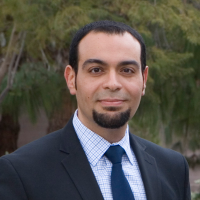 Michael Yassa, PhD, is a professor in the departments of neurobiology and behavior, neurology, psychiatry and human behavior, and psychological science at the University of California Irvine. He is the director of the Center for the Neurobiology of Learning and Memory, where the first studies of Highly Superior Autobiographical Memory were done. His lab studies how the brain learns and remembers information, and how learning and memory mechanisms are altered in aging and neuropsychiatric disease.
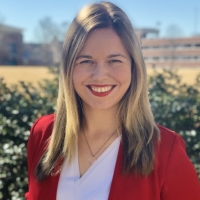 Markie Pasternak first learned about Highly Superior Autobiographical Memory in a college psychology course in 2014, realized it described her memory, and soon after began participating in HSAM research at UC Irvine. At the time she was among the youngest people to be identified with HSAM. She holds a master’s degree in higher education and student affairs and is coordinator of outreach and peer education at Auburn University.

