Kaitlin Luna: Welcome to Speaking of Psychology, a podcast from the American Psychological Association. I'm your host, Kaitlin Luna. Today we're doing a bonus episode related to the college admissions bribery scandal that was exposed this week. This is a case in which prosecutors accused affluent parents of paying a consultant to get their children into prestigious universities by having someone else take their SATs or by fabricating athletic achievements. Our guest for this episode is Dr. Suniya Luthar, foundation professor of psychology at Arizona State University. She specializes in adolescent development, vulnerability and resilience, and young people in poverty as well as teens from upper middle-class families. Dr. Luthar was also featured in a 2014 episode of Speaking of Psychology called "The Mental Price of Affluence." Thank you for joining us today, Dr Luthar. It's great to have you back on the show.
Suniya Luthar: It's my pleasure.
Kaitlin Luna: So developing an identity and learning autonomy are crucial parts of growing up. And, of course, parents can help their teens navigate the college application process. But teens really should have some level of control over it. If a parent is basically doing everything to get their kid into a college, how does that affect their teen’s self-esteem?
Suniya Luthar: Well, yes, I agree with you that adolescence is a time when kids should be developing a sense of autonomy, their own identity, and so on. And in this current generation of youngsters, that is not the case for many of them who are, aiming to get into the better colleges and schools. Having said that, I don't believe it's fair to put the blame squarely on the parents. Why do I say that? Because this pressure to get ahead doesn't come only from parents. People have asked me, “Professor Luthar, where does this pressure come from?” My answer typically is, “Where does it not come from?” It comes from parents, it comes from teachers and coaches who want their kids to play, you know, at state levels, and have all these accolades, it comes from peers. They compare notes with each other constantly. And it comes from kids themselves. So while I agree with you that young people, adolescents these days, in this demographic particularly, don't have that “Who am I?”, the choice to explore that identity. I don't believe it’s the fault of the parents, I believe it is the fault of a system that is basically corralling the kids as a herd toward doing everything you possibly can academically and in terms of extracurricular and that is your job, that is who you are for all these years.
Kaitlin Luna: And what is that doing to mental health of our teens today? Children and teens.
Suniya Luthar: The toll this extracts on them is enormous. You know, people often speak about teenagers today being overprotected and mollycoddled and such. Truthfully, my own take on this is that they're horrendously overworked, horrendously overworked. You know, we read about the lack of sleep and so on. The rates of depression, self-harm, tragically suicide, substance abuse. Our kids are under such enormous pressure and strain, even something that was, used to be fun, like playing a sport or playing a musical instrument, even that now is pursued with grim determination as a means to an end and very heavily scrutinized by an audience that is the entire school, parents, or the entire local community. So the pressure of all of this is just so astronomical. It is no wonder that our children are showing such high and increasing levels of depression, anxiety and substance use. Let me add one more thing. There was an article that just was published, I think yesterday, or the day before in the Journal Abnormal Psychology on trends of increasing depression over time. And while there have been increases in all social demographic groups, I understand that the steepest gains, the steepest rises, increases have been among the highest income level youth. In other words, the teenagers from the most affluent families are the ones who start showed the steepest rises in levels of depressive symptoms over time. So this is not something we're imagining. That is one set of findings, and other one is a report issued by the Robert Wood Johnson Foundation, where they listed the top four environments that sort of jeopardize adolescent well-being. The first three are not surprising. One is exposure to poverty, second is trauma, third is discrimination, and fourth is excessive pressures to achieve. Usually seen in affluent, not always, but usually seen in affluent communities. So this is not something that we're imagining. This is not a one town phenomenon or an East Coast phenomenon. It generalizes to upper middle class, upwardly mobile, well-educated families all over the country. This is not just the uber rich.
Kaitlin Luna: What advice do you have her parents in this situation when they're faced with mounting pressures from all sides?
Suniya Luthar: So I have advice for parents, but even before we go there, I want to underscore one more time. Let's stop parents blaming. You know, the truth is those of us who've had the good fortune of attending good colleges and universities, it's not unnatural for parents to want the same for their children, right? Do you agree with me? Oh, yeah, Absolutely. Of course. Right. So what advice do I have for parents? My advice is, by all means, strive for the best, aim for the best you can for your children. Help them pursue whatever activities, academic activities and extracurricular activities that they want to. But we watchful for when they're getting too stressed, too anxious, burned out and unhappy. Be watchful. At that point, it is important for you to say “Sweetheart, is it time to drop it down a notch? Maybe there's something we need to pull back from.” Watch out for your child's safety, obviously. I know this is a hard thing to do, because parents want the kids to get ahead. But in this day and age, it is absolutely critical that we watch out for this. Stop with “do more”, stop with this “You can therefore you must”, stop with this “Just try harder.”
Kaitlin Luna: I do want to focus a little bit on what I was talking about on the situation that they came to light this week, which does focus on parents and coaches. Do you think the parents in the alleged scheme deprived their children of the chance to make important decisions for themselves? Going back to that first question I had about developing identity and autonomy?
Suniya Luthar: I think what the parents did was over the top. Obviously, it's illegal and it's corrupt. Having said that again, I raised my own kids in Westchester County, New York. They went through the same kind of pressure to achieve and accomplish and truthfully, all of us parents do whatever we can to help our kids. Does that mean, we're taking away a sense of control from them? Not necessarily. As I said, a lot of this becomes self-propelled. They do the extra AP course and the extra sport and so on, because somehow in their minds that one extra whatever it is, is going to make the hair's difference between acceptance or rejection from a from a college of their choice. So I'm not sure that parents are necessarily robbing their kids of a sense of control in this particular situation any more than all of us do. Do you understand? You see what I'm saying?
Kaitlin Luna: Yeah, absolutely. But I also want to understand, so why would failure be important for children and teens? I mean, we're facing these mounting pressures and like you said and even things that were fun, like a sport or music becomes a chore because it's related to accolades and achievement and, you know, being the best, going to state championships, that sort of thing. But as a psychologist, why do you think it's important for teens and children to experience failure at some level in their lives?
Suniya Luthar: I think it's important for teens and children to experience failure just like it is for us. That said, once again, it's not clear to me that they don't. It's really not clear to me that they don't. I’ve seen this generation of kids as being humongous, terribly overworked. And if they are striving to be on that lacrosse team and a starter on the field hockey team and the number of things they set themselves up to do and these are high level things, they do experience failures, they have to.
Kaitlin Luna: And what do you think this situation shows us about meritocracy? Do you think there is a meritocracy out there or is there a lack of it where you achieve based on your skills and abilities as opposed, perhaps having access to more resources and that sort of thing.
Suniya Luthar: There's no question that having access to more resources tips the balance in your favor, just even the system off legacies, is just one example. Legacies and athletics flummoxes one to think that, you know, just because you play a sport, your chances of getting top notch school are better. Why not because of champion chess player or a beautiful violinist? There are some inequities and some things that just don't make very good sense in terms of how admissions are structured and not entirely fair.
Kaitlin Luna: Do you think this shows that education does not necessarily resolve society’s inequities because there's always people coming at different levels. You study teens and adults? I'm sorry children, teens in poverty, and also teens and children who are from affluent families.
Suniya Luthar: I think the inequities in our society currently to play into this. What our young people are feeling now is that if I don't make the same level off money, that my parent's do, that I'm somehow going to be left behind. Young people are aspiring to have the same education experiences, careers and standard of living that their parents did, or do. And the truth is that it is in fact, much more difficult to do that in today's day and age, economics, globalization, so on. So what's happening is that these young people feel like unless I get into that school, unless I, which is essential if I'm going to get into a high paying job, my life is over. And someone asked me the other day, “So why do they feel that? Do they really feel like if they had a job as a teacher or something that is truly middle class, not top notch, Wall Street or finance, do they really feel like they can't survive?” And the answer is, to some degree, “yes.” Because there are teachers who talk about taking a second job as an Uber driver and so on to pay off the mortgage and, you know, see their kids through school and college and so on. So these extremes, I think, really had exacerbated this feeling of, you cannot survive and lead a comfortable life. We’re not about being rich. If you don't somehow make it to the top ten, twenty percent of income levels.
Kaitlin Luna: Do you think those feelings are perpetuated by what we see in news stories and everything? Because there's a lot of stories saying, you know, this generation won't do is well as the previous generation, parents. So you know, young people coming up today in the job market are never going to achieve the same financial wealth and security as their parents. What do you think that does? What do you think being constantly bombarded with those messages does to us as a society?
Suniya Luthar: Yes, I like your phrase, “constantly bombarded.” It is all over the news media and back to what I was saying earlier. It's the news media, it’s parents, it's the schools. You start getting tracked in middle school with you have to get your resume as fancy and as impressive as possible. Little 12-year olds are starting from there, if not earlier. And then the universities are talking about how selective they are, that doesn't help anything. By saying our rates have gone down from more ten percent to seven percent; that doesn't help anything. And the message is also that sometimes universities put out tacitly or other ways that you come here and you're on the path to something really grand once you graduate. So it is really, truly, is a message that the youngsters and we as parents as we're trying to raise our kids through their schooling and college, are getting pretty much on a constant basis.
Kaitlin Luna: Yeah, absolutely. What do you think needs to change? What do you see that we need to do to make this a better situation, less stress for everyone?
Suniya Luthar: Well, I mentioned one, Kaitlin, that as parents we can be watchful for levels of depression, anxiety, stress and reach out to our kids. And, of course, adolescence is a time when they will want to brush you off and they do, that’s developmentally appropriate. But don't give up. If you feel your child is struggling. I would say the same for schools, counselors, teachers, academic teachers. Be watchful for it, if a child is getting burnt out. Put a cap on how many AP courses you can take or how many sports you do. I was talking to a girl at an independent school a couple of weeks ago, and she said, “My God, if only the school said, ‘You can't take more than four Aps. Just the fact that I can, I feel like I have too.’” So, all of us have to come together. My work is on resilience, that's something I've studied for the last 30 years among families and kids facing stresses of all kinds. And what we've learned about resilience is, one of the single most important things is that resilience rests on relationships. And that is something that is so threatened, so falling by the wayside for so many of our adolescents today, partly because they have no time. They're rushing from pillar to post in a frenzied fashion, partly because of social media, where comparisons are constant. You know, FOMO, other people's lives are better than mine. And partly because of competition with each other. If you think about it, adolescents, we used to bond over activities that we shared. Now you've got these two kids on the lacrosse team who are both being looked at from the scout that's coming from X or Y university and these kids are competing for the same things. And there is that frenzied sense of, “My goodness, I have to get us at all costs.” All these factors come together in fracturing what should have been a close-knit, kids confiding in each other, supporting each other, being loving and helpful to each other. All of that is getting affected in a terrible way. By this, “Well, I must succeed. I have to get ahead at all costs. I have to beat everybody. I have to be ahead of everybody.”
Kaitlin Luna: You said several times during the interview that is not all about the parents, is about the culture, and we've talked about the larger issues we're facing at hand. But, you know, I would imagine that it's very easy for a parent to get caught up in this feeling that they have to do everything for their child, their child has to be successful and they have to, out of love, and, you know, caring for their child, that they have to do what they can. So what are your comments about that? About how parents can help themselves not to get so pulled into that mentality?
Suniya Luthar: That’s such an excellent question. The truth is, Kaitlin, that it becomes a cultural norm. And if you decide that you're going to opt out and say, “Well, I'm not doing the travel sports or I'm not doing X or Y”, you are the odd ball. If you say I’m not getting the SAT tutor for the health for my child, you are an odd ball. There are a couple of things that happen. First of all, you feel very isolated typically in this community. And secondly, they I think, parents start to question themselves, “Is this wise?”, “If the whole tenth grade or twelfth grade is doing this, what am I doing to my child?” So there is a sense of worry, and somebody used this phrase the other day: It's like lemmings. We all get caught up in this, you know, in the sense of, I can, therefore, I must. That applies to the kid, that applies to the parents, and we're all living in communities where there are norms that affect how we live. Somebody has to say the emperor has no clothes and fortunately we are now, with the research that we're doing, I go into communities, I talk with whole parent bodies, with the entire faculty, with the students, and that is slowly leading parents and kids and communities to the point of saying, ”This is not working. We're looking at the data on our own kids. This is not working.” And it starts with a small group of parents and then grows. There was a lovely show done by Allison Aubrey on NPR just a few months ago on the town off Wilton, Connecticut where, based on the data they saw on their own kids, they really mobilized a movement through their youth council with the school to dial back some of these things, to be more vigilant. One of the moms said, “If our school had an outbreak of a serious physical illness, we'd be all over it. So why are we not doing this when we're watching these high levels of depression and anxiety?” It’s a long answer to your question, but yes, parents get swept up in this because in quotes, “It's what we do. It’s the way we live in our community.” Slowly, patiently and gently based on rigorous data, we're trying to say, “Let's dial this back just a little bit.” You know, there's another very important thing we need to consider. In fact, this may be the first order of business, which is that the parents themselves have to be replenished and taken care of if you will. A couple of years ago, my colleague Nancy Eisenberg and I did a special issue for this journal Child Development , and the question we asked 11 sets of contributors was if there was one thing that you want to change, to benefit, or help children who are facing adversities of various kinds, what would that be? And the single most consistent answer was, ensure the well-being of the primary caregiver, who's usually the mom, and the way that has done is by making sure the mom gets support. So in child development research, we're so used to thinking about parents and moms, what we should do, what we shouldn't do, what we do, what we don't to, but almost never stop to ask the question, how do moms even do this with the ongoing demands and challenges and stresses. So a big factor that when I talk to parents on communities I say, ensure that you are yourself taken care of. People say, “Ah, you’re telling moms to take better care of themselves” and I say no and not adding one more thing to the already very long list. What I'm saying is, understand the need for you to be tended to yourself and prioritize. Prioritize that, make that happen.
Kaitlin Luna: In your research and in your work, can you talk about what you see about the different pressures for children and teens in poverty versus children and teens in affluent families?
Suniya Luthar: There are an interesting couple of papers that came out from my colleagues at Boston, Rebecca Coolly and Eric Deering. They did analyses off large data sets, one of the U. S and one in Norway and essentially showed, a U-shaped link between school level affluence and adjustment problems among teens, especially adolescents. So what that means is there are elevated problems at both ends of community level affluence. Kids in the poorest areas and kids in the most affluent communities that are showing higher levels of problems and those in the middle. Now people say, why would that be? There's no question that living in poverty has enormous stressors ranging from violence on the streets to just not having enough food or to be able to survive. On the flip side, you have these specials that we've been talking about among families and kids in relatively affluent communities where this word that I keep using, this frenzied pursuit, there's panic about Oh my goodness, if I don't do this, if I don't do that, I'm going to get left behind. And that applies as much the parents as it does for the kids. That is not a good way to live. There's never a break. There's never a time where the kids can sit back and say, in next week, I'm going to nothing but chill.
Kaitlin Luna: Yeah, Seems almost crazy too to say that out loud. Do nothing. What? What does that mean?
Suniya Luthar: I actually asked, I was in an all-boys school not that long ago where again, as we've consistently seen these high levels of depression and stress. And I asked these boys, I had the luxury of sitting and talking with them right after we did the questionnaires, so I said, “Are you happy?” They looked at me and said, “What do you mean? What do you mean by happy?” So I said, “Oh, I don't know, do you ever feel chilled out and relaxed?” And they truthfully looked at me and said, “We don't do that.” So even the parties, right? Even their parties have become so once again, frenzied. There’s drugs and alcohol at most of these social gatherings. In fact, it's rare to have one where there isn’t a keg or some kind of substance that's being passed around. So even that is high octane. Hurry up and enjoy yourself. You hear about pre-gaming where kids will have a few swigs off vodka or whatever, even before they get to the party, so they can be relaxed enough to truly enjoy themselves. So whereas in a generation ago, perhaps, yes, we had a drink or two to chill and have fun. There's a sense, a greater sense now of drinking to get drunk, as opposed to laid back and fun. And if what I'm saying what I'm saying?
Kaitlin Luna: Yes, absolutely. And I think you know, to summarize our conversation today we've really, really talking about, yes, this story in the news and it's very sensational. There's a lot of elements to it. It’s shocking on many levels. It's upsetting. It's causing a lot of people to be angry. We're also saying this is an extreme example, a symptom of a larger societal issue we’re all facing.
Suniya Luthar: Very well said. I’d say it’s the tip of an iceberg that is really quite big and spreads across a pretty white swath of America and the world, I would say. The top 20, 25, 30 percent. Everybody's aspiring to maintain their standard of living and want their kids to get a good education. It spreads across all of us.
Kaitlin Luna: And then it really takes starting small with small pockets of people to help change what we’re seeing because we are seeing now the effects on our young people today with depression, substance abuse.
Suniya Luthar: Yeah, Kaitlin. Think about the cigarette smoking and how that change changed around, and rates went down a few decades ago. Big part of that was research and evidence again and again showing there are risks associated and here's what they are. In the same way, we take the same approach with our research with highly achieving schools is to keep at it and document again and again and again across schools, independent schools, public schools, day schools, boarding schools, in cities and suburbs. East Coast, West Coast, down South, Midwest. Everywhere we go, we're seeing the same problem, and it's documenting it in peer-reviewed research journals and bring those data back to communities, the general data and the data on their own school saying, “Alright, folks, here's what it is.” That does propel some movement forward. Maybe slow, but there is definitely a beginning movement to say, “We need to take this very, very seriously.”
Kaitlin Luna: Yeah, absolutely. Thank you so much for being on the show, Dr. Luthar. I really appreciate your time.
Suniya Luthar: It's my pleasure, Kaitlin.
Kaitlin Luna: We love to hear from our listeners, so if you have any questions, comments or ideas to share, you can email me at kluna@apa.org. That’s K-L-U-N-A at APA dot org. Also, please consider giving us a rating in iTunes. We'd really appreciate it. Speaking of Psychology is part of the APA podcast network, which includes the podcasts, APA Journals Dialogue about new psychological research and Progress Notes about the practice of psychology. You can find all of our podcast on iTunes, Stitcher or wherever you get your podcast. You can also go to our website SpeakingofPsychology.org to listen to more episodes. I'm Kaitlin Luna with the American Psychological Association.


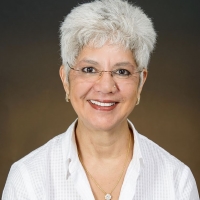 Suniya S. Luthar, PhD, is foundation professor of psychology at Arizona State University and professor emerita at Columbia University’s Teachers College. After receiving her PhD from Yale University in 1990, she served on the faculty of the Department of Psychiatry and the Child Study Center at Yale. Between 1997 and 2013, she was at Columbia University’s Teachers College, where she also served as senior advisor to the provost. Luthar's research involves vulnerability and resilience among various populations including youth in poverty, children in families affected by mental illness and teens in upper-middle class families, who reflect high rates of symptoms relative to national norms. Her recent scientific focus has been on motherhood and her studies aim to illuminate what best helps women negotiate the challenges of this life-transforming role, and to apply these insights in interventions toward fostering their resilience.