Announcer:
Interested in the latest discoveries and innovations in human technology interaction? Join us at APA's Technology, Mind and Society Conference in Denver, November 12th through the 14th. This is the premier interdisciplinary venue for emerging research in the role psychology plays in the design, use and impact of new technology. The call for submissions is now open. To learn more, visit www.tms.apa.org.
[music]
Kim Mills:
Welcome to this special bonus episode of Speaking of Psycholog y, the flagship podcast of the American Psychological Association. Speaking of Psychology explores the connections between psychological science and everyday life. I'm your host, Kim Mills. Turn on the evening news or open a newspaper these days and there's virtually nothing but COVID-19 coverage. The story is moving as rapidly as the Coronavirus itself.
Here on Speaking of Psycholog y, we acted quickly to offer a psychological perspective on the novel Coronavirus doing our first interview on the topic on February 10th, which now seems like a lifetime ago. Back then, the Coronavirus had barely touched U.S shores, life was mundane, schools were open, most of us had jobs or weren't teleworking and our understanding of the nature of the Coronavirus was limited.
Indeed, it is still limited, but we do know more now and the United States has the dubious distinction as being the country with the most Coronavirus infections today. On February 10th, we aired an interview with Dr Baruch Fischhoff, a professor at the Institute for Politics and Strategy and the Department of Engineering and Public policy at Carnegie Mellon University.
He's also an expert on public perception of risk and human judgment and decision making. He provided some important insights into quarantine and the risk of the virus, along with helpful advice on how to deal with anxiety. Since much has changed in the ensuing month and a half, we have invited Dr Fischhoff back to talk about the latest developments regarding the pandemic. Welcome back to Speaking of Psycholog y, Dr Fischhoff.
Dr Baruch Fischhoff:
Thank you for having me back in and you're right, February 10th does seem like a lifetime ago.
Kim:
It really does. As I said a moment ago, we know more about the Coronavirus today than we did when you last spoke to APA. Given that, would you say the risk level, at least in the United States, has changed since then or is it the same as it has always been, but now we have more information and better understand the risk?
Dr Fischhoff:
Well, I think it's some of both. I think had the country responded in a more coordinated and energetic way, then we would be facing less risks than we have now. We didn't really mobilize for much of that time. We had a major heads-up from what was going on with China. Many, I would say, science- oriented organizations like my university and others, some of the big tech firms began planning in January but the United States was very sluggish, didn't get into gear. We're facing a bigger risk now than we needed to have been facing.
Kim:
You spoke the last time about people being more fearful of things that they don't know, compared with things they do know. This was in the context of how we have a good understanding of how much threat is posed by seasonal flu. We now know more about the Coronavirus, including that it's more easily transmitted by flu, and that it seems to be more lethal. Given that we know more, should we be less fearful of COVID-19, or should we be more fearful right now?
Dr Fischhoff:
Well, we should be properly fearful, that each of us needs to consider what are the risks to themselves and to other people associated with each of their actions. When we expose ourselves, then we not only take on risk for ourselves but should worse comes to worse and we need hospitalization, we're posing risks on the healthcare system. If we have a suspicion of having been exposed and we're required to isolate, then we're imposing a burden on other people.
If we actually have the disease and perhaps are fortunate enough to have a asymptomatic or light case, we become disease vectors and are capable of transmitting it to everybody. This is for our own sake and for other people's sake, this is a life and death situation. We should take it with the gravity that it deserves. That also means not overstating it, that is-- Each of us needs to find a balance where we're doing all that we appropriately can, and then give ourselves a break and not worry about it in ways that we can no longer control.
Kim:
How can we tell what risks we're taking when we do certain things? I mean, all of us have to eat. Is it a problem to go to the grocery store? What about going out and taking a run or a walk or a ride on a bike? What about taking in our packages from Amazon? What sorts of things are more or less dangerous?
Dr Fischhoff:
I'm not a toxicologist or a public health official. I would recommend to people to find a very small number of very trustworthy sources, perhaps their local health department. They're also often a very good source. They're not subject to the political pressures that, say, the Centers for Disease Control and Prevention or the World Health Organization experience, or find a science writer who's been working this beat, knows how to evaluate scientific evidence and find the guidance that they have. I think the science is actually advancing fairly quickly and understanding the persistence of the virus in the air and on different package surfaces. I would say, it may be different now and maybe the science may be different two weeks from now than it is now. Rather than giving anything specific, I suggest that people find some of those sources. The one thing that complicates this for all of us is that because our national response has been and remains so feeble in many ways, we are not doing the testing that would give us a clear idea of how much of the disease is out there.
It would be different if we knew for certain that one person in a thousand in our area was a carrier, was seropositive or had the disease, or if we thought that 1 person in 10 had it, it would be very different in terms of thinking about how one would navigate it. We don't know exactly what the risk is, but it's probably-- I don't know. Talking from Pittsburgh, I wouldn't be surprised if it's 2% to 5% of people have some reasonable chance of having been exposed to the disease.
Again, because the testing is so poor, we have very little idea of where those people are. We might as well assume that whatever the rate is, it's equally likely to be anybody which suggests that, well, if a 2% chance of getting the disease from somebody is more than you want to deal with, then it would be important to maintain the social distancing that's being recommended.
Kim:
I've seen some videos on the internet of people who claim to be doctors unpacking groceries and showing how you should wash off everything to a level that seems absolutely crazy to me. Is that really the risk that we're facing right now? Do these people know what they're talking about, and where should we be getting this information?
Dr Fischhoff:
I think that's, again, part of our national failure to plan for and respond to this disease. Somebody ought to have taken the best available evidence and translate it into the practical terms that everybody needs to know because everybody eats, everybody handles groceries and because we don't have national guidance, that people are left looking for somebody somewhere. In my experience, the internet is the wild internet, is the untamed internet. It's not a very good source of information. Once again, I would look for science reporters who know how to evaluate evidence and they may very well have covered it. Somebody that you trust or Scientific American or WIRED or Undark or the science or health report of some of the major newspapers that still have them. One of the confusing things that's happened in this situation is we now have a political beat reporters covering topics and health, and they may have expertise in evaluating politicians claims, but they don't have expertise in evaluating scientific evidence.
Kim:
Then there's the problem of those reporters who are out there, let's say, covering the president's daily briefings on this situation. You never know from day to day what he's going to say. He gets up there and it's not so much to single him out, but it's inescapable. He'll say something on Monday and on Tuesday, he'll correct himself and on Wednesday, Dr. Anthony Fauci will say something else. What are reasonable people to think when we're being bombarded with this kind of--? We're whipsawed by the stats that we're given and the information that we're told.
Dr Fischhoff:
Whatever the source, inconsistent, conflicting evidence adds to the burden that we're all bearing in this crisis. The standard recommendation in this situation and others is look to subject matter experts or again, experienced science or health reporters for evidence and pay no attention to science or health information that comes from politicians that even if they, in good faith, are trying to tell you the truth and not spin it for political advantage. They don't know how to evaluate scientific claims.
Even if they've been briefed, they don't have the mental models, the training, the background to communicate anything. Look at political figures to understand where they are in the political arena, whether or not you trust them. If they inspire you then take in their inspirational messages, but they're no more a source of information than the stuff that shows up in social media. Health people and scientists for health and science information, politicians for politics.
Kim:
There is a lot of talk out there about the exponential growth of the Coronavirus infections. What exactly does that mean? You've studied flu, for example. Does the flu grow exponentially? Is this something that we see on a regular basis with other kinds of illnesses?
Dr Fischhoff:
Any transmissible disease has what they call a reproduction factor. The technical term is R&R. It's basically for each person who gets to the disease, how many people get the disease from them. Measles has an R&R, that reproduction factor in the teens. For those who had any experience with it, it just spreads wildfire which means that it spreads like wildfire. It seems, at the time we're writing, as though the reproduction factor for the current virus is maybe two or three. That means that for each person who gets it, say another two people get it.
Then each of those gives it to another people, and each of those gives it to two additional people. Eventually, it raises to the-- It's two to some exponent by the time you cascade it. That's why it's so important in places like South Korea where they have done or-- Singapore where they've done an effective job or much more effective job than we have at containing the disease is they do a lot of testing. They find that first person, as quickly as they can they trace everybody who they might have exposed and who might subsequently exposed other people so that you stop that cascade.
You can only do that if you do a lot of testing and have really mobilized your resources. From an intuitive perspective though, it's hard to see how those probabilities-- Either how that exponential process that two, and then four, then eight, then 16 mounts mounts up. It's a situation where even if you have a degree in math, like I do, know how to do the calculations, your intuitions will lead you wrong. You really have to look at the numbers. If somebody says, "This is where it's going," and they've done a trustworthy peer reviewed analysis, then believe their numbers, not your intuition.
Kim:
There are different models out there right now though. How do we know which ones to believe in? Some of them do seem to be coming from reputable sources.
Dr Fischhoff:
The models, what they do-- They do things like that. They say, "Well, what's the probability that--" They put together pieces, and then do the math for you. They say, how many people have it? How many people will they give it to? What percentage of those people will need hospitalization? What's our ability to reduce that transmission rate by social distancing? They do the math for you, and you could never do that in your head. The quality of the model depends on how complete they are and how good these pieces are. At this point, again, because we've done such a poor job of testing, we're fuzzy about that.
We're in a fuzzy, uncertain state about the transmission rate of the disease. There's also rather little social science-- You can think of this as, well, social distancing. It's really a psychological or a sociological question that is, how well do people understand what social distancing is? How well are they able to manage it in their everyday affairs? When you're having a conversation with somebody, you start off six feet apart and it's a conversation and you want to talk to one another, will you be drifting together?
How well social distancing works is really a behavioral question. The modeling teams typically don't have a lot of social science expertise. It turns out that the social sciences is, as they say, unsettled because we really don't know how effective these things are. Partly because we haven't studied them as well as we want. If your listeners are interested or our listeners are interested, The National Academy of Sciences has a consensus committee that reports to the Office of Science and Technology policy in the White House that I've just been asked to join, that has done a report on-- A synthetic report on social effectiveness of social distancing.
It's pretty technical, but it's also pretty readable. That committee has been turning out reports on things-- Some of them quite short. They have a two-page report on how long the virus persists on different surfaces. If you wanted to know how to bring in the groceries, that would be a place where you could figure it out yourself or hope that a science writer had done it.
This committee just turned out a report on really preparing for worse. It's on what they call critical care standards. They pulled together a consensus of what, I think, the health care or medical bioethical establishment believes that should be done in situations where we don't have enough equipment or perhaps enough healthcare personnel, to be able to give everybody the usual standard of care. It's basically guidance on rationing health care in a situation where we haven't mustered the resources in order to give everybody a reasonable standard of care. It's a grim document, but if somebody would like to read a summary of thinking, you can find it there.
Interviewer:
Sorry. Say again, where it's findable?
Kim:
It's called The National Academy of Sciences Standing Committee on-- People go to the NAS.edu, The National Academy of Sciences.edu. They feature COVID-19 news and resources. If you click there, you can find this committee. It's got a long URL itself, and I think it is addressing a problem that you mentioned earlier, which is, "Oh, there's lots of people giving advice. How do we know who to trust?'' The National Academy, at the request of the Federal Government, has taken it upon themselves to produce peer-reviewed syntheses of what the evidence says at any given time.
Kim:
Great, that would be interesting to look at. Talking about social distancing, and I don't know that we have a lot of research in this area, but perhaps you would know. Psychology has certainly studied social isolation, people who have lived in solitary confinement for periods of time, and we know how they react to that. Do we have any idea about social distancing, and how long people will tolerate it? Are we going to reach a point in a month from now, where people say ''The hell with it, I can't stand this anymore, I've got to have a party''?
Dr Fischhoff:
I would say that's at the fringes of my expertise.
Kim:
[laughs]
Dr Fischhoff:
I would say, looking at it from a decision making perspective, one of the burdens of this period is that much of our life is no longer on automatic. We get through life because we've made the decisions about what we want to do, how we organize our breakfast, how we get our kids to school, when we get to work, what e-mail we answer, and so on. If you have to make decisions about everything, it's a real burden.
We're now in a period where all of a sudden, things are up for grabs, and we've got to figure them out. That's contributing to the burden that people feel now. An optimistic perspective would be that we're two weeks into this now, depending on where you are, that people will be figuring these things out, that people are using a social media and more traditional ways of contacting people to develop solutions that work for them. People have different ideas, and different things are becoming socially norm. It feels less aberrant now than it did three weeks ago to talk to a loved one on the computer, on the smartphone rather than in person. An optimistic perspective would be by helping one another, we'll figure out ways of dealing with this situation that work for one another and for each of us, and both the decision-making burden and the burden of not having a habit will lessen. Maybe our tolerance will be greater.
Kim:
As you said, we're a couple of weeks into this now. What are you thinking about in terms of your future research? Are you thinking that you're going to be working on a reaction to Coronavirus? How will this figure into what you do?
Dr Fischhoff:
Well, personally, I've done research on many different risks, including pandemics in the past. We did a nice project or I thought it was a nice project. We did a project on H5N1 avian flu where we essentially mapped out what the social side of the response should be and looked at the degree of agreement between experts and non-experts. We did a study towards the end of Ebola where we looked at a sample of Americans, courtesy of funding from the National Science Foundation, and found that by two or three months into Ebola, people pretty well understood what was going on.
Even though Ebola, there was some clumsiness in its handling, together people were able to figure it out. I think that was partly because there was coordinated national policy and communication that addressed some of the noise that we're currently having. We had good communicators, or that people already knew what worked and what didn't. They even gave us good estimates of what its basic reproductive number was, that is how transmissible Ebola is. I guess I'm an optimist about people's ability to understand understand these things.
None of us is perfect, but when the chips are down, if we're given half a chance, through good communications-- We have the resources to address, to make and execute good decisions that people will figure things out. For myself, I've been helping some other people with research projects, but because I've decided not to do any research of my own because I've been working these issues for a long time and I think it was more value-- I brought greater value by helping to connect the different worlds, like this National Academy of Sciences committee that I'm going on as the only social or behavioral [unintelligible 00:24:28] scientist, I figure that's the best thing that I can do.
Kim:
Are there lessons from your prior research that you would impart to us at this point? You mentioned your work on Ebola and H5N1.
Dr Fischhoff:
My lessons for policymakers are to level with the public, treat the public like adults, assume that people can understand well-crafted messages, can execute, can handle bad news, want to know what they're up against, make certain that you provide them the resources that they can take care of themselves and their family. There is a tendency on the part of experts, including public officials, to do a lousy job communicating and giving up on the public.
Typically, it's a case where the politicians, the officials have failed the public, not the public has failed the politicians. My advice for all of us who are trying to make the best out of this situation is, in terms of practical information, it doesn't change very quickly. You could check every morning, check two or three trusted news sources, a local paper if you're still fortunate to have it, a national paper, your local health department. That will probably tell you everything that you need to know fact-wise.
Use social media for social support, not a source of information. One of the cognitive traps that's very human is to try to make sense out of any claim that we hear. You read some fantastic conspiracy theory and you think, "Well, maybe. Who knows?" That natural sense making a function is useful in everyday life when the world isn't trying to lie to you, but there's lots of people out there who are trying to lie to you. I would say, pay no attention to factual claims on the news, on the--
Kim:
On the internet.
Dr Fischhoff:
Social media or
[unintelligible 00:26:47]
coming from politicians.
Kim:
Great. Well, Dr Fischhoff, I want to thank you for talking to us yet again, this has been really interesting and enlightening. I'm sure it's going to help our listeners cope as we deal with the huge changes that we're seeing in our lives. Thank you.
Dr Fischhoff:
Thank you for having me.
Kim:
Thank you to our listeners. If you have any comments or thoughts about our podcast, send us an email at
speakingofpsychology@apa.org
. You can find previous episodes of Speaking of Psychology on Apple, Stitcher, Spotify or wherever you get your podcasts, and please consider giving us a rating on those sites. You can also go to our website and get all episodes at
speakingofpsychology.org
. Thank you for listening. For the American Psychological Association, I'm Kim Mills.
[music]
[00:28:20] [END OF AUDIO]


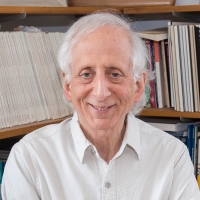 Baruch Fischhoff, PhD, is Howard Heinz university professor in the department of Engineering and Public Policy and the Institute for Politics and Strategy at Carnegie Mellon University. A graduate of the Detroit Public Schools, he holds a BS (mathematics, psychology) from Wayne State University and a PhD (psychology) from the Hebrew University of Jerusalem. He is a member of the National Academy of Sciences and of the National Academy of Medicine and has served on many National Academies of Sciences, Engineering, and Medicine committees. He is past president of the Society for Judgment and Decision Making and of the Society for Risk Analysis. He has chaired the Food and Drug Administration Risk Communication Advisory Committee and been a member of the Eugene Commission on the Rights of Women, the department of Homeland Security Science and Technology Advisory Committee and the Environmental Protection Agency Scientific Advisory Board, where he chaired the Homeland Security Advisory Committee. His books include "Acceptable Risk," "Risk: A Very Short Introduction," "Judgment and Decision Making," "A Two-State Solution in the Middle East: Prospects and Possibilities”, “Counting Civilian Casualties” and “Communicating Risks and Benefits: An Evidence-Based Guide.”