Kim Mills: Scientists around the world are racing to produce a safe and effective vaccine for the virus that causes COVID-19. Just months after the new coronavirus emerged in China, researchers are testing 40 vaccines in clinical trials in humans, and exploring 92 others in preclinical studies according to the New York times, vaccine tracker. But, developing an effective vaccine is only part of the battle. Even once one is available, enough people will have to be willing to take it to prevent the spread of the disease, and that may not be easy. An August Gallup poll found deep skepticism among many Americans about a potential COVID-19 vaccine. 35% said they would not take a Food and Drug Administration approved vaccine, even if it were provided to them for free. The numbers were even higher among non-White Americans, 41% of whom would refuse a COVID vaccine. And among Republicans, 53% of whom said they wouldn't take it either.
Psychologists' research can offer insight into why some people forgo vaccinations and what policymakers in the healthcare sector can do to change that. Welcome to Speaking of Psychology, the flagship podcast of the American Psychological Association that explores the connections between psychological science and everyday life. I'm Kim Mills.
Our guest today is Dr. Gretchen Chapman, a cognitive psychologist and professor in the department of social and decision sciences at Carnegie Mellon University. She studies how people make health decisions, including whether or not to get vaccinated, and how health officials can design interventions that improve vaccine uptake and other healthy behaviors. Welcome to Speaking of Psychology, Dr. Chapman.
Dr. Gretchen Chapman: Thank you so much.
Mills: A moment ago I mentioned a recent poll that asked whether people would get a COVID vaccine, which as we know does not yet exist. So, let's start with something less hypothetical. We already have a yearly flu vaccine, but less than half of Americans get it. Why is that rate so low and how does it compare to rates for other vaccines?
Chapman: Well, that is a question that I spend a lot of time thinking about. Vaccination rates for a lot of vaccines are quite high. So, for all of the pediatric vaccinations that children are supposed to get individually, their uptake is more than 90%. If you look at all pediatric vaccinations as a group, something like three quarters of children have had all of their vaccines on time. So, that's certainly far from optimal, but higher than the stats you were just quoting for flu shots. So, the flu shot, and also the HPV vaccination that adolescents are supposed to get, those are the vaccines that have much lower than desired uptake rates and one reason for that might be the difference between vaccinations are required versus not required.
So, pediatric vaccinations are required for school enrollment and daycare, and that sort of thing. So, it may be the requirement itself that drives those rates up. Or, maybe they've just been more normalized as indicated by the fact that schools require them. The HPV vaccine is not required for school registration. The flu shot is required in some places. Hospitals will require their personnel to get the flu shot, but it's not as broadly required so that may be part of the answer for why flu shots have a lower uptake rate.
Another reason is that flu shots, you have to get it every year so there's more of a burden. And, I'm certainly very interested in the psychological principles that help to determine which people do get the flu shot.
Mills: Anti-vaccine activists have targeted the mumps, measles and rubella, or MMR vaccine, for decades and there've been many reports of measles outbreaks in communities with low vaccination rates. But, you wrote in a recent review paper that evidence actually suggests that vaccinating refusal rates are stable, not increasing. Can you help square that seeming contradiction?
Chapman: Yeah, that is a puzzle. Pediatric vaccination rates are stable. As I said, they're each individually above 90%, but that's not quite high enough. So, that still leaves room for outbreaks. People who have very strongly principled reasons against vaccination, they're are small group. Less than 1% of children in the U S receive no vaccination at all. But, even though it's a small group, it's still very important, in part, because of geographical clustering. So, if a lot of unvaccinated children live together in the same community because their parents tend to have similar views, then that makes that community very vulnerable when say an international traveler might introduce measles to the community. So, we can have very disturbing outbreaks even, when nationally speaking, the vaccination rate is high in stable vaccine.
Mills: Vaccines are some of the biggest success stories in the history of medicine. As a result of vaccines, diseases like smallpox and polio are practically unheard of in the United States. So, why are the anti-vaccine activists messages around MMR so compelling to some people? Is medicine doing a poor job of promoting itself?
Chapman: Well, certainly the fact that people don't do everything they should do to stay healthy. That is a very general problem that's not concentrated on vaccination. So, many of us smoke when we shouldn't, we don't exercise enough, we eat too much sugar, and we're overweight, we don't wear seatbelts all the time. So, the fact that people don't vaccinate at the rates that would be recommended, it's just part of a broader picture of how hard it is to promote very consistent health behavior.
If you think about vaccinations from a lay person perspective, it is a pretty bizarre behavior that we were asking people to do. So here, we're going to take this virus that causes a dangerous infectious disease, but don't worry we modified it, or killed it, so it can't cause the disease. And then, we're going to inject it into your babies arm. If you don't know about the evidence behind vaccines, that would sound like a very bizarre request that medical professionals are making of you. So, it's perhaps not surprising that some people think of vaccines as scary. You have to know a little bit about the scientific evidence, and trust the providers that are telling you about that evidence, to buy into the drastic health benefits that vaccinations are offering.
Mills: Well, doesn't that speak to my question that medicine is not doing that good a job of explaining vaccines to people? There's a lot of evidence out there that what got people exercised over vaccines, like MMR for example, was a now discredited paper published in the Lancet. And yet, still there seems to be no way to kill that bad story.
Chapman: Yeah, no. I think that's an excellent point. I guess I would expand on your point and suggest that this phenomenon is not specific to vaccines. So, medicine has not been as successful as we would like at promoting a lot of healthy behaviors, not just vaccination. Conspiracy theories and misinformation are dangerous to public health, but those dangers don't just rest in the world of vaccination. They occur in a lot of domains. And, the psychology behind false beliefs and unhealthy behavior rest on a broad and far ranging set of principles that are not trivial to overcome.
Mills: In that same review paper I mentioned a few moments ago, you examined the research on interventions to increase vaccination rates. What did you find? What works?
Chapman: We considered three categories of interventions. The first was interventions designed to change people's beliefs and feelings about vaccination, so things like providing information. The second was social factors, so things like informing people about what everyone else is doing, or about the prosocial benefits of vaccination. And, the third category would be called "intervening on behavior directly." So, not trying to change what people think and feel, but just trying to make the vaccination behavior the easier behavior to engage in. And it was that third category where there's the bulk of the evidence supporting the efficacy of those kinds of interventions. Providing information sort of surprisingly has a mixed track record in terms of it's ability to change behavior. And the social factors are very promising, and there's a lot of social psychology evidence supporting them, but not much of that evidence has been documented in the realm of vaccination yet.
Mills: So, it has to become a standard practice so that you're given an appointment, and you're just told that you have to get your vaccination.
Chapman: Yes, standard practice, I think is a good phrase to sort of summarize that category. So, recommendations from physicians, especially what we call presumptive recommendations where the physician says, "You're due for this vaccination today so we'll be giving and at the end of the session," which communicates that it's standard practice. It's normal. It's not something to be debated. A default. So, things like pre scheduling an appointment for vaccination, incentives, reminders, requirements, those sorts of practices.
Mills: The COVID vaccine we're waiting for... on the one hand, some people may be especially motivated to take it to get back to normal. But on the other hand, many others are especially worried about safety because of the perception that it's being rushed. Does that change what health officials need to do in terms of public messaging?
Chapman: I think it might. Yeah. So I mentioned earlier that informational interventions to try to change what people think about the vaccination have an inconsistent track record. If you think about it, when was the last time that just learning one short fact changed your behavior? You're someone who doesn't exercise enough, and then someone gives you a little brochure, and all of a sudden you're exercising enough. That seems pretty unrealistic. And it also might seem unrealistic that a short message about the safety and efficacy of vaccination would change someone who never bothered to get a flu shot into someone who gets one every year.
But, part of the reason why those information messages are such an uphill battle is because people already know a lot about the flu shot. They've maybe experienced that year after year I never get the flu, even though I never get the vaccine so how useful could it be? Or, I have this group of friends that tells me vaccinations are risky. And so, I've thought about it a lot. And so, a short information message is unlikely to make a big change in their beliefs.
But, with COVID we don't know anything about that vaccine yet. So, this is a situation where an information intervention might actually have an influence on people's belief and then their behavior because we're sort of starting from a starting point of no information. So, communicating exactly how safe and effective the new vaccine is, and communicating that honestly, I think is really important. And, if there's ever a time when an information intervention is going to impact people's behavior, this might be it.
Mills: So, with the flu, what I hear from a lot of people is, "Oh, it's just the flu. Nobody dies from the flu." But, that's not true. People die from the flu all the time. But, there's this sense that it isn't a big deal and we have an administration that is telling us that COVID isn't a big deal even though we're seeing people on ventilators, and folks who were in the hospital for weeks and weeks.
Chapman: That's right.
Mills: Is it possible to scare people into getting a vaccine?
Chapman: There's a lot of literature in health psychology on fear messages. And sometimes fear messages are effective, but they can also backfire and produce an ostrich effect where the person wants to hide from the fearful information rather than taking action against a threat. Fear messages seem to work better to promote inaction. So, if you want people to stay in their houses and not go out a fear message might be pretty effective. But, if you're trying to promote action, like getting a vaccine, they may backfire unless you have a clear route of action for people so people know exactly where and when they could get the vaccine, and they trust that it's safe. That's when the fear message could be effective, the literature indicates.
Mills: We've been trying unsuccessfully to develop a vaccine for HIV for more than 30 years and the original flu vaccine took something like eight years to develop. Has science ever created a vaccine as quickly as the administration is promising?
Chapman: Vaccine development is actually not my area of expertise. I think I read that the mumps vaccine was the quickest vaccine ever to be developed and that it took four years. So, you're absolutely correct that quick vaccination development is an oddity. And of course, trust in the vaccination system, both production and distribution, is critical. There's a lot of research on vaccine confidence, and trust in their providers, and developers of vaccines is part of that. So, a real risk that we are facing with operation warp speed to get a very fast COVID vaccine is we may undermine some of that trust in the vaccination system.
Mills: Yeah, I think we've been talking about that a little bit with the Gallup poll that I mentioned a little while ago that found some groups may be particularly reluctant to accept the vaccine, non-white Americans and Republicans, for example. Will different messages and strategies be necessary for communicating with different groups?
Chapman: Perhaps. We know that recommendations from healthcare providers are strongly associated with vaccine uptake. And, there were even some experiments that randomized patients to get different kinds of recommendations, so we know that recommendations have even a causal impact on vaccine uptake. It's very possible though that physician recommendations would be most effective for people who already have high trust in the medical system. So, people of color who have historical reasons to have less trust in the medical system might... their behavior might be less influenced by physician recommendations. Conservatives who have less trust in science overall may be less influenced by physician recommendations. So, there might be some customizing of messages there.
I'd also like to mention the idea of social norms. This effect that we like to do what other people like us are doing. We sort of trust in the wisdom of the crowds in that sense. If we see other people like us getting vaccinated, then we think, "Oh, that's what people like me do." And social psychology shows that proximal norms, or norms... what other people like me are doing in the very situation than I am in. Those are the norms that are most influential. So, if people of color see other people from their same communities getting vaccinated in high rates, or if conservatives see other conservatives getting vaccinated in high rates, that's going to be influential. But, those norms have to be specific to the communities that we're trying to reach.
Mills: I've heard suggestions that once there's a COVID-19 vaccine, that it be coupled with the seasonal flu vaccine. Do you think that's a good idea? Do you believe it would make people more likely to get both, and thus increase the uptake of the flu vaccine?
Chapman: Certainly convenience is a big factor in vaccination. So, think of pharmacies that are open 24/7, and offer flu shots, and some other vaccinations, as opposed to having to make an appointment to see your doctor. Or, workplaces that offer free on-site vaccinations. That kind of convenience does increase uptake and bundling the flu shot with the new COVID vaccine would be another example of convenience. Certainly, people who are already planning on getting the flu shot would be more likely to get the COVID vaccine at that point because it's convenient. And,, it's possible as you suggested, it would go the other way that people who are enthusiastic about getting the new COVID vaccine, but never really bothered with the flu shot, will now get both because they're bundled. I'm not sure that would bring along folks who are reluctant to get either vaccine.
Mills: I know it's preliminary, and maybe this isn't a fair question, but do we have any reason to believe that a COVID-19 vaccine will be any more effective than the seasonal flu vaccine, which isn't very good?
Chapman: I think the jury's still out on that. You're right that the seasonal flu vaccine is not very good. I've read that effectiveness is in the 60 to 80% range, meaning that it reduces your risk by 60%, or down to 40%, of what your risk would have been without the vaccine. It's still worth getting, however, because obviously some risk reduction is better than others. And also because of the dynamics of herd immunity that even if it's not effective in everyone who gets it, if it's effective in enough people then there are fewer carriers to spread the vaccine around the community. So, by the same logic, even a far from perfect COVID vaccine could still be very worthwhile to roll out.
Mills: Until a vaccine is available, preventive strategies such as physical distancing, mask wearing, and hand washing are pretty much all we have to keep COVID in check. You wrote an article for the conversation back in May about how Americans already were tiring of these measures, and that from a psychological perspective that wasn't surprising. Now, here we are months later and people are even more tired of it than they were in May. What does psychological research tell us about why that is and how can we keep people motivated to continue taking these measures?
Chapman: Well, you don't need psychological science. You only need everyday experience to tell you that lasting health behavior change is really challenging. So, even quitting smoking is very, very difficult, but even so, people who were successful at quitting smoking, they often relapse. Losing weight, incredibly difficult, and yet people who are successful in losing weight frequently regain the weight.
So, health behaviors are hard to get started and they're even harder to keep going. So, there's no easy answer to that. Some behaviors do end up being habitual. Brushing teeth is probably a good example. For a lot of people, they maintain that behavior for decades and decades.
One psychological principle that helps with lasting behavior change is if there is an immediate benefit, or an immediate reward to the behavior. So, maybe brushing teeth is a good example. You get that clean, minty feeling in your mouth, that's the immediate reward, in addition to the longterm benefit of preventing cavities. Whereas wearing a mask, or socially distancing, it's hard to engineer what would be a short-term reward that feels good in the moment. Exercise, that works that way for some people. Some people just really enjoy the feeling of exercise, or that endorphin rush that they get at the end of a run, and so that keeps them going. So to the extent that we can build in those immediate rewards, or actual enjoyability of the behavior, that's going to keep it going long-term. And that's just very challenging for some behaviors.
Mills: So, should we consider paying people to get the COVID vaccine? Kind of like when you donate blood, you get $20.
Chapman: There is evidence that paying people to get a flu shot increases uptake, so that's not a bad idea. It's difficult to scale. If you want to get 300 billion people vaccinated, and you're going to pay them each $5, that's a lot of money put altogether. And then, we also worry about the downstream effects. So, we don't know yet whether the COVID vaccine is going to be a once in a lifetime vaccine or more like the flu shot where you have to get it every year. So, if we pay you $5 this year, and then that incentive program is discontinued and we're not paying you $5 next year, would you maybe be less likely to get vaccinated next year because you're like, "Where's my $5?"
Mills: Are you doing any COVID vaccine related research right now? What do you think is the next horizon for this work?
Chapman: I am working on a COVID related project with my colleagues at Carnegie Mellon University, Julie Downs and Steven Broomell. We have an NSF-funded project. We did a baseline survey back in March and April where we looked at some correlates of people's self-report about social distancing and personal hygiene, like hand-washing and mask wearing. We found some sort of traditional results that are found for a lot of behaviors. That people's perceived effectiveness of the behaviors was strongly correlated with engaging in the behavior. That their worry and likelihood risk judgments were correlated with engaging in the behaviors. And also, that their perceived social norms, if they thought lots of other people were wearing masks for example, they would be more likely to say that they were wearing masks. We also found what some other studies have found, which is a big partisan divide. So, support for the current white house administration, being more conservative, or more Republican, thinking that the pandemic has been overblown, these were all correlated with lower preventive behaviors.
We've then been piloting some different message interventions to see if they might affect intentions to wear masks. And we've read quite a handful of pilot studies and we think the interventions that we designed were based on good psychological theory and literature. But so far, none of those interventions have changed people's intentions to wear masks.
Mills: What did you try?
Chapman: We tried a social norm manipulation. There was a poll that had come out that said something like 87% of Americans were wearing masks at least some of the time, and that it was actually pretty consistent between liberals and conservatives. So, we told people that fact versus didn't tell them that fact. That had no influence. Perhaps because all they have to do is walk outside their door and see what people in their neighborhood are actually doing so our message maybe paled in comparison to their experiential evidence of social norms.
We told them about some mask mandates shortly after the Texas governor issued a mask mandate. We either told them about that mandate or the California mandate. We thought that telling them about the Texas mandate would be more influential because people would think, "Oh, well, if even red States like Texas are requiring masks, it must be pretty important to wear a mask." That did not have an influence.
We tried an identifiable victim manipulation where we gave them a real story from the media. A Sad story about a young, healthy college student who died from COVID thinking that that's so surprising and sad, you would be motivated to wear a mask to prevent other people from being infected. But, that did not influence their masks intentions.
So, these surveys have box of limitations that other surveys have like a modest sample size, and the fact that we're not measuring real behavior, we're only measuring intentions, and that there's social desirability that people probably figure out that a researcher who's studying COVID behaviors probably wants you to wear a mask. And so, people may feel pressured to say that they intend to wear a mask even if they're not really intending, and that may obscure effects. So, there's many reasons why we might not see an effect in these surveys. But of course, seeing an effect in a survey would have been encouraging in terms of an intervention that could work to change actual behavior.
Mills: Well, thank you for joining us today, Dr. Chapman. It's been really interesting. I enjoyed talking with you.
Chapman: Oh, I was delighted to talk with you as well. Thank you.
Mills: You can find previous episodes of Speaking of Psychology on our website at www.speakingofpsychology.org, or wherever you get your podcasts. If you have comments or ideas for future podcasts, email us at speakingofpsychology@apa.org. That's speakingofpsychology, all one word, at apa.org. Speaking of Psychology is produced by Lea Winerman. Our sound editor is Chris Condayan. Thank you for listening. For the American Psychological Association, I'm Kim Mills.


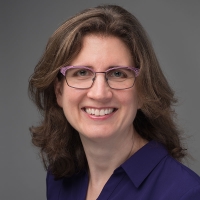 Gretchen Chapman is a professor in the department of social and decision sciences at Carnegie Mellon University. She studies the psychological processes underlying how people make decisions around behaviors such as vaccination and blood donation, with the goal of designing effective interventions to improve health behavior and health outcomes.

