Kaitlin Luna: Welcome to Speaking of Psychology, a podcast from the American Psychological Association. I'm your host, Kaitlin Luna. We're doing another bonus episode this week on terrorism in the aftermath of the New Zealand mosque attacks. We will be exploring what psychological factors cause a person to commit heinous acts of mass violence, technology's role in spreading extremist propaganda and what governments and communities can do to prevent acts of terrorism.
Our guest is Dr. Arie Kruglanski, an APA fellow and distinguished university professor in psychology at the University of Maryland. He's an expert on terrorism, radicalization and deradicalization. Welcome, Dr. Kruglanski.
Arie Kruglanski: Good to be here.
Kaitlin Luna: I first want to start off with New Zealand. These attacks were clearly designed to go viral because the suspect wore a camera on his head to live streaming on Facebook. And since that time the video has spread across the countless social media platforms, despite ongoing efforts to delete copies. How have the Internet and social media changed the dynamics of terrorist groups or lone actor terrorists?
Arie Kruglanski: I think it provided a much wider audience than was ever possible, you know, a very famous terrorism expert, Brian Jenkins, once quipped: “The terrorists want a lot of people watching, not a lot of people dead.” Because they want the impact, the publicity, the significance that it accords them. And the social media, the Internet, technology allows the public's that watches them, the audiences, to be multiplied by million-fold as compared to what was once possible. So that says, it becomes a much more appealing stage and much more appealing platform for people who are trying to get attention, get notoriety, get significant through violence and mayhem.
Kaitlin Luna: And you think by spreading it on social media and the Internet, do you think that can encourage others? Because that seemed to be a goal of the suspect was to encourage others to commit acts of violence.
Arie Kruglanski: It definitely can. I mean, the whole thing about the mass shootings is that it's a very much and emulated, a copycatting phenomenon. What is particularly troubling for me is that it spread from school shootings by disgruntled students all the way to New Zealand and other places where people use it for ideological purposes, say ostensibly and anybody who has the cause and has the motivation to get notoriety, is now aware that this is a very efficient tool. It's going to be watched by millions, even billions of people.
Kaitlin Luna: And do you think there's some contagion element to this? I know that's a very debated topic about if there is a contagion of a variety of things. But do you think in this instance that it could be?
Arie Kruglanski: I would assume, I would assume that you know, it's definitely increasing in frequency both in the United States and now we have New Zealand, these acts of violence that are widely publicized in the media, whether it's a vehicular murder or shootings off different kinds, these things are multiplying, and I think that it's definitely copycatting, not just simply copycatting but realizing that it's a very effective way of getting attention to oneself, getting attention to one's cause, getting attentions to one’s heroism as it were. I would not be surprised that it will be multiplying even more in the future.
Kaitlin Luna: New Zealand's prime minister has vowed not to speak the name of the alleged attacker, which is something that a lot of people have of praised her for. Do you think this will help deter others given the drive that we spoke of, of many terrorists looking for infamy, do you think it will have any impact?
Arie Kruglanski: I think it's a very valuable gesture that she did, because ultimately the motivation and relying the deed is to, my mind, the search for notoriety and significance. Doing something that, against their respect and admiration off the millions of people, so not mentioning the name chips away at that motivation. To what extent this will be enough is to be doubted because, you know, the media will have to share in keeping the name secret and others will catch the video and publicize it. So you know where it’s symbolically a very important gesture that she did, I'm not sure that ultimately it will have all that much of an impact.
Kaitlin Luna: What has your research shown about white supremacists? Are they different from other kinds of terrorists you've studied?
Arie Kruglanski: The basic, core dynamics is the same. In both cases of the white supremacists or the Islamic terrorist or the Sri Lankan terrorist that we studied, the underlying motivation is what we call the quest for significance, the quest to matter, to have self-respect and the respect of others. This is very much the case with white supremacists. We just finished a book on neo-Nazis in Germany to be published by Oxford University Press, and we studied about forty of them that went through the whole cycle of joining, being active for about ten years, living and then trying to reintegrate into society. And the motivations are very similar to those of the youngsters who travelled to Syria or Iraq to join the ranks of ISIS. The motivation is to do something important, to matter, to become a hero and martyr, to gain the power, to get influence through a violence against others. We have a model that explains the conjunction off this motivation with an ideological narrative and the support of the network that validates the narrative where you have these three components together, whether it be white supremacists, Islamic jihadists or an ethno-national terrorist, you have the very same ingredients. There's the need to become significant, do something heroic, to become a martyr. A narrative that tells you how to do it, how to attain that goal through hitting, through fighting, through destroying the alleged enemy of one’s religions, one’s nation, one's religion, one's nation, one’s ethnic group. And there is a group of networks that supports that narrative, that validates the narrative. It views it as part of the shared reality that this is real, that this is really justifiable, even though mayhem and violence are general prohibited by society. You need a network, a local network that tells you, “No, no. In this case, it's allowable. You have permission. You have the, you know, the license to kill as it were.
Kaitlin Luna: This sounds like the book you have coming out this June called the Three Pillars of Radicalization. Those pillars you mentioned are need, narratives and network. Can you explain this concept a little bit more? I know we just touched on the network element of it, but the other two, but the needs and the narratives.
Arie Kruglanski: Again the need, in the literature on terrorism, there is usually a list of the motivations that people mentioned. Adoration of the leader, loyalty to the leader, religious motivations, the perks of paradise, money, even feminism to show that women can also do it. But we find that underlying all these specific motivations, there is a universal human need to be noticed, to be respected, to have significance. It's a universal need. Most people have it to some degree. Some people are more ambitious in that regard, others less ambitious. But everybody wants to be noticed, wants to matter. Most people attain it through socially acceptable means. You and I are trying to make our way through our contributions to society through our profession, through pro-social deeds that are compatible with societal requirements. But you can also gain significance through fighting the alleged enemies of your group. And fighting and violence is particularly appealing to young people. It's a universal primordial, means of gaining significance. That's how animals gain significance. That's how little children resolve their conflicts. That's how sophisticated nations gain their place in the international pecking order by having a nuclear arsenal that can unleash untold violence. So, you know, there's something about violence that is very appealing as a tool to significance. Narrative suggests, you know, you can become a hero overnight. You can become a martyr by attacking your enemies, whoever they might be, can be very appealing. So this is the narrative aspect that tells you how to get significance. And finally, because that narrative is usually at odds with the general societal narrative that prohibits violence against innocents, against women, children, the old folks, people who are innocent of any wrongdoing against you, you need a local group. It may be a neo-Nazi movement, maybe a white supremacist movement. It may be some imaginary movement of Knights Templar, as in the case off Andres Breivik, the Norwegian terrorists that killed about seventy people in the island of Utoya. It can be, you know, the imagined audience on the Internet there is going to applaud you. But you need this kind of permission from a group that you know is going to support you. So these are the three elements. They create a combustible explosive mixture. When they come together, a person can be very vulnerable to radicalization, and be often ready to embark on violence against innocents.
Kaitlin Luna: In the case of the New Zealand suspect, he seemed to be radicalized by the Internet only. . Based on what we're reading out in the news media. He connected with others through the Internet, spread their ideology together and became motivated to commit acts of violence. So can you explain how the Internet has replaced groups of people physically getting together? Because today, someone with any kind of view, extremist views, can reach someone with the same views from any corner of the globe at any time of the day. So how has that changed the dynamic?
Arie Kruglanski: It's a very important aspect of the Internet technology. We mentioned the sheer size of the audience that the person and mass shooter terrorist can have by virtue of being advertised on the Internet. But the aspect that you're mentioning now is also of great importance in that you can have a group chat room, a group of individuals who share your view almost on any topic at the Internet, whether it be killing, whether it be terrorism, whether it be pornography and therefore that removes to some extent the need to have a face-to-face group. You can always find a group of, fans of, like-minded people on the Internet, and I think that allows people who are loners who do not have any very many face-to-face connections with others who are similarly-minded to get the kind of permission and support that the New Zealand shooter had. I think that's a very dangerous aspect off the Internet that, together with the sheer volume of the audience, makes these spectacular, if one can call them that, acts of violence and mayhem appealing to people who search for significance.
Kaitlin Luna: One of the questions that arises after a terrorist attack is whether we can predict if someone will become a terrorist, because obviously there's many people who hold these extremist views who do not become violent like the New Zealand attacker, and there's some who do. So, can we predict if someone will become a terrorist?
Arie Kruglanski: Becoming a terrorist is not a random event. One does not get up one morning and decide to shoot people or blow themselves up it. It's a psychological driven event, which is influenced by the need, the narrative and the network whose effect takes some time. If one knew what is the need of the individual, if one could measure it in advance, if one could they see to what extent the individual associates with a network of violently-minded others. If one could know what the narrative is that the individual is partaking of, then one could predict it. So very often, we do not know these things about an individual. Although those who are close to the person, his friends or her friends, relatives, the family, sometimes they notice a change of clothing when it comes to Islamic terrorists, more intensive attendance at religious meetings, a change in the individual's demeanor, a change in the individual's associations, these people who are in the immediate surroundings of the individual could be aware that there is a change that and they should then contact the authorities and share that information. So yes, it could be predicted. In many cases, we don't have that information. In some cases, people have that information and one way of combating and preventing these attacks would be to encourage people to whenever such information becomes available to share it with the authorities. Now your question had another aspect, and that is to what extent individuals who hold extreme views and do not become terrorists or do not become shooters. You know, this issue of radicalization isn't a dichotomy. It is not your either radical or not a radical, it lies on a continuum. It's a matter of degree. And the question is to what extent the need to be significant overshadows everything else and you're willing to sacrifice all, sacrifice your career, sacrifice your family, sacrifice your freedom, maybe sacrifice your life on the altar of that causes that lends you significance. So you know, people may hold extreme views but not be quite ready, not be quite ready to give such dominance to this one need that would override everything else. This continuum goes all the way from, you know, supporting it attitudinally to [being] willing to contribute money, to participating in a minor role in a terrorist organization, all the way to the willingness to become a suicide bomber and the sacrifice one lives on the altar of the cause. It's a continuum it is not a dichotomy.
Kaitlin Luna: Terrorism is a part of life in this 21st century. Do you have data to show if the number of terrorists are increasing?
Arie Kruglanski: No, I don't. But I think they are hundreds of terrorists groups operating. I think the last number was around 300 that I've seen. What seems to be increasing is the white supremacist groups that can become violent. You know, there is a polarization of societies, both in Europe and the United States, and there's a legitimation of xenophobic attitudes and populist ideologies and these become now the mainstream whereas before they were despised fringes of society. You see it in Germany, the Alternative for Germany is now in the Bundestag, you see it in France, you see it in Hungary, you see it in Poland. Nationalism and populism are becoming more and more acceptable in society. And that, in turn legitimizes the fringe groups that share the same ideas and are willing to go one step further through employment of violence. So I think the number of attacks have increased in United States against synagogues, against mosques, from 2016 onward. And you see the same tendencies the world over. Of course not to speak about Islamic extremism that has been rampant in the last you know, several decades, and that is not going away any time soon.
Kaitlin Luna: It’s really one of the most pressing issues facing national security and international security today.
Arie Kruglanski: It is indeed, it is indeed. And the danger is clear and present and of great proportions. I know that, a very esteemed colleague Steven Pinker has been showing how the degree of violence had been declining over the centuries and including in the last century. Ah, but, you know, this is a kind of inductivist argument, the idea that because it has been decreasing, we can expect further decreases. And I do not think that this is the case. I think things can be reversed. And especially with the great technology, nuclear technology, all kinds of weapons of mass destruction that could fall into the hands of fanatics. The danger is great, and society needs to mobilize itself to fight against it with all means at our disposal.
Kaitlin Luna: Do you think there is enough international call to do so?
Arie Kruglanski: I do not think so. I think especially in our country, there's been very little attention to the problem in its general form. We've been assuming that to fight terrorism, the only way is to employ the military and the police and to thwart plots and so forth. But the problem is social/psychological. You cannot kill an ideology. Governor Romney quipped some years ago that we cannot kill our way out of this mess. Indeed we cannot. The military means are necessary, but insufficient. You have to understand what prompts individuals to embark on violence and the embracement of radical ideologies. You have to prevent it. It has to be a whole society effort. It starts with the treatment of immigrants and refugees. It starts with respect to alternative religions, it has to involve trusting the police, police/community relations, community institutions, religious institutions, social services, the educational institutions. It has to be a whole society effort. It cannot be left to the military because the problem is not only resolvable on the military grounds.
Kaitlin Luna: You're often interviewed in the media about the topic of deradicalization and two recent stories highlighted recently reformed white supremacists. Can you explain the process of how a person can become deradicalized?
Arie Kruglanski: There are many different forms of deradicalization. Basically, deradicalization is the reverse of radicalization, it involves the same three elements of need, narrative network that I mentioned before. For example, in our work on the German neo-Nazis, those who left the movement who became deradicalized either had their alternative needs evoked. They became older. They wanted to get married. They wanted to have a profession. They got tired of just putting all their eggs in one basket. So that's the need component. Some individuals became disenchanted with the ideology. They saw the ideology as just a kind of tokenism, that people are not serious about it, that the people in the movement are bent on partying and getting into fights and brutality, as opposed to really caring about the societal change that they were purported to care about. Some people were disenchanted with the network. They felt that this band of brothers that was promised, that they gave them permission to become violent isn’t really a band of brothers that there's a lot of knifing in the back, a lot of betrayal, a lack of camaraderie. All these are elements that can promote deradicalization. We have also seen deradicalization that is spontaneous. For example, in Egypt and Algeria there are radical movements that deradicalized as it were spontaneously. But it was not quite spontaneous. It happened when it became clear that the violence would not promote significance. When the public turns against the Al Jihad in Egypt, the Al Jihad organization, because they were killing tourists and tourism is the lifeblood of Egyptian economy, so the public turns against them. Their weapons caches were confiscated, they were put in jail and then they realized that the Koran prohibits violence. So you know once it is clear that violence is not going to serve the means of significance, their mind becomes open to alternative ideas and they see that their religion actually prohibits violence, something they did not see strangely enough when the going was strong. There are attempt to deradicalize people in a systematic way. For example, in Saudi Arabia, in Sri Lanka, in detention camps where suspected and arrested terrorists are held. And these attempts bring together the terrorists with the governmental clerics that espouse a different interpretation of the religion. They offer them alternative ways off gaining significance through vocational training, through finding jobs, ways of integrating into society. So all of these have to do with addressing the need in a different way, extricating the person from the network that was supportive of violence and inserting them in the network that is anti-violence, sometimes their families, and exposing them to narratives that interpret religion, or provide alternative ideologies as to how significance can be attained in ways other than violence.
Kaitlin Luna: What can communities and governments do to prevent terrorism? Can they step in and help give people significance that they were looking for through these extremist groups?
Arie Kruglanski: Yes, that's definitely something that communities and governments can do. I'm collaborating with one such program in Denmark, in the city of Aarhus that is run by my friend, Dr. Preben Bertelsen. They use psychological principles to involve community institutions, the schools, the police, in particular, social services, families, to prevent radicalization whenever it rears its ugly head. Whether it's youngsters in the school or even returning fighters from the field of battle in Syria and Iraq, it requires a concerted family effort. It requires trust between the police and the community so that the families feel that the police are on their side and are not going to arrest and punish their members. But they will do all they can in order to mitigate, attenuate, their tendency to become radicals. So you know communities can do a lot. There is an attempt that has been criticized in many places. The Strong Cities Network, of which several American cities are also members to promote this kind of community effort. It's not without its problems. Sometimes some communities feel targeted and victimized by these programs. We need to keep searching for ways of addressing the problems as a society in its entirety. Psychologists can be very helpful because I think that we understand the roots of the problem. We understand that it is the needs. It is the significance. It is the narratives. It is the network. How to translate it into policies is beyond the meager power of a few psychologists. It has to be the whole community effort, a whole country effort, a governmental effort. It has to be a large initiative, long lasting initiative. And of course, it's difficult to implement because, you know, politics is local and short sighted and what we're talking about is a long-term program that will last and extend itself for many years.
Kaitlin Luna: Yes, for psychology’s role in deradicalization, do you think that psychologists are brought in enough in those elements, like working with governments working with communities?
Arie Kruglanski: I don't think so. I think that both the psychological community, APA, APS, all kinds of organizations that bring together psychologists of various ilks, should offer their services to the government to a great extent. But also the government should realize that the problem is not going to go away unless a large counter deradicalization effort is being made. And they, you know, under the previous administration, President Obama, there was one attempt of a large meeting at the White House to promote counter violent extremism initiatives. I think it kind of subsided at this point. But I think it is a dire need that needs to be undertaken, the initiatives have to be undertaken, both on the part of psychological societies and on the part of governmental bodies that would realize that these kind of activities are necessary if we are to control and the reduce the very dangerous phenomenon that we're seeing growing now.
Kaitlin Luna: There's still a lot of work to do. But do you feel like there is hope in this area that we can stop the tide of terrorism and prevent more acts of violence and deradicalize people?
Arie Kruglanski: There is always hope. I think it's a very challenging problem, especially given the uncertainties are sweeping the world these days. The migration crisis, the refugee crisis, economic issues, rising nationalism, you know, the European community disintegrating or falling apart to some extent. These are very troubling phenomena that have unsettled the kind of peacefulness and complacency that we've had since the Second World War. These uncertainties breed populism, breed simplistic ideologies that speak in black and white terms that define us versus them. And these ideologies dehumanize the out group and it's a very short step from those kind of perspectives to legitimation of violence. So we're living in very troubling times, but we need to do all that we can to assuage those dangerous possibilities and use the knowledge, psychological knowledge, social psychological knowledge we have, in order to promote counter-radicalization activities wherever we can. Because you know otherwise we are drawing close to the edge of an abyss because these are very dangerous times. And we must do what we can to resist those alluring and yet extremely dangerous tendencies.
Kaitlin Luna: Thank you so much for joining us, Dr. Kruglanski. It's been of really fascinating conversation.
Arie Kruglanski: Thank you very much, Kaitlin.
Kaitlin Luna: Dr. Kruglanski will be featured in the April issue of the Monitor on Psychology, APA’s magazine for members that covers science, education, psychology practice and more. The story will be posted online on April 1. You can read it by visiting APA’s website at apa.org/monitor.
This is the second bonus episode we’ve done focusing on breaking news, in addition to our biweekly podcasts that air every other Wednesday. We want to know what you think about the new episodes and our regularly scheduled podcasts. Please share your comments and ideas with me. Email me at kluna@apa.org.
Speaking of Psychology is part of the APA podcast network, which includes other great podcasts such as APA Journals Dialogue about new psychological research and Progress Notes about the practice of psychology. You can find all our podcasts on iTunes, Stitcher or wherever you get your podcasts. You can also go to our website SpeakingofPsychology.org and listen to more episodes. I’m Kaitlin Luna with the American Psychological Association.


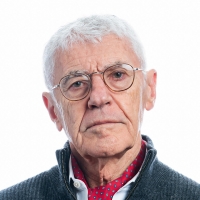 Arie W. Kruglanski, PhD, is an APA fellow and distinguished university professor at the University of Maryland. His research is on human judgment and belief formation, the motivation-cognition interface, group and intergroup processes and the psychology of human goals. Kruglanski has published more than 300 articles, chapters and books. He is a founding co-principal investigator and co-director of START (National Consortium for the Study of Terrorism and the Response to Terrorism) and conducts research with the support of grants from the Department of Homeland Security and Department of Defense on the psychological processes behind radicalization, deradicalization and terrorism.

