Kaitlin Luna: Hi, this is Kaitlin Luna, host of Speaking of Psychology. This podcast was recorded live during the 2018 APA convention in San Francisco. This episode is about how our memories may not be as reliable as we like to think. As always we want to hear from you, so please email me at kluna@apa.org if you have any comments or ideas for us, that's kluna@apa.org.
I'm joined by Dr. Elizabeth Loftus, a distinguished professor at the University of California Irvine. Dr. Loftus is well known for her research on human memory, notably false memories. Dr. Loftus has been honored by APA's review of general psychology as one of the 100 most eminent psychologists of the 20th century. Welcome Dr. Loftus.
Elizabeth Loftus: Thank you.
Kaitlin Luna: It's wonderful to have you here today.
Elizabeth Loftus: My pleasure.
Kaitlin Luna: So your research tells us something I would think is unsettling about our minds, that our memories aren't set in stone, that they're basically subject to manipulation. So can you explain that a bit more?
Elizabeth Loftus: One of the things that I and other people who do similar work have shown is that once you have an experience and you record it in memory, it doesn't just stick there in some pristine form you know waiting to be played back like a recording device. But rather, new information, new ideas, new thoughts, suggestive information, misinformation can enter people's conscious awareness and cause a contamination, a distortion, an alteration in memory, and that's the kind of thing that I've been studying for the past many decades.
Kaitlin Luna: And how can human memories be manipulated?
Elizabeth Loftus: They can be manipulated when people talk to each other after let's say some crime is over that they may have both witnessed. They can be manipulated when they are interrogated by an investigator who maybe has an agenda or has a hypothesis about what probably happened and communicates that to the witness even inadvertently. People can be manipulated when they see media coverage about an event, let's say it's a high publicity event that is talked about a lot on television or newspapers. In all of these cases, the opportunity is there for new information, not necessarily accurate information, to contaminate a person's memory.
Kaitlin Luna: And what got you interested in this work?
Elizabeth Loftus: Oh gosh, I got interested in studying memory distortion many decades ago. As a graduate student I'd done a little bit of work on human memory, and then once I got my PhD I wanted to do some work that had a more immediate practical application. And so I thought, well I know something about memory but how about looking at the memory of witnesses to accidents, crimes and other legally relevant events. So I kind of combined an interest in legal issues with some expertise in human memory and produced this line of work.
Kaitlin Luna: Can you take us back to the early 1990s and you talk about the memory wars, so what was that time like and what was happening?
Elizabeth Loftus: Oh gee, well in the 1990s and even in maybe the late 80s we began to see an altogether more extreme kind of memory problem. Some patients were going into therapy maybe they had anxiety, or maybe they had an eating disorder, maybe they were depressed, and they would end up with a therapist who said something like well many people I've seen with your symptoms were sexually abused as a child. And they would begin these activities that would lead these patients to start to think they remembered years of brutalization that they had allegedly banished into the unconscious until this therapy made them aware of it. And in many instances these people sued their parents or got their former neighbors or doctors or teachers whatever prosecuted based on these claims of repressed memory. So the wars were really about whether people can take years of brutalization, banish it into the unconscious, be completely unaware that these things happen and then reliably recover all this information later, and that was what was so controversial and disputed.
Kaitlin Luna: And your work essentially refuted that, that it's not necessarily possible or maybe brought up to light that this isn't so.
Elizabeth Loftus: My work actually provided an alternative explanation. Where could these merit reports be coming from if this didn't happen? So my work showed that you could plant very rich, detailed false memories in the minds of people. It didn't mean that repressed memories did not exist, and repressed memories could still exist and false memories could still exist. But there really wasn't any strong credible scientific support for this idea of massive repression, and yet so many families were destroyed by this, what I would say unsupported, claim.
Kaitlin Luna: And going off on what you just said, you said you were at one point sued by a woman who claimed that her mother sexually abused her, and in this situation you believed the mother had not done this abuse. And you published what you called an expose and it was controversial and you were sued by this by this daughter. And you talked about in your TED talk about the disturbing trend of scientists being sued you know for their work. So can you speak a little bit about that and what is that as a scientist, what does that mean?
Elizabeth Loftus: There was a case history that was floating around in the literature and published by a psychiatrist you know sort of, and it was being used as the new proof of massive repression. The case history was anonymous so it was Jane Doe and John Doe, mom's town, dad's town, and at some point I was able to identify the Doe family. And once I found the Doe family, the name of the family, then I could get into the divorce file and I found all kinds of information that had been left out of this psychiatrist's account. And I found enough information to convince me that that was a very strong likelihood that this accused mother, oddly the mother accused of sexual abuse, was probably innocent. And just being involved in this investigation got me in a lot of hot water. So yes the adult daughter did sue me and sue my co-author and the magazine where we published the expose and some other people and eventually after years the litigation ended.
Kaitlin Luna: And you won the, in 2016 you won the John Maddox prize which recognizes the work of scientists who promote science and evidence but might face difficulty in doing so or hostility. So can you talk a little bit about that and why you believe is important to speak out even when it's difficult, even you face these tough situations where you might be sued or your name gets called out and dragged through the mud, that sort of thing?
Elizabeth Loftus: Well I did win the John Maddox prize I mean I'm very proud of that, and because it is a recognition of standing up for science and in the face of a lot of hostility. And the hostility that came not just from a lawsuit or you know but other individuals who were feeling I guess that their cherished beliefs were being attacked and would lash out in all kinds of unpleasant ways. But I do think it's important because I mean science you know is that candle in the dark, and you know I and it is the thing that's going to help make this a better world. So, and it needs to be protected, especially in today's climate.
Kaitlin Luna: Can you talk about the ethical questions that have come up about your research and how you've responded?
Elizabeth Loftus: Can you say that again?
Kaitlin Luna: Can you speak to the ethical questions that have come up about your research and how you've responded over the years?
Elizabeth Loftus: The ethical questions, well I suppose one ethical question is whether what I do in my experiments is plant false memories in the minds of people in order to study the process, little-bitty false memories and then great big ones. So some people might think that that's not a very ethical thing to do, but number one everything is reviewed by the human subjects review committees at the universities, many people have done these same kinds of experiments as far as I know there's never been an adverse effect and it has been a scientific contribution that I think has helped make the world a better place.
Kaitlin Luna: And you've spoken about the positives of planting false memories like how it can be used in a positive way, can you elaborate a little more on that and what you mean by that?
Elizabeth Loftus: Yes, one little twist in the false memory work that we did is to look at the consequences of having a false memory. If I plant a false memory in you, does it have ripple effects, does it affect your later thoughts or your later intentions or your later behavior? And we've now shown that you can plant a false memory that you got sick eating a particular food, you got sick on pickles or eggs or strawberry ice cream and you don't want to eat as much of that food. We've planted false memories that you got sick drinking a vodka drink and you're not it is interested in the vodka drink. We've done the opposite, planted a warm fuzzy memory that you loved a healthy food, asparagus in our study, and people want to eat more asparagus. So if we can control people's nutritional selections and maybe help them live a healthier life maybe that's not a bad thing to do.
Kaitlin Luna: Is there any dangers to planting false memories? Even if it is for something positive like you're trying to eat healthier lose weight or something like that?
Elizabeth Loftus: Well the danger, I guess the danger is that some evil nefarious people could take this mind technology and put it to some bad use, just the way we can build a nuclear bomb now and put it to some bad use.
Kaitlin Luna: Can you talk about the broad implications of your research on criminal law?
Elizabeth Loftus: I think that the work that I and many other people have done on human memory, eyewitness testimony, the memory of witnesses and victims to crimes has had some impact on the legal system. That the scientific studies have revealed something that we might call best practices that have been implemented in a number of jurisdictions so that when law enforcement and members of the legal system interact with people who are involved in legal cases they get the most accurate and complete information from people and we aren't wrongly convicting people of crimes they didn't do. So I see, I see some great impact there.
Kaitlin Luna: Is there anything we can do to prevent against false memories or to enhance our memories?
Elizabeth Loftus: Oh you know, if you warn people that somebody might be trying to mislead them or fool them, they can momentarily protect themselves and kind of fend off the misinformation. The problem is that people don't walk around in life with those warnings at the forefront of their consciousness, and so we're gonna need to find some other ways of getting people to protect themselves.
Kaitlin Luna: And can you enhance your memory, you know to ensure that maybe the information you do remember is more accurate, or is it even possible?
Elizabeth Loftus: There are things you could do to enhance your memory for, usually two simple things are just to pay better attention at the time you're experiencing something or learning somebody's name at a party for example, and then rehearsal and certainly we know the best patterns of rehearsal that are known to maximize the likelihood that people will remember the information.
Kaitlin Luna: Just as we spoke about prepping for your TED talk you said you took many months to prep for memorizing a 16 minute talk, so you it's a lot it's a lot of work to do that you can memorize something that long and to enhance your memory.
Elizabeth Loftus: I mean you know I'd been teaching for decades when I was invited to do a TED talk at TED global. And so this was going to be a talk in front of maybe a thousand people in the audience and then it would go out on the Ted website and it would be translated into who knows how many languages. So the exact wording was part of it, and you have to memorize it and it actually took me about three months to, of you know practicing and talking to the mirror and talking to trees, to get it down. And I used a few tricks that I'd learned as a memory scientist, like the method of loci, and so I could even give you the talk right now even though it's been five years.
Kaitlin Luna: What are some of those methods you said, I mean there is obviously repetition?
Elizabeth Loftus: And well the method of loci involves taking a chunk of material that you want to remember and placing it in a spot, let's say in your home, and then the next chunk in another spot then the next chunk in another spot, and then you take a mental walk through your home and you see the chunks. So for example, I'd like to tell you about a case I worked on involving a man named Steve Titus. Titus was a restaurant manager and one day he was accused of a horrible crime. So I remember that because I walked to my front door and there is Steve Titus, okay tell them about Titus, and then I go into my house and there's a portrait over here that my mother-in-law did when I married her son, I look at it tell them about you. You know then there's some pinecones over here that's the wrongly accused, tell them about the wrongly accused. So in walking through a familiar location where you've placed chunks of what you need to remember, you can master it.
Kaitlin Luna: That's fascinating, I definitely need to work on that skill.
Elizabeth Loftus: Well if you, there's a fabulous book called “Moonwalking with Einstein” that describes this whole method, it's really a great popular book.
Kaitlin Luna: That's wonderful, well thank you so much for joining us Dr. Loftus I really appreciate your time today.
Elizabeth Loftus: My pleasure.
Kaitlin Luna: Speaking of Psychology is part of the APA podcast network which includes other great podcasts like APA Journals Dialogue about the latest and most exciting psychological research and Progress Notes about the practice of psychology. You can find our podcasts on iTunes, Stitcher or wherever you get your podcasts. You can also visit SpeakingofPsychology.org to find more episodes and resources on the topics we discussed. I'm your host Kaitlin Luna from the American Psychological Association.


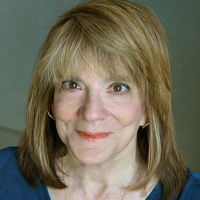 Elizabeth Loftus, PhD, is one of the nation's leading experts on memory. Her experiments reveal how memories can be changed by things that we are told. Facts, ideas, suggestions and other post-event information can modify our memories. The legal field, so reliant on memories, has been a significant application of her memory research. Loftus has been an expert witness or consultant in hundreds of cases, including the McMartin preschool molestation case, the trial of Oliver North, the trial of the officers accused in the Rodney King beating, and litigation involving Michael Jackson, Martha Stewart, Scooter Libby and the Duke University Lacrosse players. She has been honored by APA’s Review of General Psychology as one of the 100 most eminent psychologists of the 20th century and she received the 2016 John Maddox Prize which recognizes the work of individuals who promote sound science and evidence on a matter of public interest, facing difficulty or hostility in doing so.