[music]
Kim Mills:
The news surrounding COVID-19 is pretty depressing. The stock markets are tanking, the price of oil collapsed, the Centers for Disease Control and Prevention is warning that there could be a second, more devastating round of infections ahead. Are you feeling anxious yet? Welcome to Speaking of Psychology, the flagship podcast of the American Psychological Association that looks at the connections between psychological science and everyday life.
I'm Kim Mills. Now that we're well into our second month of sheltering in place, people who are maybe losing motivation, finding it hard to exercise and eat right and get enough sleep, and if you have kids, how are they doing? Are they keeping up with their schoolwork or are you too stressed to find out? Joining us today is Dr. Sian Beilock, a psychologist and president of Barnard College in New York.
Dr. Beilock is one of the foremost researchers into embodied cognition, which looks at the connections between our minds and our bodies. She's also studied anxiety, especially math anxiety in girls and women. She is one of the world's leading experts on the brain science behind choking under pressure and the many brain and body factors influencing all types of performance. Welcome to Speaking of Psychology, Dr. Beilock.
Dr. Sian Beilock:
Thanks for having me.
Kim:
In the interest of full disclosure, I have to say right up front that I graduated from Barnard with a degree in biology, but I'm not telling you what year that was.
Dr. Beilock:
Oh, I love it.
[laughter]
Dr. Beilock:
That's fantastic.
Kim:
All right. That being said, I wanted to talk to you because of your varied and remarkable background and not because I went to Barnard. There are a lot of areas that we could talk about today. I expect our conversation will be a little bit free-ranging if that's okay.
Dr. Beilock:
Perfect.
Kim:
I hope that we can relate a lot of what we talk about to the COVID-19 pandemic because that's what is on everyone's mind right now. At APA, we talk a lot about the mind-body connection, how our mental health is inextricably linked to our physical health. Research shows the connections are real and that they're strong. You've done a lot of research in the area of embodied cognition as it's called. Could you explain that in more detail and how might it be relevant to our lives right now?
Dr. Beilock:
I think oftentimes, we think of the mind and body connected in a one-way street so to speak. The mind sends signals to the body about how to act, what to do. A lot of my research and the work behind embodied cognition suggest really that that information flow runs both ways, how you hold your body, whether you're sleeping enough, exercising has an impact on how you feel. That's really important in this time, especially when many of us are indoors not getting up as much, that we understand there is that strong connection and make it a priority in however way we can do it, whether it's inside or outside the social distancing to get that body running because it helps us run our mind.
Kim:
A lot of folks who are sheltering in place include children of all ages, many of whom are trying to keep up with their studies remotely. As an educator, do you have any advice for how parents can help their kids stay on top of their studies under these conditions?
Dr. Beilock:
I have some advice as a researcher and also as a mom to a nine-year-old who's going through the same things. I think the first thing to really remember as a parent is to give yourself a break, right? We can't hold ourselves or our kids to the same standards we held ourselves outside the pandemic. In many cases, it really doesn't matter. The best example I like to give is with young kids. Oftentimes parents are really obsessed with when their kid learns to read and whether their kid is the first reader in the class or early in the group.
All the research suggests that when a kid learns to read, it has no impact on later academic functioning. Those kinds of ideas really are important for us to remember in terms of giving ourselves a break. For example, it's much more important that your young child feels good about math and has the viewpoint that he or she can learn math, that it's something you acquire with practice, then knows every fact for his or her age group. Our attitudes are really important right now. I think that's something we can all focus on and we can all have control over.
Kim:
That alludes to the research you've done into the connections between parents' math anxiety and that of their kids and also just the parent connection to children's academic and social development. You talk a little more about those factors and how they might be playing into the current scenario of parents and kids sheltering in place.
Dr. Beilock:
First of all, it's just really important to remember that what parents do with their kids does matter. I think oftentimes parents think that reading is something you might do at home where you do bedtime stories, for example, but math is the purview of school. You don't hear a lot of people doing bedtime math.
Kim:
[chuckles] That would be funny.
[laughter]
Dr. Beilock:
In fact, my research group has studied an app called bedtime math, which is free on iTunes and Android. We've shown that when parents are able to engage with their kids in fun and interesting ways around math, their kids do better in school in math. That's especially true for parents who are most anxious about math. A lot of adults, especially in the US, don't like math or afraid of math.
You don't hear highly-intelligent people walking around bragging that they're not readers, but you do hear them bragging that they're not good math people. Unfortunately, that does tend to seep in and affect our kids. People who are anxious about math, parents tend to do less math with their kids. When they do help them with homework, they can disrupt it. Really, right now, the most important thing I would say, especially for parents who are anxious, is to help your kid have a good attitude about math.
Saying things like, "Oh, it's okay. I don't like math either" or "I'm not a math person," might be kind to make them feel good, but it's sending a signal that either you've got the math gene or you don't. Instead, saying, "Hey, this is difficult. Let's struggle through this together," showing that it's okay to make progress but maybe not get the right answer, all those things are things we can model now for our kids that are so important.
Kim:
Some of your research has looked at how to reduce the performance gap between lower-income and higher-income students, particularly in the sciences. Do you think that lower-income kids are in danger of falling further behind as a result of the current pandemic? Are there strategies that you might recommend for parents to help their kids stay focused and not fall behind?
Dr. Beilock:
I certainly think that when we're in a state like this, it oftentimes augments socioeconomic divides rather than shrinks them, unfortunately. It is really important to think about how we can support everyone. At Barnard, for example, we went to a mandatory pass-fail for all of our classes, for all of our students for the remainder of the semester when we went online.
The reason we did that is because we knew that we could somewhat control students' living environments when they were on campus, but we couldn't when they went home. Some kids were going to their parents' second home and some kids were going home to a family where they were going to have to help support what was going on. We really did this for inequality reason. We didn't want some students to suffer just because they didn't have the time or the means to be able to focus in the right way.
This is something especially important to think about with parents and their kids as well. Many lower-income families, their parents are essential workers. Working on the front lines, it's stressful, right? Anything that we can think of to help make these activities fun for our kids, do you even ask them what they're doing in school to at least engage in conversations? I'd say anything right now goes a long way.
Kim:
Since much of your research has focused on how our physical surroundings shape how we feel, think, and behave, how do you think sheltering in place might affect our minds and our bodies?
Dr. Beilock:
Well, we know that lack of movement, not changing the surroundings can affect our ability to be creative. For example, there's psychological research showing that when you get up and walk away from a problem, you often likely became that aha moment. It's not necessarily when you're banging your head against the wall. It's much easier to do that when you're in an office and you get up to go to the water cooler or when you commute to and from work.
Now, I would say it's important for us to create those strategies, right? How can we set a schedule or we do have time to get away from our computer? At what time at night do we turn off our phone and computer and how do we help create surroundings that can relax and invigorate and energize us? In opposition to what we used to know as normal daily life, I think we have to do a little more work to create that now.
Kim:
We know the COVID-19 pandemic is affecting higher education just like it is. Other workplaces and institutions wanted to talk a little more about what's happening at Barnard, which is relatively small, about 2,400 students, right?
Dr. Beilock:
Yes.
Kim:
Also, maybe what's happening at the larger Columbia University, world, and beyond, what is happening to the students and the faculty right now?
Dr. Beilock:
Well, Barnard is really special because it's a small institution focused on empowering women. You get this small, fantastic liberal arts education, but under the umbrella of the larger Columbia University. I always talk about it as the best of all worlds and we're linked in a lot of ways. For example, many students at Columbia come over to Barnard to take classes every day and vice versa.
There's so many ways that we're interconnected and it's been really interesting to watch the whole university system. Barnard really make a quick move online. We did this in just a few weeks and I've been so proud of our faculty and our students. I've been doing weekly coffee chats with about 10 of our students online each week. They talk about the faculty and how important it is for them to have the classes and stay connected because I think many of our students are isolated in ways they didn't expect.
Kim:
Do you feel like this is helping the students to have a full educational experience even though they can't be on the campus?
Dr. Beilock:
I do think that all of what we're doing online, we're doing a lot of community building. Our faculty are running extra seminars. They're teaching classes multiple times to make sure if students are in different time zones, they can get to the class. I feel like all of that is helping a lot. Our students are telling us that it's really important to have those sorts of connections, especially in a time where they aren't getting them in other places.
Kim:
Are you talking to other college presidents about what their challenges are?
Dr. Beilock:
Yes. I think higher education in general, we do a good job of learning and talking to each other. We're learning and talking to each other both in New York City, State, and then I talk to my peers also as well.
Kim:
What are they telling you? Are you getting ideas from them or are you sharing best practices?
Dr. Beilock:
It's a little of both. I think Barnard was ahead in many things in terms of, as I said, our decision to go pass, no pass in terms of our really, I would argue, clear communication with the students. One thing that we did that was different than a lot of institutions is that we made the decision to allow students to stay on campus if they couldn't get into their home country or really were housing insecure.
I've gotten a lot of feedback from our community about how much they appreciated that. It's a small number of students, but we really do feel Barnard is a community and it's not just a community for two semesters. It's a community throughout the years and you as an alum, hopefully, feel that as well. We have a very small number of students on campus, but I think it was so important to be able to continue to just provide support for them.
Kim:
Well, that's amazing that you're able to do that. You say a small number. About how many?
Dr. Beilock:
We have about 150 students on campus. Out of 2,400, they usually are on campus. Almost all of them went home.
Kim:
The ones who are there, are they all moved into the same dorm? Are they separate? How are you doing this?
Dr. Beilock:
We did just recently have them co-locate to a more apartment-style living close together while maintaining social distancing, of course, and own rooms. We wanted to make sure that they had a community. I think that's really important. This is not just physically isolating, it's mentally isolating. This also allowed us to reduce the number of shifts that are essential workers that are still on campus needed to be there. Instead of coming in five days a week when we were able to help consolidate some of the students, some of our workers were able to come in two or three times a week.
Kim:
What's happening to your admissions process right now? How are you handling that?
Dr. Beilock:
Our deadline is May 1st. We are building a fantastic class of 20, 24. I think Barnard is in a fortunate position here. We had over 9,400 applications this year for around 600 spots. That makes us one of the most selective of any college or university in the country. We really have a fantastic and strong class coming in. I will say that for next year's class, current juniors, we are going test-optional for one year to make sure that students aren't prohibited from applying because they weren't able to take an SAT or an ACT.
Kim:
That's a big problem for some kids. Students at some universities are suing their schools over the COVID-19 shutdowns. Some students want refunds of tuition fees and other costs because they feel they're not getting the full benefit of an on-campus education. Of course, on the other hand, colleges and universities are losing a lot of money because of the shutdown. What is happening at Barnard and do you have any intelligence about what's happening across the street at Columbia?
Dr. Beilock:
Well, I think we are working really hard to support our students. We did refund room and board for students who left prorated based on when they left. They are getting the academic experience, so we feel comfortable with that. We know how hard their faculty have worked to help mount those programs and really be a lifeline for a lot of students in this time. One thing that we've done at Barnard, and I think we're one of the first institutions to do this, is that we do have a lot of summer programs on campus where students take part.
For example, we have the Summer Research Institute where we fund with a stipend over 200 students each summer to live on campus for 10 weeks and work in a lab at Barnard, Columbia around the city. It's really an important part of being a science major at Barnard where a third of our graduates are math and science majors. We, unfortunately, had to postpone that program this summer. We know that students are going to have problems with summer work.
At Barnard, we're need-blind and we meet full financial need, but we do ask students to make a contribution based on their summer earnings. This year, we announced that for all incoming and continuing sophomores, juniors and seniors, and all incoming first-years, Barnard will pay their summer contribution. It's a significant expense for us, about $3 million, but we really felt it was important to support financial aid students in that way because we knew that they were going to be strained in terms of being able to make that summer contribution.
Kim:
What do you foresee in the world of higher education come this fall? Are you still prepared to continue distance learning or is it too soon for you to say much about this?
Dr. Beilock:
We expect to be back on campus, but of course, it would be irresponsible to not do contingency planning. I think it's really important to remember that it's not all or nothing. It's not all online or all in person. There's lots of creative things to think about in between. I think it's actually a really exciting time for higher education in terms of understanding what is so valuable about the residential experience. It is valuable. Any of us who have older kids at home, we all know that most of the parents and most of the kids want to be back at school.
[laughter]
Dr. Beilock:
Everyone's pushing in the same direction. I have two college students at home and a nine-year-old. Neither the college students nor me want to be here much longer. All kidding aside, I'm very happy they're home and safe. I think it shows how valuable that residential experience is. That doesn't mean that we can't be so creative in all of this and learn some really interesting things. I think this is really an important time to do that.
Kim:
I have to ask for our members on our psychologist listeners who are tuned into the podcast. How does your being a psychologist affect your being president of a college?
Dr. Beilock:
It's a really great question. I think my psychology has always seeped into the rest of my life. People ask me how I got interested in choking under pressure, performance under stress. I say I've always done a little bit of me-search in addition to research. I'm interested in how I perform. Now, as being president of Barnard, I certainly bring tools of cognitive science to the table. In terms of one place where it really is important to me is in terms of creating a senior leadership team where diverse opinions, diverse lived experiences, and a lot of back and forth really matter.
I know the best decisions, for example, get made when people feel comfortable voicing contrary opinions to the norm. I work really hard as a leader to create that sort of environment. I think that trickles down to the rest of the campus. I think college and universities are a place where you need really different ideas and challenging ideas and people with very different perspectives to get together to get the best research done. I bring that with everything I do.
Kim:
You pretty much had to walk away from the world of research, right? Would you have any time now to continue the work that you had been doing?
Dr. Beilock:
I'm actually doing it on a smaller scale. I've always split my time a bit. I have written two popular audience books while I run my lab. When I was at Chicago for my last several years as a professor, I was also executive vice provost of the university. I've always had a bit of a juggling act and I found ways to really integrate it in meaningful ways. For example, for our admitted students at Barnard, I gave a virtual Zoom class last week about some of my research and the science behind performance under stress.
It was a fantastic way to tell them a little bit about some of the work that we're currently doing and get new students excited. I think there's always opportunities to meld it together. I am still running a small lab. It's important for me and I think it's important for a lot of leaders of institutions to have that grounding. Being a faculty member, being a scientist if you are, it makes a difference in terms of how you lead.
Kim:
You have any final words for the concerned students and parents who are listening to us today?
Dr. Beilock:
I love to say that it's okay to be anxious at this time. Where we can really control things is giving ourselves a break. I talk a lot about how we're often the hardest on ourselves. The example I like to give is that sometimes the way you talk to yourself, you'd never talk that way to a friend. You're often much harder on yourself in terms of how you're feeling, how you're performing, what you're accomplishing, what you're not.
I think this is really a time more than ever for us to relax a little bit and relax our expectations for ourselves. We know that being in uncertainty can cause the most anxiety. Knowing that and then giving yourself a little bit of permission to be anxious and not holding your feet to the fire is okay right now. We will tackle this like we've tackled other challenging situations in our past. I think right now, you control what you can and you have to give yourself a break with what you can't.
Kim:
Good advice. Thank you. Thank you for joining us today, Dr. Beilock. It was a privilege to talk to you.
Dr. Beilock:
Happy to be here and I love hearing from a Barnard grad.
Kim:
Well, I wish you and Barnard the best going forward, of course. To you, our listeners, thank you for tuning in. This is part of a series of podcasts APA has produced regarding psychology's role in helping us understand and navigate the COVID-19 pandemic. You can find previous episodes of Speaking of Psychology on Apple, Stitcher, YouTube, or wherever you get your podcasts. You can also go to our website and listen to all episodes at
www.speakingofpsychology.org
. If you have comments or ideas for future podcasts, email us at
speakingofpsychology@apa.org
. Thank you for listening to the American Psychological Association. I'm Kim Mills.
[music]
[00:22:25] [END OF AUDIO]


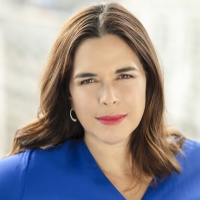 Sian Beilock is president of Barnard College and one of the world’s leading experts on the brain science behind “choking under pressure” and the many brain and body factors influencing all types of performance: from test-taking to public speaking to your golf swing. Beilock’s research is routinely covered in the media (e.g., CNN,
New York Times
, NPR,
Wall Street Journal
) and she was highlighted as one of four “Rising Stars” across all academic disciplines by the Chronicle of Higher Education in 2005, chosen as one of twenty-five “Women to Watch” by Crain’s Chicago Business Magazine in 2007, and received an award for Transformative Early Career Contributions from the Association for Psychological Science in 2011. In 2017, Beilock won the Troland Research Award from the National Academy of Sciences.
Sian Beilock is president of Barnard College and one of the world’s leading experts on the brain science behind “choking under pressure” and the many brain and body factors influencing all types of performance: from test-taking to public speaking to your golf swing. Beilock’s research is routinely covered in the media (e.g., CNN,
New York Times
, NPR,
Wall Street Journal
) and she was highlighted as one of four “Rising Stars” across all academic disciplines by the Chronicle of Higher Education in 2005, chosen as one of twenty-five “Women to Watch” by Crain’s Chicago Business Magazine in 2007, and received an award for Transformative Early Career Contributions from the Association for Psychological Science in 2011. In 2017, Beilock won the Troland Research Award from the National Academy of Sciences.