Kaitlin Luna: Hello and welcome to Speaking of Psychology, a podcast produced by the American Psychological Association. I'm your host, Kaitlin Luna. I'm joined today by Dr. Marianne Celano, co-author of "Something Happened in Our Town," a children's book about racial injustice from Magination Press, which is APA's children's books imprint. The story, written with fellow psychologists and colleagues Dr. Marietta Collins and Dr. Ann Hazzard, follows a white family and a black family as they discuss the police shooting of a black man in their town. The purpose of the book is to spark important discussions within families about racial injustice.
Celano is the director of the Emory University Parent Child Interaction Therapy Program as well as a professor in the Department of Psychiatry and Behavioral Sciences.
Thank you for joining us today, Dr. Celano.
Marianne Celano: Thanks very much.
Kaitlin Luna: So first, I wanted to talk about what sparked your interest in this topic — you and your co-authors?
Marianne Celano: I would say a couple of years ago my co-authors and I became increasingly concerned about the disproportionate police shootings of unarmed African-American individuals, particularly boys and men. And we wondered how kids reacted to that. If kids heard about it, how they would react with questions they would have, so we decided to write a book that would sort of be a platform for parents to discuss this — these events with their children and begin to discuss patterns of racial bias and injustice in our country.
Kaitlin Luna: So, on the topic of that, I'm sure it's very tough for many parents to try to imagine telling their children about these complex issues, like race issues in America today. And many parents themselves may still be dealing with their own feelings about it — understanding how what's going on within themselves. So, but why is it still important for parents to talk to their children?
Marianne Celano: Well I agree it's very complicated issue and it's a very sensitive issue, as well. I think it's important for parents to talk about this issue because they're primarily responsible for socializing their children and raising them to live in the world and kids observe the world — their social world. They observe who's included, who's excluded. They observe where people live. They observe racial disparities. They observe lots of things. They are consumers of media. They see how African-Americans and whites are portrayed in the media. They observe things about their parents, who their parents' friends are, who their parents' close friends are, what their parents say, what their parents don't say verbally, but maybe say with their bodies. So, they're picking up on a lot of messages about race and about and racial attitudes, who parents may inadvertently send out messages about who should be their friend and who should not be their friend.
So, they pick up on these things and if we say nothing, then what's influencing our children's racial attitudes are messages they get from the media, from their friends. But if you say things directly to the children about what you want them to learn and it's more likely to take, and particularly children under the age of seven are very amenable to external instruction, to listening to their parents' words as they get older, then experience ways in more on what they learn. But earlier, they really do listen to what we say.
Kaitlin Luna: So, what do we know about how kids learn about racism?
Marianne Celano: Okay, well there's a field within psychology called ethnic racial socialization, which has to do with the verbal and nonverbal messages that parents tell their kids about the meaning and significance of race, racial identity and how they should interact with people from another race.
And what we know is that African-American parents give these messages at a pretty early age. Now they talk about what it means to be black in the United States, messages of cultural pride, messages, sometimes messages of mistrust, how you should act around white people, how to cope with racism, how to cope of racial injustice.
We know less about what white parents do with white children in this area, but what we do know is that many white parents think race is not as relevant. So, they don't talk about this. They don't have these conversations with their kids. And so that leaves the kids open to learning about race from other sources.
Kaitlin Luna: And what's the biggest takeaway of this book for children and for parents?
Marianne Celano: Well, we really want — number one is we want parents and kids to talk about this. We want parents and kids to have discussions about what is racial bias, what is racial injustice, how important it is to treat everyone fairly.
For the kids, there's basically two messages: One is we want to give them some actions they can take to counter acts of racial injustice, which for young children often that's exclusion appears.
The other message we want to impart is diversity is something to be celebrated, not just tolerated, right? So, there's value in diversity. The character, the older sister character of the white girl in the book says you never know who's going to be your best friend and that's a really important message. So that you don't just include people because it's the right thing to do, but because there's value in including everybody.
Kaitlin Luna: And one of the unique things about Magination Press books is that they include information for parents, notes, sample questions. They can ask their children, which is a wonderful part of these books. So, can you explain the tips in the book and how they help parents and have these conversations and how they how they might spur in these, these dialogues?
Marianne Celano: Well, sure and we feel like that's a very important part of the book. So, one of the things we've learned in doing some research is that, especially for white parents, I think 80 percent of white parents of 4- to 7-year-old kids want to talk about race with their children, but they don't really know how. They don't know how to break it down into concepts that their young children can understand and they're not even sure when is the right time to begin the conversation.
And what usually happens is conversation begins when the child brings it to our attention, when the child asks a question offering a potentially embarrassing question. And so, the kid might say "how come Jada's skin is dirty?"
You know or "how come all the people in this neighborhood are black?" You know, or something like that. And so, it comes up when the child asks a question for many parents. And so, we wanted to have sample questions and answers as part of the resources at the end of the book, and also sample definitions and ways to answer the child's question in language that the kid can understand and ways to translate concepts of inclusion into actions that children can take.
Kaitlin Luna: And for African-American families or families of color, what advice do you have to them, for them about how to talk to their children?
Marianne Celano: Well, African-American families typically have these conversations earlier and in particular related to these police shootings of unarmed African-American individuals, many black parents talk about the conversation that they have to have with your children about especially their boys about how to act in public and how to not be a target.
What actions they could take; how they can wear different clothes; how they can act, you know when stalked by a police officer try to protect them.
In terms of messages of cultural pride and history, I mean that's there's an Illustrated conversation in the book but the African-American boy and his parents and his parents do mention that they're very proud of their cultural history. And they mentioned powerful leaders, civil rights leaders and talk about the value of collective action in addressing social justice. So, that's all part of a book and it's an example in the book of that family, as well.
Kaitlin Luna: And what's interesting is that this the release day of this book was moved up but due to this the shooting of Stephon Clark, who's an unarmed black man and who was in his grandmother's backyard — he was shot by police. Can you describe and explain why the book was moved up and main significance of that?
Marianne Celano: Yeah, my understanding is the book was moved up because of that incident because APA, Magination Press and the authors wanted the family to have the book as a resource and wanted to be responsive to the communities of this tragic shooting, in fact.
Kaitlin Luna: And this is the first picture book you and your co-authors have written so and you've received positive reviews and press coverage most recently or very recently in the Atlanta Journal-Constitution, which is where Emory is located. So, can you talk about what that's been like for you and your co-authors?
Marianne Celano: What we've been delighted with the positive response to the book, especially from children who have read the book to groups of children, as well on groups of parents and children and we've been very pleased with the responses that we've gotten.
Kids readily understand that it's not fair to exclude other people. So, they get that message. Some kids have studied, you know, racism in school with an anti-biased curriculum or in social studies when they learn about slavery and Jim Crow laws and segregation and all that. And so, they have a context to put it in.
Other kids have not yet studied that because they're younger, but they still understand that it's important to treat everyone the same and to be fair to everyone. So, we've gotten a pretty positive response with them.
Kaitlin Luna: And the book has not been without some controversy and there was an op-ed in The Hill that was published that basically said the book was anti-police and you and your co-authors had a rebuttal op-ed that said that the author misunderstood the book. Can you explain why he might have perceived the book to be seen as, as bias against the police and how you responded? Can you elaborate more on your response to him?
Marianne Celano: So, we don't conceptualize the book as being anti-police. It does start with a police shooting of an unarmed African-American male. So, we were very direct and starting the book that way – "Something Happened In Our Town." You know, the kids, the grown-ups didn't think the kids knew about it, but the kids knew about it and they had questions and the parents are very direct in how they explain this event that the man was unarmed and that it was a mistake that the police officers shot a man and both, but the white family and the black family put that act into sort of political relational context. The pattern of racial disparities and racial injustice in our country.
We take great pains to point out that it was a mistake and that many cops, both black and white, make the right choice. But as one of the characters, I believe that Josh's father, African-American father and the story says we can't always count on them to make the right choice — which is a hard message, but we felt it was a realistic message. And so, we included that in there.
We recognized that children do tend to think of police officers as trusted gatekeepers and they're often security guards at their schools and things like that. And we do want children to trust police officers. But we hope that children, as they develop, they develop more nuanced ways of understanding their world. Things are not just good or bad, right? And police officers are good, but sometimes they make mistakes.
We also adopt this attitude when we're teaching children about sex abuse prevention and about personal body safety. You know, it does create some discomfort in children. They may not trust some adults after they learn that adults could hurt them. But we feel like the outcome of personal safety for the child is worth that discomfort that we have to embrace when we talk about that with them.
So, we also feel that the outcome of social justice is worth the temporary discomfort we feel when we have to talk about how some police officers make the wrong choice.
Kaitlin Luna: And is there any worry or for parents or caregivers that their children might read this book and be scared of the police because young children in the four or five-year-old age range?
Marianne Celano: I hope you know that scared of the police, that has not come up as much other than fear that they may already have, based on hearing about police shootings of unarmed African-American individuals.
I've had some kids be surprised that the police officer killed someone who they didn't, they shouldn't have killed. And they surprised at that mistake. But, I haven't had reactions of people that were scared.
Kaitlin Luna: And so, going off of the reaction or saying, what has the reaction been from, you know, from readers and from children, from families, caregivers. What have they told you and with you and your co-authors?
Marianne Celano: So, it sort of depends on who you ask, right? So parents, many parents have called the book bold or ambitious and particularly African-American parents have told me that they're grateful that this book is now available to them.
We've also heard from white parents who told us that this book is very important to them, as well. That they have been meaning to try to have a conversation about race with their children, but they didn't know exactly how to address it. And so, they have found, particularly the tips in the back, very helpful as well.
Kaitlin Luna: So, what age range is this book targeted for?
Marianne Celano: So, it's targeted for kids four to eight, but we really feel like parents should make the decision about when they think their child is ready for this book. And parents should read it first and look at the tips in the back. We feel like parents know their kids best and some parents may choose to read this book to their child when they're four. Other parents may say no my child's not ready yet, seven. And some kids that are older than eight may get something out of a book, as well. We feel that kids younger than four probably wouldn't understand.
Kaitlin Luna: Well, thank you so much for joining us, Dr. Celano.
Marianne Celano: Thanks for having me.
Kaitlin Luna: For more information about "Something Happened in our Town" and to order the book, please visit APA's website. Speaking of Psychology is part of the APA podcast network, which includes other great podcasts such as APA Journals Dialogue, about the latest and most exciting psychological research, and Progress Notes, which discusses the practice of psychology. You can find all APA podcasts on iTunes, Stitcher or wherever you get your podcasts. You can also go to our website, www.speakingofpsychology.org, to listen to more episodes and see more resources on the topics we discuss. I'm Kaitlin Luna, with the American Psychological Association.


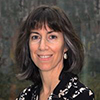 Dr. Marianne Celano is the director of the Emory University Parent Child Interaction Therapy Program as well as a professor in the Department of Psychiatry and Behavioral Sciences. Celano co-authored “

