 Francis Simonh Bries, University of the Philippines Diliman
Digital democracy or disengagement? Investigating the structure and predictors of online political participation in the Philippines
Political participation is typically investigated through the perspectives of its behavioral repertoires (structure) and its underlying psychological and political processes (predictors). However, existing work has focused more on the development of predictive frameworks versus definitions and typologies of political behavior. Bries’s dissertation pursues both approaches to investigate online political participation, given the shift toward online activities due to the COVID-19 pandemic and corresponding policies that restrict offline political participation. This study is being conducted in the Philippines, deemed as the “social media capital of the world” and considering its preparations for its national and local elections in 2022.
Bries is a PhD candidate in psychology at the University of the Philippines Diliman, working with Diwa Malaya Quiñones, PhD. His research focuses on the psychological determinants and implications of the use of social media and digital technologies, democratic processes, and political behavior. He earned a bachelor’s degree in psychology from UP Diliman.
 Caroline Christian, University of Louisville
Neurocognitive and momentary assessment of fear-based mechanisms underlying the transition from partial to full remission in anorexia nervosa
Anorexia nervosa (AN) is a serious psychiatric illness with high impairment and mortality. Over half of individuals with AN do not reach full remission during treatment, and one third relapse after discharge. Partial remission in AN (i.e., weight-restored individuals experiencing cognitive-affective AN pathology) represents a critical time for identifying mechanisms underlying remission. Despite considerable overlap with anxiety disorders, fear and avoidance have not been tested as mechanisms inhibiting remission in partially remitted AN. Christian’s dissertation study will test how fear-based learning (e.g., fear approach, avoidance) relates to AN pathology using behavioral and momentary assessment. The results will inform precision relapse prevention interventions and step-down care for AN.
Christian is a PhD candidate in the Department of Psychological and Brain Sciences at the University of Louisville, working under the guidance of Cheri Levinson, PhD. She is interested in integrating novel methods to better understand the role of transdiagnostic factors (e.g., avoidance) in eating and anxiety disorders, especially across critical periods, to inform prevention and treatment. Christian earned her Bachelor of Science in psychology and biology from the University of Louisville.
 Anne Claire Grammer, Washington University in St. Louis
A naturalistic examination of dietary lapses in low-income, treatment-seeking families with obesity
Socioeconomic disparities in childhood obesity prevalence and treatment response are well-documented and may be explained, in part, by unique challenges low-income families experience to adhere to dietary recommendations, a robust predictor of weight change. Grammer’s dissertation will use ecological momentary assessment to examine how socioenvironmental factors (e.g., presence, access, and affordability of healthy food) and intrapersonal factors (e.g., stress, depressed mood) momentarily impact parent-child dietary adherence and weight change throughout 3-month family-based behavioral obesity treatment. Results from this study have the potential to inform targets for childhood obesity by revealing precise moments to support healthy eating among families with high disease burden.
Grammer is a PhD candidate in the Department of Psychological and Brain Sciences at Washington University in St. Louis, working alongside Denise Wilfley, PhD. Broadly, Grammer’s research evaluates the use of digital assessment and treatment approaches to support health behaviors in vulnerable subgroups of youth, young adults, and families. She received her Bachelor of Arts magna cum laude with honors in psychology from Bryn Mawr College.
 Madeleine Gross, University of California Santa Barbara
Curiouser and curiouser: Examining processes that lead to state and dispositional changes in curiosity
Is it possible to increase the frequency and intensity of daily experiences of curiosity and wonder? What role do these states play in innovation, learning, and the development of a meaningful life? These questions drive Ms. Gross’ research, which takes a broad perceptual, phenomenological, and cognitive-behavioral approach to understanding the mechanisms that drive individual differences in personality. Her early investigations revealed that curiosity predicts how people think (i.e., the qualitative features of thought), how people view the world (i.e., their eye movement behavior), and how people explore information (i.e., their information foraging styles). Her dissertation research harnesses these findings to develop large-scale interventions to promote dispositional changes in curiosity, by employing behavioral and attitudinal habit formation strategies.
While working as a doctoral student with Jonathan Schooler, PhD, at UC Santa Barbara, Gross has used the support of two interdisciplinary fellowships to develop new approaches to examining personality. Continuing in this pursuit, she is currently investigating the perceptual and genetic correlates of personality as a Fulbright researcher in Martin Rolfs, PhD, Active Vision and Cognition Lab at Humboldt-Universität zu Berlin.
 Maurita Harris, University of Illinois Urbana-Champaign
Addressing gaps in equity through wearables (AGE-Wear)
African American adults are susceptible to multimorbidity related to chronic conditions starting in their 50s. Self-managing one’s health by monitoring risk factors (e.g., physical activity and diet) through wearables (e.g., Fitbit) can support an individual aiming to prevent or reduce the impact of chronic conditions. However, health technologies are not always accessible to African American adults, and there is limited research on understanding their engagement or adoption. Harris is conducting two studies, semi-structured interviews and a mixed-methods case study, to understand the use of wearables among African American adults and obtain their insights about design that would facilitate and thereby improve health outcomes. Harris’ dissertation will serve as the basis for a framework to incorporate the motivational processes regarding human behavior, design, and technology adoption of wearable devices by African American adults.
Harris is a doctoral candidate in community health working with Wendy A. Rogers, PhD, at the University Illinois Urbana-Champaign. Her work is at the intersection of the technology lifecycle, human factors, health, and aging. Harris earned her bachelor’s degree in psychology from North Carolina State University.
 Kate Nussenbaum, New York University
The development of adaptive memory
The ubiquity of new experiences early in life poses a fundamental challenge for still-developing memory systems. How should information that can best guide adaptive action be prioritized? Nussenbaum’s dissertation combines behavioral, brain imaging, and computational approaches to examine how, from childhood to early adulthood, individuals use the statistics of their environments to guide adaptive memory encoding. Her dissertation will characterize developmental changes in how different learning contexts influence what information is prioritized in memory and the specificity with which it is represented.
Nussenbaum is a doctoral candidate in psychology at NYU, where she works with Catherine Hartley, PhD. Her research examines how individuals acquire knowledge of the structure of their environments and use that knowledge to guide memory and value-based decision-making across development. Nussenbaum earned her bachelor’s degree in cognitive neuroscience at Brown University and her master’s degree in experimental psychology at the University of Oxford.
 Sirui Wan, University of California Irvine
Am I a math person or a language person? Developmental changes in students’ use of dimensional comparisons to form ability self-concepts in math and verbal domains
Believing that one is either a “math person” or a “reading person” can have fundamental influence on students’ educational and career choices. When students try to determine whether they are “a math person” or “a reading person,” they may use information from dimensional comparisons—i.e., comparisons of a person’s relative and subjective strengths and weaknesses across different domains such as math and language arts. Sirui’s dissertation focuses on the role of dimensional comparisons in the development of students’ self-relevant motivational beliefs. His work will contribute to our understanding of when dimensional comparisons begin to influence children’s self-perceptions and whether this influence may change as children grow older.
Wan is a doctoral candidate in the School of Education at the University of California, Irvine, working with Drew Bailey, PhD, and Jacquelynne Eccles. PhD. He studies the development of students’ academic achievement, motivational beliefs, and their relations with students’ achievement-related choices. Sirui holds a BS in engineering from Harbin Institute of Technology, an MS in developmental and educational psychology from Beijing Normal University, and an MA in education from UC Irvine.
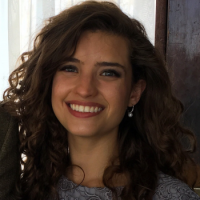 Camila Caballero, Yale University
Moving beyond the laboratory: Age-dependent differences in the association between frontoamygdala connectivity and dimensions of daily cognitive emotion regulation
Development is characterized by dynamic changes in emotion regulation. While most neurodevelopmental research has focused on changes in regulatory effectiveness, emotion regulation is a multidimensional phenomenon. This dissertation was designed to examine how changes in frontoamygdala circuitry relate to changes in real-world effectiveness and frequency of emotion regulation strategy use throughout childhood and adolescence.
It is with great sadness that we announce the passing of Ms. Caballero, who died in December of 2021. She was a PhD candidate in clinical psychology working with Dylan Gee, PhD in the Clinical Affective Neuroscience and Development Lab at Yale, where her work broadly focused on the development of emotion regulation among youth experiencing highly stressful environments. Caballero earned her bachelor’s degree in brain and cognitive sciences at MIT and a master’s degree in education at Boston University. Camila’s research was deeply motivated by her desire to lessen the suffering of children impacted by trauma.
Ms. Caballero’s contributions to psychology will continue to be felt through the many contributions she made to children’s mental health even at such an early stage in her career, her lasting influence on the CANDLab’s research, and the immeasurable impact that she had on her labmates in the CANDLab, the Yale Psychology community, and colleagues across the field.


