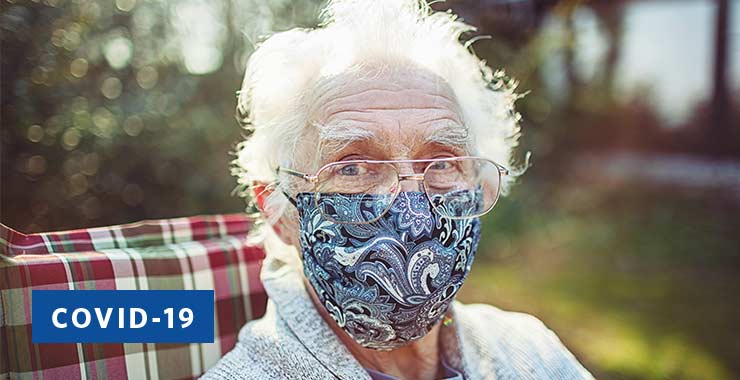
For decades, psychologists’ research has shown that ageism undermines older adults’ mental and physical health by implying they are less capable and worthy of care. Now, the COVID-19 pandemic has surfaced how ageism endangers all of society by dividing generations at a time when unity is particularly important.
“Ageism comes with a price, costing us the intergenerational solidarity that’s needed during during the current COVID-19 crisis,” says Hans-Werner Wahl, PhDopens in new window, senior professor of psychology who studies aging at Heidelberg University in Germany.
Psychologists who study the effects of ageism have found that stereotypes directed at older adults affect all age groups. Becca Levy, PhDopens in new window, professor of epidemiology at Yale School of Public Health and professor of psychology at Yale University, who is credited with starting this field of research, has developed a framework to explain how age stereotypes affect older persons. Her research has found that children and young adults are often exposed to negative stereotypes about older people and that they apply these stereotypes to themselves when they get older, with adverse health consequences.
Ageist beliefs may be especially harmful during the COVID-19 pandemic, when messages about older people as frail and vulnerable are rampant. According to Shevaun Neupert, PhDopens in new window, a professor of psychology at North Carolina State University, there’s a general message in society that anyone who is older is equally vulnerable and at risk for contracting the virus.
“This message of ‘stay home and protect your grandmother’ could both shape how younger people think about older adults now and how they themselves will think about being older as they age,” she says. “This is a transformational time to imagine how generations of people will experience aging now and in the future.”
Ageist stereotypes could also affect how generations relate to one another now. Wahl says viewing all older people as frail could cause younger people who view themselves as “lower risk” for becoming infected to resent older generations for the need for stay-at-home precautions.
“We need to avoid this tendency to blame older people for physical distancing, as though we need to stay home just to protect them,” he says. “That kind of approach — where younger people are strong and healthy and older people aren’t — is too primitive and simplistic.”
While it is true that people age 65 and older are at higher risk for complications from the virus, many older adults are healthy and strong, says Alison Chasteen, PhDopens in new window, a professor of psychology at the University of Toronto. Further, she adds, “stereotypes about older people can breed behaviors that undermine their autonomy or physical strength.”
For example, thinking of all older adults as helpless can lead people to act in ageist ways, such as offering unwanted help, which sends the message that an older adult isn’t capable or independent, she says. It’s best to err on the side of caution by asking if they need help. “Even if our intentions are good, we need to always remember that people should have a sense of independence and autonomy — they can tell us if they need help.”
Over time, research shows, exposure to ageism is associated with higher cortisol levels, which can harm cognitive ability and increase inflammation, leading to overall poorer health, says Manfred Diehl, PhD, director of the Adult Development and Aging Project at Colorado State University. In addition, ageism among medical workers can also affect health-care decisions about older people. “We can see that doctors very often use chronological age in their decision-making process,” Diehl says. “This is where ageism gets very dangerous. Age alone shouldn’t be a criterion or cut-off point, but other criteria, such as comorbidities or pre-existing conditions, should be used.”