
Representative Tom Kean Jr. (R-New Jersey) is the latest member of Congress to speak openly about a hospitalization for depression, telling colleagues on the House floor in late June that a nearly four-month absence from Washington was due to inpatient treatment for the illness.
“When people hear the word depression, many people think (or) simply feel it means feeling sad, but depression is so much more than that. It is physical, it is emotional, and until you experience it yourself, it’s difficult to fully understand how powerful this illness can be,” said Kean. The veteran lawmaker had kept the reason for his absence private for months, saying he had underestimated how long his recovery would take.
“I am grateful that I accepted help,” he told the chamber. “Today I stand before you healthier, stronger, and excited to return to the work that I love.”
Kean’s disclosure echoes a similar moment in 2023 involving Senator John Fetterman (D-Pennsylvania), who sent a strong message to the public after his absence from Congress for inpatient treatment for clinical depression.
“I want everyone to know that depression is treatable, and treatment works,” the senator said at the time. “This isn’t about politics. Right now, there are people who are suffering with depression in red counties and blue counties. If you need help, please get help.”
News that Fetterman checked himself into Walter Reed Military Medical Center in Washington, D.C. in February 2023 drew attention to the effort to get more men to seek treatment for the condition—attention that Kean’s disclosure has renewed.
Fetterman's transparency around his depression prompted other lawmakers to speak out, including Representative Ritchie Torres (D-New York), who has said he would not be alive todayopens in new window—let alone serving in Congress—were it not for the mental health care and antidepressant medication he received after being hospitalized for suicidal ideation nearly two decades ago, and who has since called for greater transparency from public officials who take extended medical leaves.
Senator John Fetterman (D-Pennsylvania) and Representative Tom Kean Jr. (R-New Jersey)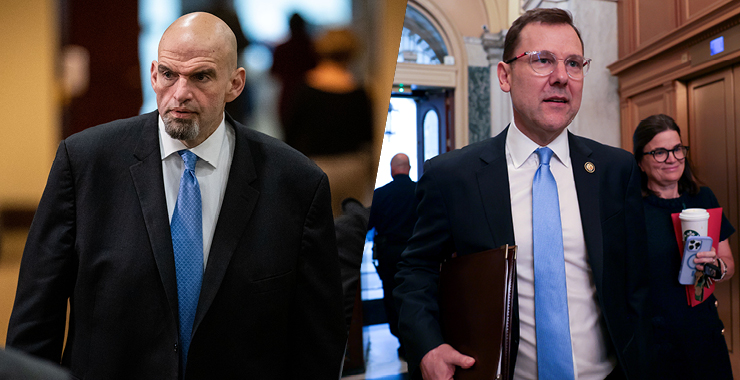
Former Representative Patrick Kennedy (D-Rhode Island) has also spoken publicly about his own struggles with depression, bipolar disorder, and addiction. Kennedy went on to co-author the 2008 Mental Health Parity and Addiction Equity Act (H.R. 6983opens in new window) and later founded The Kennedy Forum to advance mental health and addiction care policy.
Their willingness to speak publicly doesn't make the vulnerability any less real, Lynn Bufka, PhD, APA’s executive lead psychologist for practice, told The Hillopens in new window.
“Many times, people who are depressed have profound feelings of worthlessness, or that they’re not as good as other people,” she said. “That’s very difficult to talk about publicly. It requires an incredible amount of vulnerability to be willing to share that with others.”