skip to main content

Is it safe to get health advice from influencers? The answer is complicated

Learning how to be a critical consumer of information and thinking before you share can help protect everyone from false information online

APA Style leaf logo Cite This Article in APA Style
Abrams, Z. (2024, May 9). Is it safe to get health advice from influencers? Psychologists and other experts share strategies to help you distinguish fact from fiction. https://www.apa.org/topics/journalism-facts/false-health-information

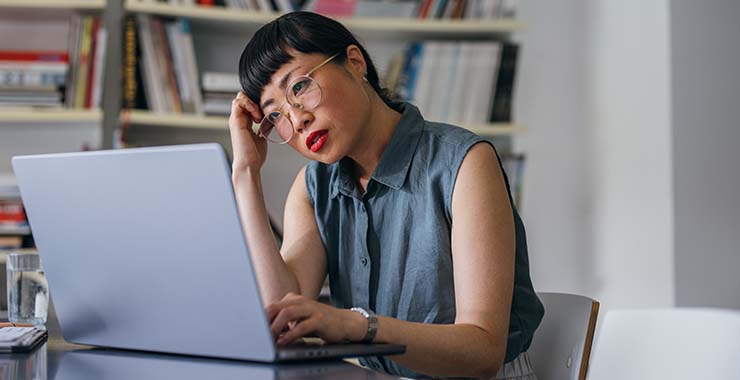
woman with a confused expression looking at a laptop screen

Lives are at risk as health information runs rampant online, with nonexperts promoting dangerous falsehoods about everything from alternative birth controlopens in new window to phony cancer treatmentsopens in new window and promising quick fixesopens in new window for a dizzying list of medical conditions.

The flood of conflicting health advice has left social media users—especially young people, who frequently encounter anti-science viewsopens in new window—vulnerable to deceptive information. And despite a genuine desire for the truth, people often find more inaccuraciesopens in new window when they try to verify what they read online.

“Most people are not experts on how knowledge is produced in science and medicine, so these concepts can feel very abstract,” said Kurt Sampsel, PhD, the senior program manager for disinformation and community engagement at PEN America, a nonprofit organization focused on protecting free expression.

How false information thrives

Psychologists and other experts are studying how false health information spreads, who is most vulnerable, and what can be done to reverse the trend. Misleading health content can put people’s lives at extreme risk, such as when people choose to follow a dangerous health trend like drinking Borax laundry detergent diluted with wateropens in new window to treat arthritis or other conditions that has no supporting science.

Misleading health information can also cause financial harm, which is common in the health space because spreaders of false information often offer products or services as a solution.

“There are so many alternative medicine sources in this space spreading misinformation for profit,” said psychologist Briony Swire-Thompson, PhD, an assistant professor of political science and psychology who directs the Psychology of Misinformation Lab at Northeastern University.

Some peddlers of health scams target specific populations, including those who have historically developed a distrust of physicians or the pharmaceutical industry. Past abuses from medical providers, such as the repeated medical exploitation of African Americansopens in new window, can place marginalized populations at increased risk.

“Folks in these populations are disproportionately vulnerable because they have been mistreated by the medical establishment,” said Deen Freelon, PhD, a computational social scientist and a professor at the University of Pennsylvania’s Annenberg School for Communication. “That can make them apt audiences for misinformation related to health.”

Health crises such as the recent mpox outbreakopens in new window are also used to exploit people looking for information. When a disease breaks out, real uncertainty arises about how it spreads and how people can stay safe, leaving an opening where health misinformation can thrive, said Jon Roozenbeek, PhD, an assistant professor in psychology and security at King’s College London who studies online misinformation.

For that reason, better education about the scientific process, including that it takes time to establish evidence to offer scientifically sound guidance, could reduce susceptibility to falsehoods. A broader understanding of the process required to develop a vaccine, for example, would arm people against certain false claims.

“We need to help people understand that when there are changes in the scientific findings, those findings are not problematic, but the way science works”—that science is an ongoing, evolving process, said psychologist William Klein, PhD, associate director of behavioral research at the National Cancer Institute.


Protect yourself online

Research points to several strategies that can counteract health misinformation. One is that individuals, companies, and organizations with health expertise can and should debunk false claims by providing a science-backed correction and explaining why the claims are false. Research shows that inoculating people against misleading messages by teaching strong critical-thinking skills better prepares people to identify and disregard falsehoods they see online. Another effective strategy is leveraging trusted sources, such as religious leaders or athletes, to communicate with the public about health using science-backed information.

While the onus to protect people from false information requires action from social media companies, regulators, and educators, there are also steps everyone can take to arm themselves against false or deceptive content.

Be a critical consumer of information. Consider the source of health advice you read online. If you follow the advice, will the person or company sharing it benefit financially or otherwise? Does the influencer or content creator have medical credentials? Do they have a record of making baseless claims?

Think before you share. Research suggests that reminding people to check the accuracyopens in new window of information with a reputable source such as the Centers for Disease Control and Prevention, the National Institutes of Health, and the Mayo Clinic can cut down on sharing falsehoods. Before you pass something along, consider whether it may be untrue or could cause harm.

Sharpen your media literacy skills. Playing science-backed games, including the Spot the Troll Disinformation Quizopens in new window and Bad Newsopens in new window, can reduce your chances of believing false health information by making it easier to spot disreputable social media accounts and inaccurate news stories on social media.

While these individual-level interventions can move the needle in small ways, health misinformation will exist and persist until broader, societal-level shifts occur. A big one many experts are working toward is changes in societal norms that will make spreading misinformation socially unacceptable.

“It’s going to take more than media literacy, platform reform, and government policy,” Sampsel said. “This will require social changes, such that sharing misleading, false, or inaccurate information is something that becomes more and more socially condemned.”

Recommended Reading

Speaking of Psychology

Subscribe to APA’s audio podcast series highlighting some of the most important and relevant psychological research being conducted today.

Subscribe to Speaking of Psychology and download via:

Appleopens in new window
Apple podcast logo

Spotifyopens in new window
Spotify logo

You may also like