skip to main content

How sport psychologists are helping Olympians in Paris

Psychologists help athletes deal with the physical and mental toll of their sport, using cognitive behavioral techniques.

APA Style leaf logo Cite This Article in APA Style
Abrams, Z. (2024, July 31). How sport psychologists are helping Olympians in Paris. https://www.apa.org/topics/mental-health/going-for-gold

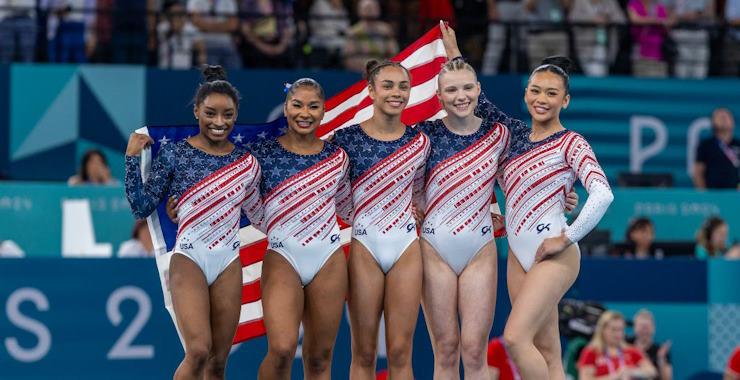
USA gymnasts in Paris

The Olympic Games have always provided a spectacular display of physical prowess, but now the event’s organizers and participants are also increasingly shining a light on mental well-being.

After withdrawing from the Tokyo Games in 2020, gymnast Simone Biles spoke publicly about her weekly therapy sessions and how they’ve helped her return stronger than before. British swimmer Adam Peaty, who has grappled with depression and alcohol problems, returned this year to claim the silver medal in the men’s 100-meter breaststroke. Meanwhile, the United States Olympic and Paralympic Committee (USOPC) has increased the size and scope of its cadre of psychologists.

“The culture of mental health is rapidly shifting. More people are comfortable saying they have mental health problems and asking for services,” said Cody Commander, PsyD, a clinical and sport psychologist who works with Olympic athletes. “Now that people are coming out in record numbers, we’ve expanded our workforce to meet that growing demand.”

Boosting athletic performance

For years, sport psychologists have worked alongside athletes to enhance performance, for example by training them to manage precompetition jitters or supporting reflection following a race.

“Our job is to help athletes perform their best in spite of all the pressures and distractions that go along with the Olympics,” said Karen Cogan, PhD, lead sport psychologist for the USOPC.

One exercise Cogan uses is working through “what if” scenarios with athletes. If you’re in medal contention at your last event, how do you handle the pressure? If there’s a death in your family just before you compete, do you want to know about it? How would you manage the stress of a security threat that delays the competition, if one occurs?

Cogan also trains Olympians on mental skills that can help them navigate distractions that might arise before, during, and after an event. Breathing techniques and mindfulness training can help individual athletes, while she facilitates communication and cohesion among groups who compete together.

Casey Kaufhold, the world’s top-ranked archer, joined Team USA during the Tokyo Games while still attending high school. Since then, she has worked with a sports psychologist to handle the stress of competing.

“I’ve been able to manage the pressure a little bit better and I think I’ll just apply a lot of what I learned over these three years—trusting myself, my training, and my process,” Kaufhold told Olympics.com.

Mental performance consultant Jamie Shapiro, PhD, works with Paralympic athletes to develop a precompetition routine and identify cue words—such as “balanced” or “confident” or instructional cues such as “kick”—that allow them to stay focused on the task at hand.

“Thinking about medals can be a big distraction for athletes, so we have them practice directing their attention to the process of performing their sport,” said Shapiro, who is also a past president of APA’s Division 47 (Society for Sport, Exercise, and Performance Psychology).

Psychologists also help athletes deal with the physical and mental toll of their sport, using cognitive behavioral techniques such as cognitive restructuring to identify negative thought patterns. Paralympic athletes, for example, are often navigating a physical disability, stress around the recurring disability “classification” process to determine who they will compete against, and logistics around transporting specialized equipment such as a racing wheelchair. Both Olympic and Paralympic athletes face challenges around injuries, team dynamics, sport-life balance, disappointing performances, and retirement from sport.

“I honestly don’t know how you could do it without a sport psychologist,” said Lily Williams, a cyclist competing in Paris with the USA Olympic team pursuit squad. “Our job is basically to go hurt ourselves as much as possible day in and day out, and it’s really helpful to have somebody help you disassociate that kind of work from feelings of negativity.”


A growing focus on mental health

In addition to the sport psychologists who provide support on the performance side, the USOPC has a designated team of licensed mental health providers to focus exclusively on mental health. The sole purpose of the team, which includes both in-house providers and contractors, is to deliver mental health care to any Olympic or Paralympic hopeful—about 4,000 athletes—who wants more consistent therapeutic support.

That includes ongoing treatment for athletes managing conditions such as depression or anxiety, or intensive support for a competitor who faces unforeseen circumstances, such as a family emergency, that forces them to withdraw from the games, said Jessica Bartley, PsyD, a clinical associate professor of sport and performance psychology at the University of Denver and leader of the USOPC’s team of sports and performance psychologists.

Other common concerns include eating disorders, substance use, trauma, and navigating retirement from sport. For the latter, Bartley uses acceptance and commitment therapy to help athletes identify values, such as discipline and teamwork, that they can take with them into their postcompetition life.

“The narrow focus on one sport is typically what makes someone an incredible competitor, but it can be very tough for athletes to form a new identity when their career ends,” she said.

The push for expanding mental health care began in 2020 when the USOPC assembled a mental health task force to develop best practices, resources, and action plans for Team USA at the Tokyo Games. The task force—which includes Olympians, Paralympians, coaches, and medical and mental health care professionals—recommended assembling a mental health services team. That team has since created a directory of vetted mental health providers across the United States and developed an emergency action plan with guidance for handling mental health crises that occur during competitions, including removal from play, medical withdrawals, disordered eating, psychosis, domestic violence, and other incidents.

“We’re working to clarify the distinction between sport psychology and other mental health resources and services, and also to ensure that every athlete involved in the organization has access to free mental health care,” said Nicole Ross, a two-time Olympic fencer, a member of the task force, and a graduate student in psychology.

Supporting Olympians in Paris

Sport psychologists can help competitors adjust their routines and strategies to face the unique circumstances surrounding the Olympic Games. That often requires working on the fly—Cogan usually moves around between sports throughout the day, conducting one-on-one sessions with athletes, group meetings with teams before their competitions, and group mindfulness sessions.

Amidst the fanfare of the Olympics, psychologists and athletes alike are doing their best to appreciate the experience and approach their events as they would any competition, said Mackenzie Brown, an Olympic archer who has competed for Team USA.

“The Olympics can be pretty overwhelming when it comes to the magnitude, the village, and the other athletes,” she said. “Sport psychologists can help us bring all of the emotions and reactions back into control because for us to perform at our best, we have to treat it like any other day.”

Recommended Reading

Recommended Reading

Speaking of Psychology

Subscribe to APA’s audio podcast series highlighting some of the most important and relevant psychological research being conducted today.

Subscribe to Speaking of Psychology and download via:

Appleopens in new window
Apple podcast logo

Spotifyopens in new window
Spotify logo

You may also like