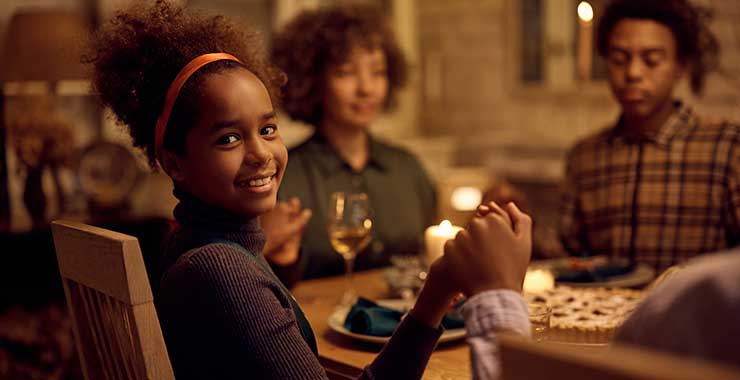
Looking to foster a better attitude toward gratitude among your kids? While the instinct may be to remind kids to say, ‘thank you,’ psychological research suggests it’s better to help children develop gratefulness by encouraging them to notice kind acts, and modeling gratitude as adults.
Gratitude is more than just a pleasant sentiment. It can be a powerful tool for enhancing well-being. Decades of research have demonstrated the benefits of practicing gratitude, both for adults and children.
In a landmark 2003 study led by Robert Emmons, PhD, a psychology professor at the University of California, Davis, participants who were assigned to list things they were grateful for experienced greater happiness, joy, and enthusiasm than those who were only asked to write about how they were feeling each dayopens in new window. The findings inspired a spate of additional research. To date, numerous studies have found that having a grateful outlook, “counting one’s blessings,” and expressing gratitude to others can have positive effects on emotional health as well as on interpersonalopens in new window and romanticopens in new window relationships. Grateful adolescents report higher life satisfaction and a greater motivation to improve themselvesopens in new window, according to a 2022 study in Emotion.
Expressing gratitude is even associated with a host of physical benefits. Studies have shown that feeling thankful can improve sleepopens in new window, lower blood pressureopens in new window, reduce depressionopens in new window, and even alter biomarkers of risk for cardiovascular diseaseopens in new window.
Amid the hustle and bustle of the holidays, instilling gratitude in our kids can be a gift that keeps on giving. Here are six science-backed tips for parents to help cultivate gratefulness in their kids: