 Cory Clark, PhD, is the executive director of the new Adversarial Collaboration Research Center at the University of Pennsylvania and a visiting scholar in psychology. Her research focuses on the psychology of morality and politics. She recently answered questions from APA about how psychological research can help us understand and navigate a divisive period in U.S. history.
American Psychological Association. (2021, February 1). Psychological research provides insight into US political divisions. https://www.apa.org/topics/politics/political-divisions
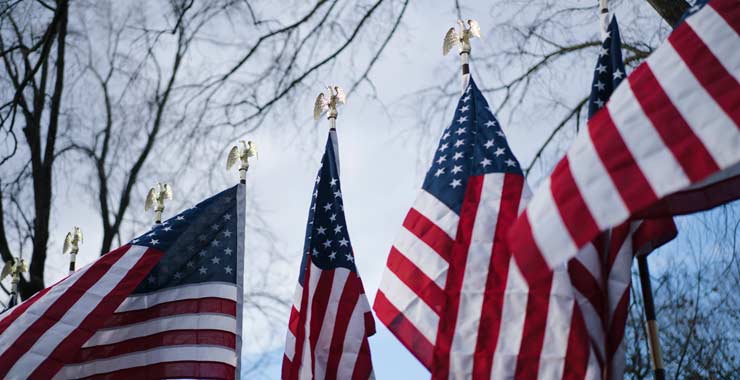
Your research has focused on philosophical concepts such as free will. Can you tell us about this area of research and how it contributes to political psychology?
There really isn't a clear definition of free will, even among philosophers, let alone everyday peopleopens in new window, yet most people assert that free will exists. This raises the question, why do people believe in free will? My research suggests that people increase their belief in free will when they want to punish someone. For example, in my experimental work, I have people recall or learn about a particular immoral action performed by another person, which increases participants’ desire to punish, and I find that people will then report stronger belief in free will and reject science that challenges free willopens in new window. This is one way people justify punishing fellow human beingsopens in new window—they say humans have this special capacity to make decisions completely autonomously, and therefore, they deserve to be punished.
In the political domain, with my colleagues Jim Everettopens in new window and Azim Shariffopens in new window (among others), I have examined how liberals and conservatives selectively apply the concept of free will to explain other people's behavioropens in new window and particularly the behavior of those they wish to punish. Conservatives report stronger beliefs in free will in general, but when liberals have stronger desires to punish someone, they'll attribute more free will to that actor than conservatives will. In some studies, we had participants read about an identical moral infraction that was perpetrated either by a liberal or a conservative. Participants had stronger desires to blame their political outgroup perpetrators, and consequently, liberals attributed more free will to the conservative perpetrator, and conservatives attributed more free will to the liberal perpetrator.
Right now, the country is deeply divided based on political differences. Does the research provide any insight on how we have become so divided?
There is a lot of research on why and how polarization has increased over time. Much of it points to the feedback loop between supply and demand, between what people want and what people get from the media, on social media, and in their social worlds. People are naturally tribalisticopens in new window in the sense that they easily identify who their ingroup and outgroup members are. Once they're committed to an ingroup, they treat their ingroup members more favorably than outgroup membersopens in new window, and they interact with information in ways that sustain their beliefs about their ingroupopens in new window. We see this as people gravitate toward information, including news sourcesopens in new window, social media environmentsopens in new window, and physical environments that increase their odds of exposure to information that makes their group look good (PDF, 756KB)opens in new window and correct and minimizes the risk of exposure to information that could challenge their group.
Social media has sped up this process with algorithms that feed people the content that they want to see. That polarizes people even further, as people get even more homogeneous content and become more certain over time that their group is right—both morally and empirically. Even though we blame information sources, like the media and social media, the reason we’re getting biased information is because we demand it through our clicks and shares. The biased information that results further reinforces our political beliefs and our certainty in our righteousness.
Many studies have shown that even after we are exposed to information, we evaluate it in a biased manner. For example, a classic studyopens in new window had proponents and opponents of the death penalty read the methods of a scientific study that found results that either supported or did not support the deterrent efficacy of the death penalty. Opponents evaluated the methods as higher quality when the results showed the death penalty was not effective, and proponents evaluated the methods as higher quality when the results showed the death penalty was effective in deterring crime. So, participants changed their evaluations of the methods of the study, which were the same in both conditions, depending on the results of the study. Generally, we would say the methods should be evaluated independently, without consideration of whether we like the results those methods produced. But in fact, our evaluations of the scientific quality of the study itself are influenced by the conclusions the study found and whether they confirm our preexisting beliefs.
You've talked about how moralization plays a role in polarization. Can you talk more about that?
Increasingly, we see that political parties are disliking each other more and more over the past few decadesopens in new window. But there is also a moral component to this—people see their political opponents as morally inferior to their own political group. For example, one studyopens in new window found that both Democrats and Republicans thought their own political group would be more prosocial in an economic game than their political opponents would be, when in fact both groups were virtually equally prosocial when they played the game. We have many negative misperceptions of our political outgroup (PDF, 1.76KB)opens in new window, and these likely justify our desires to avoid them, further eliminating opportunities to correct our misperceptions.
You have said that liberals and conservatives are resistant to information that contradicts their beliefs. What does the research tell us about such biases?
My former labmates and our advisor, Pete Dittoopens in new window, conducted a meta-analysis of political bias studiesopens in new window. We found that both liberals and conservatives demonstrated political bias to similar degrees—they both tend to evaluate information that confirms their political beliefs more favorably than otherwise identical information that challenges them. But there are domain specific asymmetries where one group will demonstrate more bias than the other, often depending on which group has a stronger attachment to a particular value or narrative. There is an interesting new studyopens in new window that found that liberals and conservatives are similarly likely to deny evolved gender differences. But liberals deny them despite accepting evolution, because the idea that men and women are different violates certain liberal values. Conservatives, on the other hand, accept that men and women are different, but are more likely to deny evolution, and that prevents them from endorsing gender differences as evolved. So, there is a similar science denial there for liberals and conservatives, but for different reasons.
Does the research provide any hints on how we can become less polarized as a country?
Theoretically, yes, but practically, I am less sure. The thinking has been that a superordinate identity could bring people together. So, the fact that we are all citizens of the United States should bring us together. But that one seems difficult because being patriotic or being proud to be from the United States has become a polarized issue. If you see an American flag on someone's Twitter profile, you are likely to assume that person is a Republican rather than a Democrat. Experts have also argued that having a common enemy or threat could help cure polarization. But the COVID-19 pandemic has been a common threat to everyone, and it has also become a divisive issue. Some experts have suggested social media platforms could alter their algorithms to prevent the spread of inflammatory content, which could lower political hostility across the country. Some platforms are already taking steps in that direction, but the results of recent changes remain to be seen.
The real world incentivizes partisan tribal signaling and it is difficult to see how that incentive structure could change. In the laboratory, however, studies have found that incentivizing accuracy is helpful. For example, forecasting tournaments, in which people are incentivized to make accurate predictions on political issues, can promote intellectual humility and depolarizationopens in new window. These online games require players to make probabilistic judgments about politically significant future outcomes, which likely minimizes black and white thinking. Players probably start to realize how little they know and how complicated political issues are. Once you realize that, you can begin to appreciate other people’s perceptions and opinions—maybe they disagree because this is hard, not because they are bad people. Of course, this seems to work in the lab; I am not sure how it would be applied in the real world.
Those of us in academia can also play a role in bringing people together and modeling more collaborative behavior for those who follow us and our work. Phil Tetlockopens in new window, and I have just started an adversarial collaboration research center, where we hope to bring together disagreeing scholars to resolve scientific disputes. This is not easy for people. It's not something that people really want to do. But it could demonstrate that by working together and not heading to our separate corners, disputes can be resolved, and science will advance. My hope is that this will be one small step to bridge differences that can lead to bigger steps for the broader society.
References
Ahler, D. J., and Sood, G. (2018). The parties in our heads: Misperceptions about party composition and their consequences. The Journal of Politics, 80(3), 964-981.
Bakshy, E., Messing, S., and Adamic, L. A. (2015). Exposure to ideologically diverse news and opinion on Facebook. Science, 348(6239), 1130-1132.
Clark, C. J., Baumeister, R. F., and Ditto, P. H. (2017). Making punishment palatable: Belief in free will alleviates punitive distress. Consciousness and Cognition, 51, 193-211.
Clark, C. J., Liu, B. S., Winegard, B. M., and Ditto, P. H. (2019). Tribalism is human nature. Current Directions in Psychological Science, 28(6), 587-592.
Clark, C. J., Luguri, J. B., Ditto, P. H., Knobe, J., Shariff, A. F., and Baumeister, R. F. (2014). Free to punish: A motivated account of free will belief. Journal of Personality and Social Psychology, 106(4), 501-513.
Clark, C. J., and Winegard, B. M. (2020). Tribalism in war and peace: The nature and evolution of ideological epistemology and its significance for modern social science. Psychological Inquiry, 31(1), 1-22.
Clark, C. J., Winegard, B. M., and Baumeister, R. F. (2019). Forget the folk: moral responsibility preservation motives and other conditions for compatibilism. Frontiers in Psychology, 10, 215.
Clark, C. J., Winegard, B. M., and Farkas, D. (under review). A Cross-cultural Analysis of Censorship on Campuses.
Clark, C. J., Winegard, B. M., and Shariff, A. F. (in press). Motivated free will beliefs: The theory, new (preregistered) studies, and three meta-analyses. Journal of Experimental Psychology: General.
DeMarree, K. G., Clark, C. J., Wheeler, S. C., Briñol, P., and Petty, R. E. (2017). On the pursuit of desired attitudes: Wanting a different attitude affects information processing and behavior. Journal of Experimental Social Psychology, 70, 129-142.
Ditto, P. H., Liu, B. S., Clark, C. J., Wojcik, S. P., Chen, E. E., Grady, R. H., ... and Zinger, J. F. (2019). At least bias is bipartisan: A meta-analytic comparison of partisan bias in liberals and conservatives. Perspectives on Psychological Science, 14(2), 273-291.
Everett, J. A. C., Clark, C. J., Meindl, P., Luguri, J. B., Earp, B. D., Graham, J., ... and Shariff, A. F. (in press). Political differences in free will belief are associated with differences in moralization. Journal of Personality and Social Psychology.
Iyengar, S., Lelkes, Y., Levendusky, M., Malhotra, N., and Westwood, S. J. (2019). The origins and consequences of affective polarization in the United States. Annual Review of Political Science, 22, 129-146.
Jordan, J. J., McAuliffe, K., and Warneken, F. (2014). Development of in-group favoritism in children’s third-party punishment of selfishness. Proceedings of the National Academy of Sciences, 111(35), 12710-12715.
Lewandowsky, S., Woike, J. K., and Oberauer, K. (2020). Genesis or Evolution of Gender Differences? Worldview-based Dilemmas in The Processing of Scientific Information. Journal of Cognition, 3(1).
Mellers, B., Tetlock, P., and Arkes, H. R. (2019). Forecasting tournaments, epistemic humility and attitude depolarization. Cognition, 188, 19-26.
Motyl, M., Iyer, R., Oishi, S., Trawalter, S., and Nosek, B. A. (2014). How ideological migration geographically segregates groups. Journal of Experimental Social Psychology, 51, 1-14.
Stewart-Williams, S., Thomas, A., Blackburn, J. D., and Chan, C. Y. M. (2019). Reactions to male-favoring vs. female-favoring sex differences: A preregistered experiment.
Stroud, N. J. (2008). Media use and political predispositions: Revisiting the concept of selective exposure. Political Behavior, 30(3), 341-366.
Tappin, B. M., and McKay, R. T. (2019). Moral polarization and out-party hostility in the US political context. Journal of Social and Political Psychology, 7(1), 213-245.
Winegard, B., Clark, C., Hasty, C. R., and Baumeister, R. (under review). Equalitarianism: A source of liberal bias.