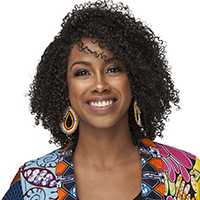
Afiya Mbilishaka, PhD, a clinical psychologist and hair stylist in Massachusetts, uses hair salons as an entry point to mental health care. Her business, PsychoHairapyopens in new window, trains stylists and barbers to support people’s mental well-being while they’re doing hair, incorporating elements of mental health first aid with research on lived experiences and cultural strengths of Black people. We asked Mbilishaka to talk about her approach and how others can support their own communities.

What’s your approach to population health?
There’s an African proverb that says “Many hands make light work,” and I believe that applies to psychology. With PsychoHairapy, I use the lay health advisor model, which involves identifying trusted community members who can share information about health-related topics. These informal helpers already have a lot of insight about the communities they work with, and their communities already trust them.
If conversations about mental health are already happening, it’s useful for these individuals to feel more confident in how to offer evidence-based support to them. People may be more likely to open up to and listen to someone they already know and respect.
What role do lay people play in supporting individuals with mental health needs best treated by a psychologist?
Along with supporting people in daily conversations, the stylists and barbers I work with learn skills to identify signs of mental health concerns and how to refer people to resources that can help them. Therapy is important, but many mental health professionals are busy and expensive, especially if someone doesn’t have insurance. Plus, psychologists aren’t necessarily out in the community screening because they’re busy in their offices or other settings.
Salons or other community spaces can act as extensions of the therapy office by teaching people how to identify when support is needed, who can provide that support, and how to help in the meantime. In some ways, this approach is like CPR. We can help keep someone afloat for a while until they go to an appointment.
For psychologists who want to make an impact in their community, what are the most important considerations?
There are so many opportunities to connect people to mental health through their daily activities. It’s good to be observant of patterns in society, like how people spend their time and how they access a sense of community. I also think when we’re developing an expertise, we can lean into our own passions. Ask yourself where you like to spend time and how you’ve been influential outside of your psychology work, whether through social media, fitness, or spiritual practices. I’ve always loved doing hair, so I saw that as a unique way to have conversations and get to know people. Others will have their own interests and skills they can apply to support mental health in their communities.
Which psychological approaches are most helpful for psychologists who want to connect with their communities?
Applying evidence-based practices in mental health care is always essential, but the best approach may depend on the specific setting and population. I use mental health first aid to equip people to identify signs of mental illness and refer people to resources, whether therapy or employment opportunities. I also integrate elements of group therapy and skills like active listening in the training, so stylists can understand when to listen versus offering input or advice.
It’s also important to tailor your approach to apply to the experience of those you’re working with. Black women, for example, may respond differently to certain communication styles or show signs of certain mental illnesses or other struggles. Different groups can also have different mindsets around mental health. PsychoHairapy stylists learn about common cultural stigmas around mental health in the Black community so they can explain what therapy is like and how to best encourage people to take the next step.
What are some practical ways psychologists can learn to better support the communities they want to serve?
Cultural sensitivity is key. Look for ways to learn about those you want to work with and build new skills to relate to the people you are engaging with. Continuing education is a good option. I just signed up for a three-hour, online CE course about “the strong Black woman schema,” the internalized scripts some Black women have about needing to be strong. I hope to use the training to help me plan out interventions for women in the salon.
If you’re interested in the type of work I do, connect with other therapists doing community work to learn more about their approach, or even take a training or certification in an existing program to see how others have transformed their clinical skills into community work.
Why are psychologists uniquely equipped to support population health?
We’re research-scientist practitioners by nature. Most PhD programs in psychology teach both research and how to apply it, which equips us to best support individuals in the clinical setting and in our communities. With the feedback of teachers and supervisors, many of us have also been able to identify what we do well, along with areas we want to grow. When we translate our professional and personal skills into community work, we can make an impact outside the therapy space.