
skip to main content
Integrated care

Treating patients with chronic insomnia

Laurie Ivey, PsyD, helps people sleep better so they can live better

APA Style leaf logo Cite This Article in APA Style
American Psychological Association. (2026, January 15). Treating patients with chronic insomnia. https://www.apa.org/topics/sleep/treating-chronic-insomnia

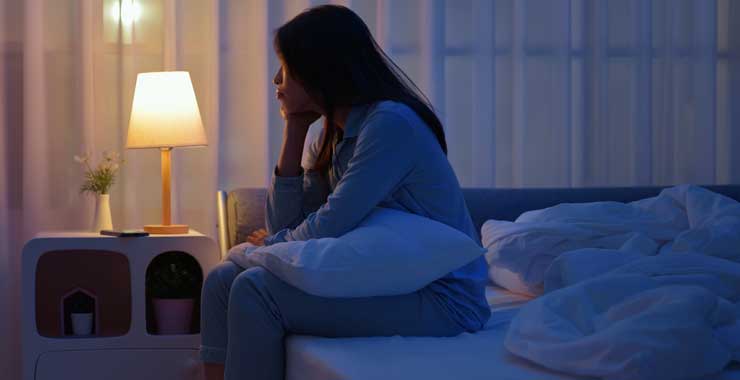
A woman sitting up in bed at night, likely experiencing insomnia or sleep

Laurie Ivey, PsyD After decades of teaching physicians and psychologists in training how to work together in the integrated primary care setting, psychologist Laurie Ivey, PsyD,opens in new window chose to redirect that expertise to a specialty that affects nearly every aspect of people’s well-being—sleep.

At University of Colorado Anschutz Medical Campus, Ivey’s role in the Sleep Center involves collaboration with sleep medicine physicians, including neurologists, pulmonologists, psychiatrists, and ear, nose, and throat doctors, to treat patients with chronic insomnia.

Chronic insomnia is frequently tied to generalized anxiety disorder—leading people to ruminate rather than rest—or to smartphone use hijacking the hours meant for sleep, she says.

She spoke to us about the best treatment, how sleep and mental health intersect, and how clinicians can help their patients with sleep problems.

What do you focus on in the sleep clinic?

I primarily treat patients with chronic insomnia who are referred by sleep physicians. I’ll meet with the patient and assess the sleep problem and their individual goals. Then we meet for short-term therapy where I typically use CBT-I, an evidence-based type of cognitive behavioral therapy for treating insomnia. CBT-I helps patients identify and change thoughts that may be contributing to their sleep problems. For example, if someone is anxious every night about sleep, we can do cognitive restructuring to shift catastrophizing (“I’ll be ruined tomorrow”) into more accurate, manageable self-talk.

Attention to sleep hygiene and behavioral conditioning are significant parts of CBT-I. We look at what they’re doing well and what they can improve. Cell phones are a huge factor contributing to sleep deprivation. Blue light, notifications, and all-consuming content like news, social media, and work email can make it hard to rest. I also emphasize the importance of regular exercise for sleep management, in addition to all its other important benefits.

Sleep and mental health disorders have a clear bidirectional relationship. Sleep problems can exacerbate existing mental health symptoms and possibly lead to new mental health disorders, and mental health disorders frequently impair sleep.

How do sleep problems and mental health disorders impact one another?

Sleep and mental health disorders have a clear bidirectional relationship. Sleep problems can exacerbate existing mental health symptoms and possibly lead to new mental health disorders, and mental health disorders frequently impair sleep. For example, we know depression, anxiety, bipolar disorder, and posttraumatic stress disorder can have sleep problems as part of their cluster of symptoms.

For these patients, not sleeping well can further impair quality of life. It becomes a perpetuating problem, and we must figure out how to reduce what I call the “tumbleweed” that gets bigger and bigger. So, it’s important to treat both the underlying mental health disorder and the sleep-related problem itself.

Sometimes, I discover undiagnosed mental health disorders in the process. The biggest overlapping mental health disorder is generalized anxiety disorder, which is what CBT-I typically targets. People who are struggling with sleep almost always have sleep anxiety, and they ruminate about whether they’ll be able to sleep.

Messages about the importance of sleep for longevity and positive health are prevalent in the media. Many articles reference the possible link between poor sleep and future dementia. Patients frequently come to see me because they want to improve their sleep and reduce their risk of future dementia.

While prioritizing sleep is a good thing, minimizing anxiety about it is also important. If I diagnose someone with a mental health disorder, I can refer them to another provider for long-term treatment.

What other treatment modalities do you use?

I teach every patient relaxation techniques like diaphragmatic breathing and body scanning so they can use those skills throughout their day and during the night. Sometimes, CBT-I doesn’t go quite far enough. Acceptance and Commitment Therapy, or ACT, and related mindfulness exercises help patients further their understanding about the mind-body connection. Mindfulness techniques improve their ability to keep a quiet mind and their ability to stay somnolent if they wake up in the middle of the night instead of allowing their thoughts to turn on and wake them up.

ACT also has the component of mindfulness and cognitive flexibility, which we know help anxiety. People start to understand they don’t have to be stuck in thought patterns, and they learn to stay present. If you’re in the future or past, it’s hard to manage anxiety. Being in the present in a mindful state can help improve both generalized anxiety and sleep anxiety.

How can clinical psychologists best support patients with insomnia or other sleep problems?

Even if a patient doesn’t come to therapy for sleep problems, psychologists should bring up sleep. It crosses over with so many mental health disorders—sleep is a symptom of anxiety, depression, PTSD, and bipolar disorder. If you’re not assessing sleep, you’re missing a key component of diagnostic evaluations. Patients don’t always realize the impact of sleep deprivation on their health, and medical and mental health providers frequently neglect to check in about sleep. If we catch sleep problems early and intervene, we can help prevent the onset of future mental health problems.

Providers who don’t feel comfortable treating sleep issues can suggest a primary care visit. Primary care providers can determine if medications would be helpful for a patient, particularly if they meet criteria for anxiety or depression. Additionally, it’s common for primary care practices to have integrated behavioral health providers who can do short-term CBT-I.

As psychologists, we typically say therapy and medication are better for either one alone. For sleep recovery, evidence shows that CBT-I is better than medication in the short term and has longer-lasting effects.

Recommended Reading

Related and recent