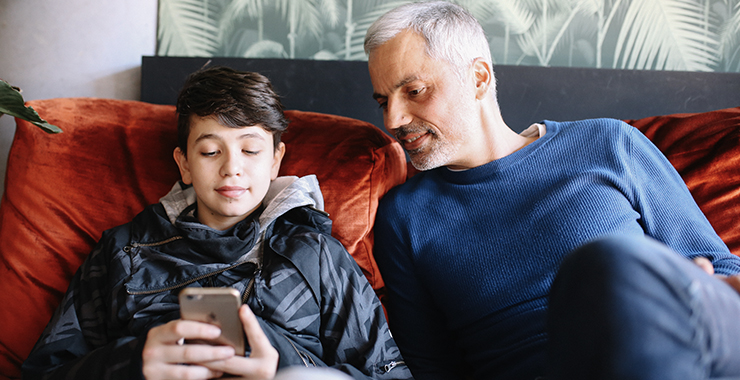
Keeping up to speed on social media platforms can be difficult for parents and caregivers. Trying to filter the extraordinary amount of content your kids are exposed to online can feel impossible. Because of this, APA recommends teens develop social media literacy skills before they begin using social media and receive ongoing reminders to help reinforce these skills.
[Related: Potential risks of content, features, and functions: The science of how social media affects youth]
Social media platforms, schools, and parents can all play a role in teaching social media literacy skills. APA recommends social media literacy training should cover a variety of areas that are directly related to the science on adolescent social media use and mental health. Related to APA’s Health Advisory on Adolescent Social Media Use, here are answers from APA Chief Science Officer Mitch Prinstein, PhD, to frequently asked questions about social media literacy. His answers are based on hundreds of studies on tens of thousands of teens conducted around the world over the last decade.
1. Does social media mirror the real world?
Social media is different from real life. Help teens remember that likes, comments, or posts may not represent what most people think. Posts or opinions expressed may not reflect the majority of people in your community.
2. How do I know when information online is true?
Social media is filled with information that is inaccurate or deliberately designed to mislead people. Both misinformation and disinformation spread easily online. We can be fooled into believing what we see even when we don’t realize it. Studies show that mis- and disinformation are more likely to be reposted than factually accurate information, so we are probably exposed to something false more frequently than we realize.
Talk to your child about how to judge whether a source is reliable and trustworthy. The online game getbadnews.comopens in new window, developed by psychological scientists, teaches players how to recognize the tactics people use to spread false information online. Another resource, spotthetroll.orgopens in new window, was developed by psychological scientists to teach kids how to recognize real social media users from bots.