Findings
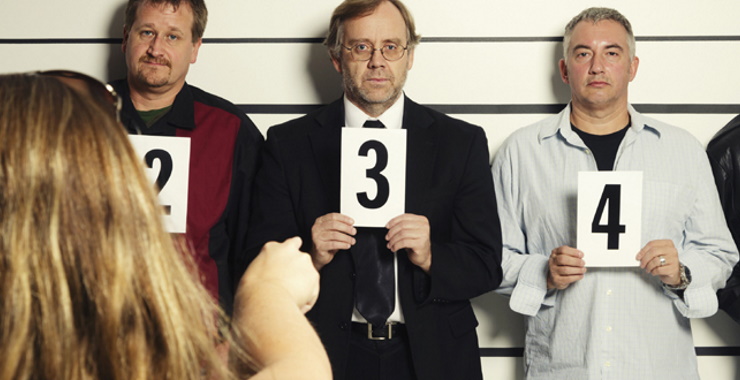
Lining up suspects in front of a one-way mirror and allowing eyewitnesses to choose which one is the perpetrator is standard police procedure. Yet DNA evidence has repeatedly revealed the limitations of this technique: Many prison inmates whose convictions hinged on eyewitness identification were later proven innocent by DNA testing.
Long before DNA analysis was possible, psychologists doubted eyewitness accuracy in the lineup procedure. In one early experiment, psychologists Roy Malpass, PhD, and Patricia Devine, PhD, staged a crime in the middle of a lecture. A male “vandal” (who was actually hired by the researchers) entered the lecture hall, exchanged heated words with the instructor and knocked over a rack of machines. The audience was then asked to participate in a lineup to identify the vandal.
Results showed that the accuracy of the witnesses’ identifications depended on the instructions the researchers gave them. The differences between the two sets of instructions were subtle: One set implied that the witness had to choose among the suspects in the lineup, while the other set implied that the witness did not have to make a choice. The researchers then included the real “criminal” in the lineup only half the time.
The researchers found that telling witnesses they didn’t have to choose a suspect led to fewer false identifications—but importantly, that instruction did not hinder witnesses’ ability to make accurate identifications.
Various other interactions between law enforcement officials and eyewitnesses, both before and after a lineup, can affect the witness’s memory and identification as well. Research shows, for instance, that identification errors can occur when subjects view photos of suspects before picking them out of a lineup.
Psychologists have also explored the ways in which giving feedback after a lineup can distort the witness’s memory. A 2014 analysis examined 23 studies involving 7,000 participants from the United States, Canada, Australia, and Europe. The results showed that when a lineup administrator confirms the witness’s choice, it can significantly inflate the witness’s confidence in that judgment—a consequence that could affect later testimony. When postlineup feedback suggests the witness didn’t choose the right person, it reduces witness confidence, though to a lesser degree.
Other research has explored the complex role that emotion can play in the accuracy of eyewitness testimony. For instance, one study found that compared to emotionally neutral people, eyewitnesses experiencing greater negative emotions were able to provide a more complete description of the perpetrator, yet were actually less likely to correctly identify the perpetrator from a photographic lineup.