Reviewed by Joshua Ryan. Joshua is a junior at Glen Rock High School in Glen Rock, New Jersey.
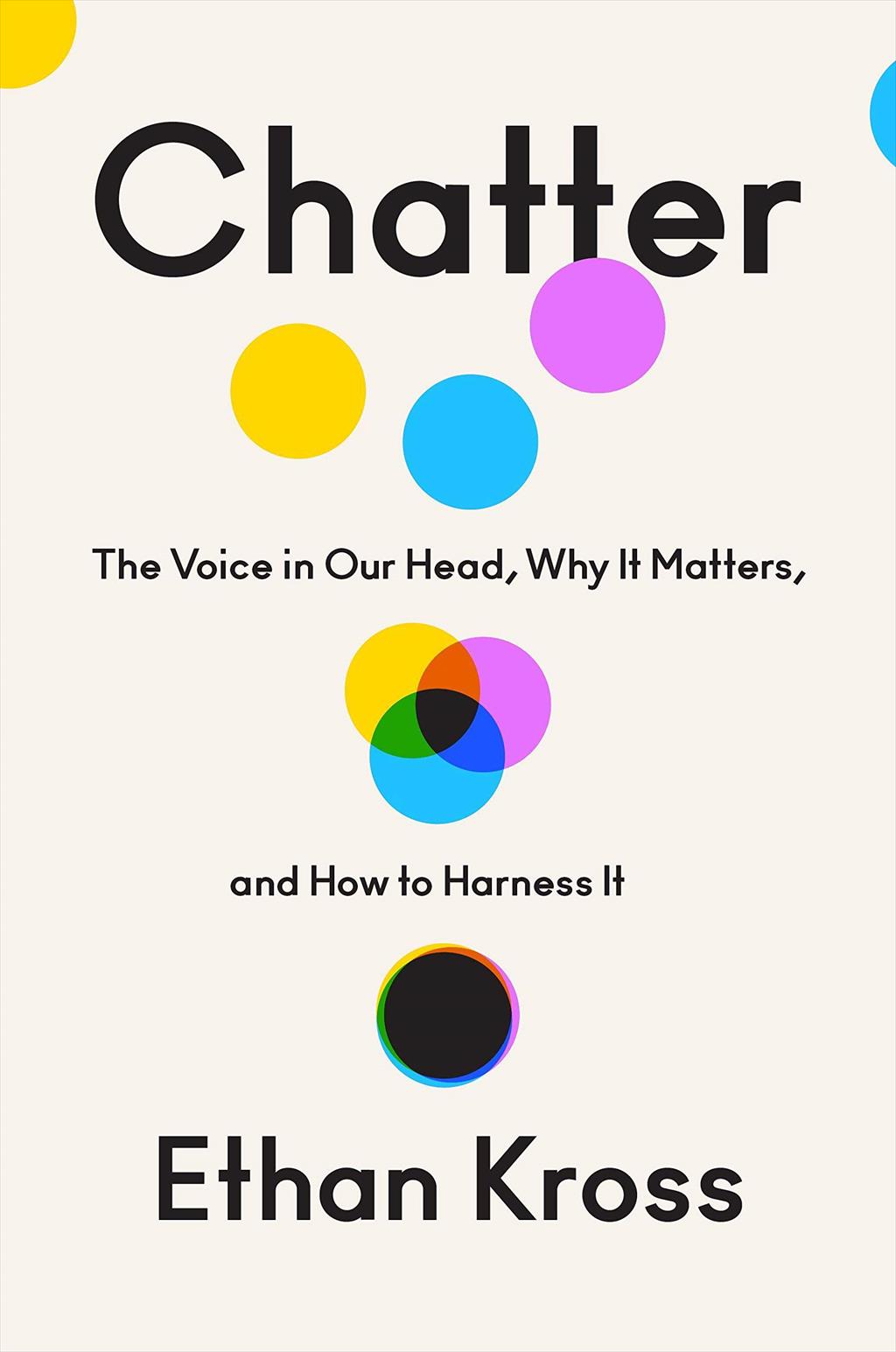 Author: Ethan Krossopens in new window
Publisher: Crown, 2021
ISBN: 0525575251, 9780525575252
Length: 288 pages
Chatter begins with a personal experience Ethan Kross had after being sent a threatening letter where he irrationally stayed awake for two nights to defend his house with a baseball bat. After realizing the dubious logic of that action, Kross wanted to explore the underlying thoughts that brought it about. In the first chapter, chatter is described as positive and negative self-talk. Kross explains the potential benefits of this inner voice, and then explains the destructive influences chatter can have. Then, Kross describes an effective way to stop chatter: by zooming out and putting one's issues into perspective, describing it as giving a person the same rational thought process they would show when dealing with the same situation affecting another person. This allows for the person to separate from their distressful emotional response. He next describes another method: saying your name to increase psychological distance, which helps to externalize the event, achieving a similar separation from the emotional response. Then, Kross shows how other people can influence you in terms of your chatter, and how emotional support must be carefully enhanced with cognitive solutions for a positive result. The final topic focuses on how nature can refresh one’s mind, and even how virtual pictures of greenery can improve self-talk. The last topic is about the power of placebos in dealing with chatter and the ways to use them. Just being informed about how a placebo works can activate its effects, meaning deception is not necessary to tap into such a source of relief! The final segment of the book summarizes and categorizes the topics and strategies in a way you can use to help yourself. Conclusions stated in the book were empirically validated in numerous experiments.
This book covers multifaceted information, often related to negative-self talk, with information on ways to combat it. Kross discusses how negative-self talk has risen dramatically due to social comparisons observed in social media. It can affect one's life in negative ways as seen in Kross’s personal incident that spurred his research into chatter. His basic message is clear: one cannot live without a potential inner voice, but one should be able to monitor it and bring out the positive one. The book is an academic self-help book, as he sets out to teach the reader systematic procedures to deal with chatter. Chatter has examples of people suffering from negative chatter and inadvertently and or intentionally using one of the tools in the book to control it, such as the tribes of the Trobriand Islands, and their usage of rituals to lessen chatter. I found the segments where Kross described ways to end internal criticism the most important, as I did not expect him to both describe the problem and solve it in one book. Those sections are the most important as well, for they are applications of basic science.
This publication relates to numerous overlapping areas in psychology such as neuroscience, social psychology, and cognitive psychology. The book provides examples of how important psychology is as a scientific study, to how the environment and outside world affect and influence the inner workings of the mind. To see examples of people who suffered from chatter, and then resolved it in some way, shows the importance of applied science and its benefits. Chatter also is an example of the application of cognitive psychology. Chatter helps highlight the research Kross and others have done and showcases the application of research in cognitive psychology. This book would be an excellent read for any student interested in the field of psychology and cognitive psychology.