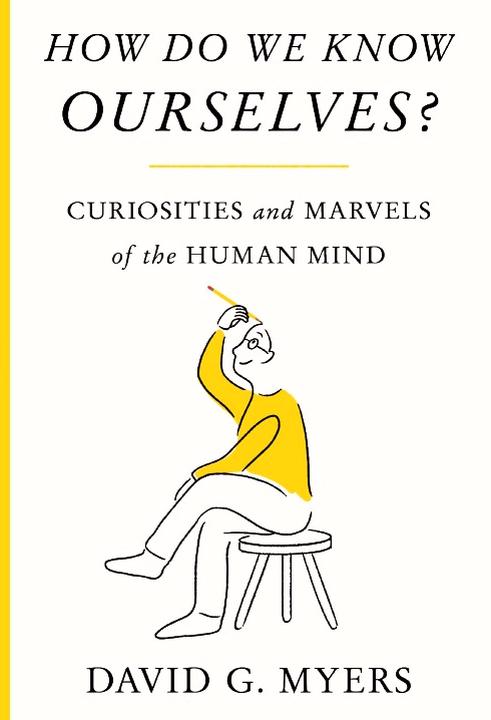
 Author: David G. Myers
Publisher: Farrar, Straus and Giroux
Copyright: 2022
ISBN: 978-0-374-60195-9
Pages: 211
Price: $26.00
Although social psychologist David G. Myers, PhD, has been teaching college-level psychology for more than 50 years, he is still “sometimes surprised, occasionally awestruck, and frequently fascinated by the human mind” (Myers, 2022, p. xi). Hence, this publication of 40 essays seeks to highlight some playful aspects of psychology in our everyday world, balanced with facets of psychological research that intrigue the reader to dig into the science behind human behavior. The engaging subject matter seeks to foster discussion regardless of the reader's psychological knowledge base.
Broken into three sections, Myers links topics from his Talk Psych Blog together with new musings on concepts witnessed in ordinary daily living. Part I: Who Am I? encourages the reader to apply psychological concepts to the individual self with warnings to guard against biased tendencies. Part II: Who Are We? hones in on the human tendency to be highly influenced by societal trends. Part III: What in the World? seeks to spotlight the power of psychological science in our lives to increase our understanding of human behavior. Embedded within these insightful essays are examples from famous politicians, classical literature, sought-after celebrities, and the average person on the street that lends credence to psychological thought rooted in commonplace human experience.
For someone new to psychology, Myers draws upon the tried-and-true research of famous names such as Robert Zajonc, Oliver Sacks, Robert Rosenthal, and Daryl Bem. As readers, we are challenged to apply concepts like dual processing, intuition, hindsight bias, and behavioral confirmation to enlighten our knowledge of ourselves. We can all stand to spotlight our implicit egotism, our annual tendency to let the new year’s resolution slide too quickly, or our willingness to jump on the intuitive fear bandwagon when the evidence is staring us in the face.
Each of the 40 essays is a usable length for classroom teachers and students. These short readings will readily engage the most reluctant psychology student. Who isn’t intrigued by diving into topics such as why people like others who are similar to themselves, why we go along with ideas simply to get along with others, or why we say what we think others want to hear rather than expressing our true opinions? Assigning these essays might accidentally engage students to think beyond the perimeters of our class period.
The conversational style of each essay lends itself to interesting discussions. Within a classroom setting, these research-based snippets offer themselves as bell ringer activities or anticipatory set probing questions to create curiosity in students. A tiny taste of these reflections may lure students into diving deep into something other than social media. Who better to reinforce content taught in an introductory psychology course than the author of psychology’s best-selling textbook?
Another aspect of Myers’ observations and sharp-witted wisdom is the exploration of human idiosyncrasies. Why do we constantly compare ourselves to others when humility focuses on a more accurate understanding? What lasting impact will the covid-19 pandemic have on human tenacity? Why is the pain of loss more vivid than the joy of success? Thanks to the spotlight effect and the illusion of transparency, why do I assume everyone can read me like a book? How can we combat the persuasiveness of familiarity breeding belief?
Using psychological principles, Myers pokes and prods us to analyze the polarized world of politics, ornery tendencies of belief perseverance, and use social identity to impact our small corner of the world. Should we wonder why pointing out our own differences can cause more self-conscious distortions? Should we worry that people chose overconfidence, not correctness? Should we seek to understand why narcissism is on the rise?
Full of wisdom for the ages, How Do We Know Ourselves? enhances our understanding of how science works, cautions that some phenomena are simply situational, and reminds us that all that endures is both explicit and implicit. When addressing ideas that seem more like pop culture myths than research-based ideas, Myers encourages readers to think like researchers, not consumers. Like any master teacher, David G. Myers offers: a genuine love of content, compassion for the audience, and a fervor to share a lasting message with those who can impact the world. Reading this book forces us to question the version of ourselves with which we are currently functioning, interrogate the societal principles which so easily fool us, and lighten the burden of some deep issues.