A recent landmark survey of 10,000 young people (ages 16–25) across 10 countries confirmed that 75% find the future frightening (Hickman et al., 2021). Alarming? Yes. But the research also revealed a pathway forward. "Pro-environmental engagement" can serve as a psychological buffer, converting climate dread into agency and hope (Crandon, 2024). While climate change is adversely affecting youth emotions and well-being (White et al., 2023), supportive education and collective action can help address these concerns. Environmental hope, particularly its component of agency thinking, may be the crucial link between improving student positivity and boosting pro-environmental behaviors.
Undergraduate students report that eco-anxiety linked to climate change contributes to higher levels of worry and emotional distress (Lee, 2023). This psychological distress stems not only from awareness of escalating climate threats, but also from perceptions of widespread inaction. The structural problem of injustice and inaction leads directly to anxiety and distress. Transformative environmental education that integrates knowledge, action, and emotion can help students process their climate anxiety while fostering engagement and hope (Demir Yildiz, 2025).
Psychology instructors are uniquely positioned to address this challenge. Instructors can teach students about environmental realities while ensuring they're psychologically equipped to navigate a climate-changed world. An introductory psychology course curriculum that prioritizes agency building can transform anxiety into proactive behaviors, buffering against systemic helplessness. Positive psychology interventions, including mindfulness, cognitive reframing, optimism, and civic engagement, can empower students and bolster their capacity for hope, self-efficacy, and problem-solving (Carr et al., 2021).
A framework for section: PERMA meets climate justice
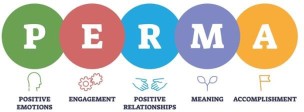 The PERMA model (Positive Emotion, Engagement, Relationships, Meaning, and Accomplishment; Seligman, 2011) provides a robust framework for designing interventions to enhance undergraduate well-being. Integrating climate justice with positive psychology creates a powerful mechanism for collective coping. Here's where it gets interesting. When we center climate action on justice, we tap into the "Meaning" component of the PERMA framework, helping students bridge the gap between individual choices and global equity. For example, knowing that a weekly coffee run produces 15 kg of CO2 is just a statistic. However, when a student takes that data home and starts a family conversation about switching to locally roasted beans, the impact changes. They are no longer just "doing homework"; they are participating in greater moral effort. This sense of purpose provides the psychological fuel necessary to maintain hope in the face of the climate crisis.
From theory to practice: A sample assignment
An assignment like "The Food We Eat Can Have a Positive Impact on Climate Justice" (Karkhanis, 2022) demonstrates how to integrate positive psychology, climate justice, and subjective well-being (SWB) in a college psychology course. How does this work in practice? This assignment unfolds in three stages:
Foundation Building: Students learn core concepts, including subjective well-being (SWB; Diener, 2026), climate change, climate justice, and carbon footprints. This provides both a cognitive foundation and an ethical framework.
Personal Engagement: Students document their diet for one week, trace food origins, calculate their carbon footprint, and identify concrete reduction steps. These efficacy-boosting tasks develop engagement and foster responsibility for daily actions.
Social Connection: Students create an infographic and use it to discuss climate justice with friends and family. This step deliberately externalizes the learning, reinforcing social relationships while fostering environmental hope through collective dialogue.
By requiring introductory psychology students to connect their pursuit of physical well-being (diet, food security) with larger environmental ethics, the activity grounds abstract climate responsibility in a highly personal and immediate context. When personal health goals align with broader ethical values, motivation becomes more sustainable and contributes to deeper well-being (Clayton et al., 2017; Ryff & Singer, 2008). Students develop the capacity not just to cope with climate anxiety, but to live and work toward a safer climate future.
References
Carr, A., Cullen, K., Keeney, C., Canning, C., Mooney, O., Chinseallaigh, E., & O’Dowd, A. (2021). Effectiveness of positive psychology interventions: a systematic review and meta- analysis. The Journal of Positive Psychology, 16(6), 749-769. https://doi.org/10.1080/17439760.2020.1818807opens in new window
Clayton, S., Manning, C. M., Krygsman, K., & Speiser, M. (2017). Mental Health and Our Changing Climate: Impacts, Implications, and Guidance. Washington, D.C.: American Psychological Association and ecoAmerica.
Crandon, T. J. (2024). Climate change anxiety and mental health: Environmental activism as a buffer. Current Opinion in Psychology, 52.
Demir Yıldız, C. (2025). Raising Climate Heroes: Ecological Game Camp—A Mixed-Methods Study on Experiential Climate Education in Children and Adults. Sustainability, 17(17), 8043.
Diener, E. (2026). Happiness: the science of subjective well-being. In R. Biswas-Diener & E. Diener (Eds), Noba textbook series: Psychology. DEF publishers. https://noba.to/qnw7g32topens in new window
Hickman, C., Marks, E., Pihkala, P., Clayton, S., Lewandowski, R. E., Mayall, E. E., Wray, B., Mellor, C., & van Susteren, L. (2021). Climate anxiety in children and young people and their beliefs about government responses to climate change: a global survey. The Lancet Planetary Health, 5(12), e863–e873. https://doi.org/10.1016/S2542-5196(21)00278-3opens in new window
Karkhanis, D. (2022, June 17). The food we eat can have a positive impact on climate justice. Curriculum for the Bioregion. https://serc.carleton.edu/bioregion/examples/249015.htmlopens in new window
Lee, K. (2023). Eco-Anxiety in Undergraduates: An Exploration of Western Washington University Students’ Beliefs of and Personal Experiences with Climate Change and Ecological Crisis. [Undergraduate honors thesis, Western Washington University] https://cedar.wwu.edu/wwu_honors/749/opens in new window
Ryff, C. D., & Singer, B. (2008). Know thyself and become what you are: A eudaimonic approach to psychological well-being. Journal of Happiness Studies, 9, 13–39.
Seligman, M. E. P. (2011). Flourish: A visionary new understanding of happiness and well-being. Free Press.
White, B. P., Breakey, S., Brown, M. J., Smith, J. R., Tarbet, A., Nicholas, P. K., & Ros, A. M. V. (2023). Mental health impacts of climate change among vulnerable populations globally: An integrative review. Annals of global health, 89(1), 66, 1–19. DOI: https://doi.org/10.5334/aogh.4105opens in new window
About the author
Deepti Karkhanis, PhD, is a tenured faculty member and Program Chair of Psychology at Bellevue College, WA. A developmental psychologist by training, she earned her bachelor’s and master’s degrees from the University of Delhi and her PhD in Applied Developmental Psychology from George Mason University, VA, where her research focused on culture, emotional socialization, and child development.
At Bellevue College, Karkhanis teaches a wide range of courses, including Lifespan Psychology, General Psychology, Cross-Cultural Psychology, Positive Psychology, and First Year Seminar. She is deeply committed to inclusive, engaging teaching practices and frequently facilitates faculty workshops on educational equity, culturally responsive pedagogy, burnout prevention, and integrating positive psychology into the curriculum.
Karkhanis is also a contributing author to the 2024 OpenStax Lifespan Development textbook and has published and presented widely on topics such as collaborative learning, emotion socialization, student engagement, and equity in the classroom.