skip to main content

Top 10 reasons high school psychology teachers should attend the APA convention

APA offers an outstanding professional development opportunity for classroom teachers

APA Style leaf logo Cite This Article in APA Style
Alston, N. (2026, May 7). Top 10 reasons high school psychology teachers should attend the APA convention. https://www.apa.org/ed/precollege/psychology-teacher-network/introductory-psychology/top-reasons-attend-convention

Have you ever wondered if attending the APA convention is worth the time and expense? Are you concerned that the content might be too theoretical or too far removed from the realities of teaching high school students? I am here to tell you (as Nancy Fenton has done in the past) that the APA convention is one of the most valuable professional development opportunities available to high school psychology teachers.

Professional development has been the cornerstone of my 26-year teaching career. In 2024 and 2025, I had the privilege of attending the APA conventions. These experiences reinvigorated my passion for psychology and provided me with countless resources to bring back to my classroom. With hundreds of sessions spanning three days, the hardest part is choosing which incredible opportunities to attend! Here are my top 10 reasons why you should join fellow high school psychology teachers at APA 2026. 
1. It's more affordable than you think

Let's address the elephant in the room first—cost. Many of us attend other conferences where registration costs range from $400 to over $550. The APA convention registration? Registration rates start at $125 and increase to $225 for TOPSS members and student affiliates. That's about a third to half the cost of other conferences. If you are fortunate enough to live in or near the convention city that year, you save on hotel costs too, making it an incredibly affordable option for local teachers. Virtual programming is available too, for only $55 for TOPSS members.

Note: Virtual programming provides access to the main stage and feature stage sessions for a 3-month period.  This is a great opportunity for people who cannot attend APA in person.

2. Hear from the researchers you teach about all year

This is where the magic happens. It is truly an amazing experience to hear psychologists you have heard and read about present their ideas in person. At APA 2024 in Seattle, I personally attended Regan Gurung, PhD's session where he discussed his book Study Like a Champ, covering practical strategies we can bring directly into our classrooms to help students learn more effectively. These aren't just names in your textbook citations—they are real people doing fascinating work who are often thrilled to talk with teachers about how their research applies to adolescent learning and development.

3. Access to groundbreaking keynote speakers

APA offers main stage and keynote addresses to highlight top speakers of interest. The keynote presentations alone are worth the price of admission! At APA 2025 in Denver, I was privileged to hear Bryan Stevenson, JD, from the Equal Justice Initiative speak. His work on criminal justice reform and racial equity brought real-world applications to the concepts of bias, memory, and social psychology that we teach every day. It was truly inspiring to hear him speak about justice and equality in ways that made complex psychological concepts come alive.

Also at APA 2025, Claude Steele, PhD, from Stanford University presented on "Churn: The Psychological and Physical Stress that Divides Us and How We Can Overcome It," which connected beautifully to teaching about stress, prejudice, stereotype threat, and social identity. Can you imagine being able to tell your students, "I heard Dr. Steele present on this very topic!" It transforms the way students engage with the material.

4. Stay current with cutting-edge topics

Technology is changing our world, and psychology is at the forefront of understanding these changes. At APA 2025, I listened to Elizabeth Yost Hammer, PhD, and Elliott Hammer, PhD, speak about AI—absolutely fascinating and directly applicable to what we're seeing in our classrooms right now. Where else can you get expert guidance on topics that are shaping our students' lives in real-time?

Other compelling presentations last year included Yara Mekawi, PhD, and Natalie Watson-Singleton, PhD, discussing "Why Awareness Isn't Enough: Using Therapy Principles to Mobilize Anti-Racist Action." Amy Szarkowski, PhD, spoke about fostering joy in interactions with children with disabilities, and Amanda Venta, PhD, presented on immigrant health and interpersonal dynamics. The breadth and depth of topics ensure that every teacher finds sessions that speak directly to their curriculum and student population.

5. APA preconvention workshops designed just for you

APA and TOPSS often plan a one-day, pre-APA Workshop for High School Psychology Teachers and it is an absolute highlight. In 2026, a workshop planned for August 5 will cost just $35 for TOPSS members and will focus on addressing challenging teaching topics. These workshops provide professional development specifically designed for what we face in our high school classrooms, not generic strategies we'd have to adapt ourselves.

If you've never attended an APA convention before, consider starting with a pre-convention workshop—it's an excellent way to ease into the experience, meet fellow high school psychology teachers, and get practical strategies you can use immediately in your classroom. Check the TOPSS website each year to see if a workshop is being offered. In 2026, we hope you’ll consider applying to attend the August 5 workshop in Washington, DC.

6. Connect with a community committed to excellence

One of my favorite parts of the convention is connecting with other high school psychology teachers at TOPSS events. We share teaching strategies, discuss common challenges with the course, and troubleshoot tricky concepts.

Beyond the TOPSS workshop and networking opportunities, TOPSS's collaborative work demonstrates the organization's commitment to supporting psychology teachers at all levels. TOPSS works in collaboration with CABE (APA’s Committee on Associate and Baccalaureate Education) and BEA (APA’s Board of Educational Affairs) in efforts to support excellence in the teaching of psychology at all levels—from high school through undergraduate and graduate education.

This means you're connecting with a broader community dedicated to advancing psychology education across the entire spectrum of learning. This collaborative approach ensures that high school psychology teachers have a voice in shaping the future of psychology education and can benefit from the expertise and resources of the wider educational psychology community.

7. Hundreds of sessions tailored to your interests

APA offers dozens of sessions designed specifically for psychology educators, with programming from TOPSS, CABE, BEA, the psychology honor societies (i.e, Psi Chi, Psi Beta, and Psi Alpha), and APA’s Division 2, the Society for the Teaching of Psychology (STP). The STP website features a nice chart each year of all sessions hosted by these groupsopens in new window.  This is a useful reference guide for programs of interest.

Beyond these sessions, there are about 800 sessions covering every topic in psychology you can imagine. Teaching developmental psychology? There are sessions for that. Need fresh ideas for your social psychology unit? You'll find multiple options. Want to deepen your understanding of neuroscience, research methods, clinical applications, or cultural psychology? It's all there.

Whatever units you teach, you'll find sessions that deepen your content knowledge and give you concrete examples and studies to bring back to your classroom. 

8. Reenergize your passion for psychology

There's something incredibly energizing about being surrounded by thousands of people who share your passion for psychology. You'll leave the convention with new colleagues, fresh perspectives, and a renewed sense of enthusiasm for your work. If you want to "nerd out" about psychology education, this is your place! Most presenters are willing to chat about their work and discuss classroom applications for high school psychology teachers.

9. Explore the exhibit hall for classroom resources

The exhibit hall (“Solutions Center”) is worth exploring. You'll find teaching resources, the latest psychology books, and materials you can actually use in your classroom. Publishers often offer conference discounts, and you can preview new textbooks and supplemental materials before they hit the market. I always leave with a bag full of resources and my head full of ideas for enhancing my curriculum.

10. Social opportunities and more

APA usually features one or two unique after-hours experiences, such as a planned block party in 2026, and most of the 54 divisions host social hours for attendees. TOPSS now joins CABE and the honor societies for a joint awards ceremony and breakfast. There are also dozens of exciting sessions during APA that offer fun learning experiences to attendees, such as “Psychological Science in 3” competitions where psychological science research is presented in three minutes, the opportunity to take part in science summits, and more.  

Practical tips make your experience even better

I know some teachers worry that APA conventions are too theoretical or complex for high school teachers. That hasn't been my experience at all. While cutting-edge research is certainly presented, the speakers are genuinely interested in discussing real-world applications. Here's my advice for making the most of your convention experience:

  • Review the program in advance and map out your priority sessions.
  • Attend the TOPSS-specific events to connect with fellow high school teachers.
  • Visit the exhibit hall/solutions center for resources and materials.
  • Take detailed notes on specific examples and studies you can incorporate into your lessons.
  • Don't be shy—approach presenters with questions about classroom applications. They're usually more than happy to discuss how their work translates to teaching.

The bottom line

Whether you teach AP, IB, or AICE Psychology, or general psychology courses, for as little as $125 you get three days of specialized content, access to hundreds of sessions, world-renowned keynote speakers, cutting-edge research presented by the actual researchers conducting the studies, TOPSS networking and specialized teacher programming, and continuing education opportunities. Compare that to other professional development options, and you'll see it's an incredible value. Don’t forget that virtual programming is available as well.

I hope to see you at a future APA convention. It truly is the greatest professional development opportunity available to high school psychology teachers. APA 2026 will be held August 6-8, 2026, in Washington, DC.  A one-day workshop for high school teachers will be held August 5.

About the author

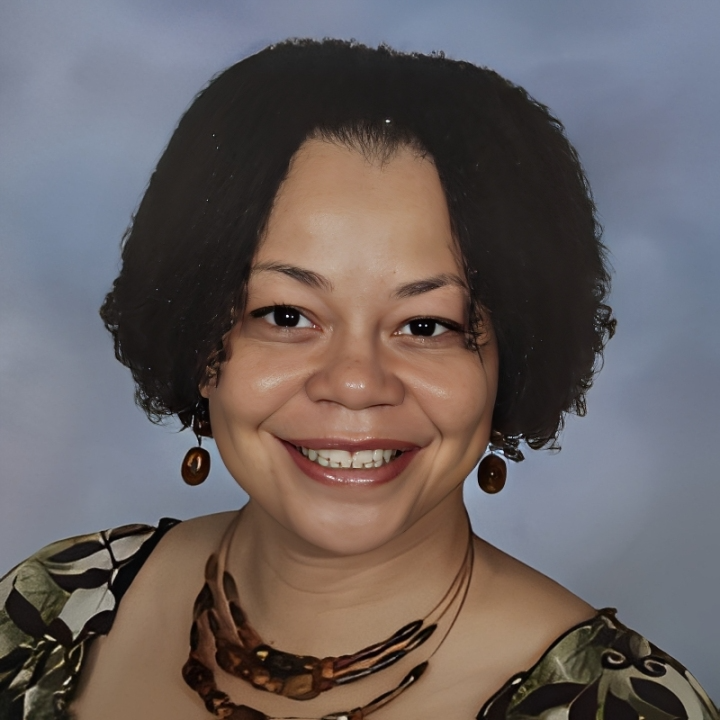
Headshot of Natasha Alston. Natasha Alston is an award-winning educator specializing in culturally responsive pedagogy and the psychology of race, identity, and adolescent development. A 25-year veteran at Mountain Pointe High School in Phoenix, Arizona, she currently teaches both dual enrollment/AP psychology and dual enrollment/AP African American studies. She is also an adjunct instructor at Rio Salado Community College. She holds an MPS in Africana Studies from Cornell University, served as the 2025 APA TOPSS Committee chair and a TOPSS Committee member-at-large from 2021-2023, and has coauthored the Social Psychology course at Rio Salado Community College. A College Board AP African American Studies Question Leader and national presenter, Natasha is the 2020 Isidore Starr Distinguished Teaching Award recipient who believes education is—and must always be—a joint endeavor.  
Recommended Reading

You may also like