Interview compiled by Terri Lindenberg, MA
You've inspired many students. What advice do you have for a student who wants to follow in your footsteps?
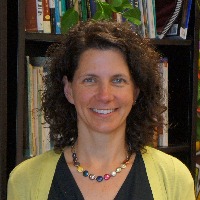 I do wish more of my students wanted to go on and become college professors, but I understand that most do not. Therefore, I tell them to find their passion and do something they really enjoy. I love teaching! I loved it the moment I taught my first class in 1994. Because I love what I do, I am interested in continually improving my teaching skills and building rapport with my students to maximize their success. I tell students that they are much more likely to be successful in their career if they are doing something they are truly passionate about.
How do you conceptualize the intersection of social justice and academia?
This is a question that I care about very much. I am at a university that has social justice at the core of its mission. Our mission at Xavier University of Louisiana (a Catholic, Historically Black institution) is to create leaders for a more just and humane society, and that starts in my classroom. Every class I teach has some direct focus on the mission. In fact, my last day of class activity is, “Now that the semester is over, describe one specific thing that you have learned in this class that will help make you a better leader for a more just and humane society.” I do this whether I’m teaching intro psych, advanced research, or human sexuality, and I find that the student responses blow me away.
What do you hope students take away from your class?
As I have moved through my teaching career, I have gotten more applied in my learning objectives and less focused on memorizing foundational knowledge. Yes, foundational knowledge is important, but the reality is that students will have access to Google when they leave my classroom. Instead, I want them to know how to use what they learn in health psych, for example, to enhance their own or their community’s health, recognize and work to dismantle systematic injustice in health care, and live self-reflective lives. They have to be able to do these things in order to truly achieve the mission I mentioned above.
How do you or how should psychology instructors in general promote the idea that psychology is a science?
Part of being a good leader (again my university’s mission) is the ability to think critically and separate evidence from hearsay. This is especially important when it comes to issues of human behavior. As such, we should be engaging students in the research process and challenging them to read primary empirical articles. Students are used to taking in information that has been already digested for them in traditional textbooks without ever really knowing where or how those facts and findings originated. Exposing students to research and allowing them to engage in the research process builds those critical thinking skills.
What is your favorite course or topic to teach? (or, conversely, what is your least favorite course/topic to teach?
My favorite class to teach is always the one I’m currently teaching! However, I have taught one course more than any other, and that is advanced research. I love teaching this course because it is a milestone for undergraduate students. They enter the course afraid, intimidated, or indifferent to research, and they leave having gone through every single step of the research process. I tell them that even if they don’t get bitten by the research bug (many of them do) they will still have gone through each and every step of the process that any psychological scientist does, and that they will now have a deeper understanding of the research articles they read. It is simply a delight to see students mature in that course.
What do you enjoy most about teaching?
Well of course the answer is students! I love learning with them and from them. I love the challenge of engaging them in material they don’t yet know is relevant to them. I am also in the very lucky position of being Director of our teaching center for over a decade. So, I tell my students we are going to try a lot of innovative things in class, some will work, some will fail, and I expect them to “play” along with me and learn along the way.
Is there a teacher or colleague you’ve had who especially inspired you?
Oh my, yes! I am a first generation college student from a dirt road in rural Alabama who went to Troy State University on a full scholarship to be in the marching band. Every step of the way, I had strong women teachers who inspired me and pushed me forward--Margo Gibson in high school, Pam Manners, PhD, in college, and Janet Ruscher, PhD, in grad school. I would not be the teacher I am today without these women. I would also be remiss, in a PTN interview, if I didn’t acknowledge all that I have learned about my own teaching practice from the high school teachers I have had the pleasure to work with.
What advice would you give to newer (or veteran) teachers of psychology?
Know your stuff and like your students; the pedagogy will follow because you will want to do your best.
What does it mean to you to receive the APF Charles L. Brewer Distinguished Teaching of Psychology Award?
Wow, I am so very honored to have my names on that list of outstanding teachers! And so grateful to have known Charles Brewer and what a fabulous teacher he was. I am so moved by this recognition and also by the outpouring of support and congratulations from my teaching community. I now feel an extra responsibility to mentor other colleagues, especially women and my BIPOC colleagues, so that their names can be there as well, and that starts in my own classroom.